Gold rallied alongside Treasuries as a slump in oil prices helped ease concerns about inflation, following the Federal Reserve’s first interest-rate hike since 2023.
The Federal Reserve (Fed) made something clear this week that markets had been reluctant to accept. Apparently, the easing cycle isn't paused, it's over for now.
Open any market commentary today and the conversation is dominated by giants. Mega-cap technology companies command outsized shares of major indexes, and the private markets tell a similar story, as we watch companies increasingly staying private well past the point where they once would have gone public.
Join Defiance ETFs’ Brendan Cavanaugh, CFA, and VettaFi’s Kirsten Chang as they discuss how advisors can gain exposure to companies advancing autism care.
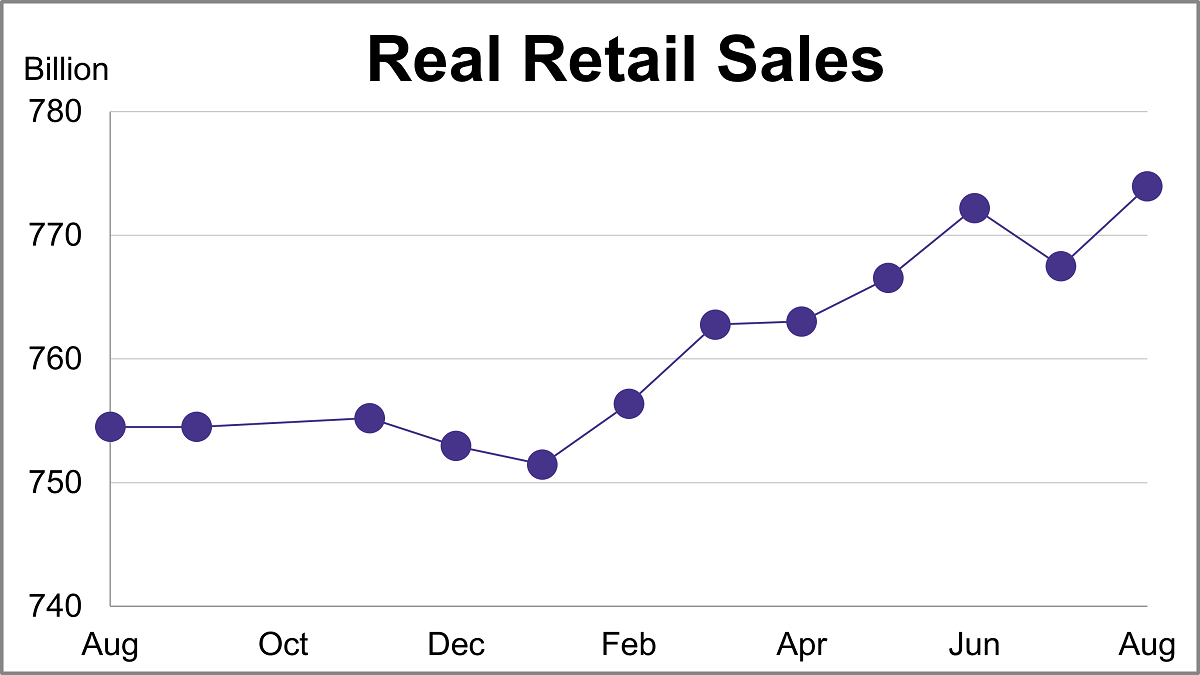
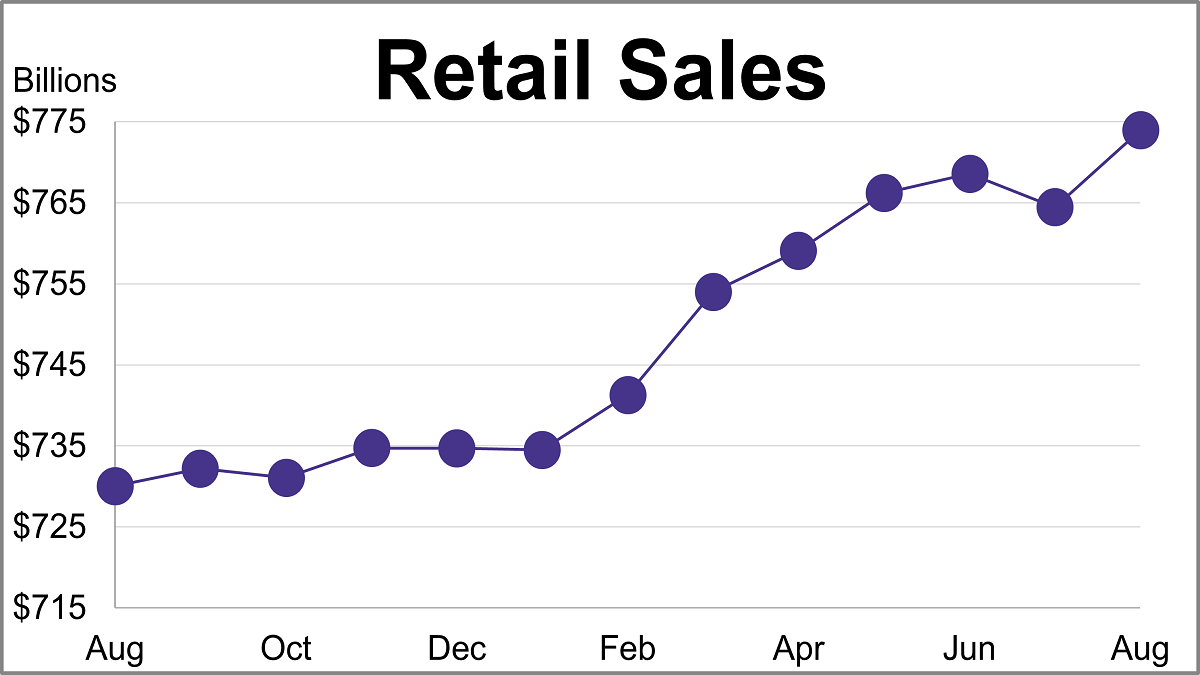
Nominal retail sales were up 1.2% month-over-month and up 6.0% year-over-year in August. After adjusting for inflation, real retail sales were up 0.8% month-over-month and up 2.6% year-over-year.
A spinout from the family office for the billionaire owners of US construction giant Michels Corp. is expanding its public equities strategy with a fund focused on US infrastructure.
In an environment marked by the Fed’s first rate hike in three years and ongoing market uncertainty, income-focused investors face a unique dilemma. While cash alternatives offer attractive yields in the short-term horizon, they leave portfolios vulnerable to reinvestment risk should the
As ETF strategies continue to expand into new asset classes and structures, the SEC has been taking a closer look at how some of these products fit within existing regulations.
The new investment case for global power, security and affordability. The phrase “energy transition” has served as a useful political and cultural shorthand, but it has become a misleading framework for capital allocation. Franklin Templeton Institute explodes new opportunities for investors—and where shifts in thinking may be needed.
The U.S. Federal Reserve delivered on consensus expectations by raising its policy rate by 25 basis points (bps) at its September meeting.
One of my favorite movies was the Coen Brothers movie, No Country for Old Men. It is the story of a guy who makes off with $2 million stolen by someone else. The ‘someone else’ is a super mean guy with a powerful blow gun. They are both being chased by a policeman. It was the best picture of 2007 and won four Oscars.
Municipal bonds might still offer attractive tax-advantaged income and relatively stable credit quality for investors who understand the risks.
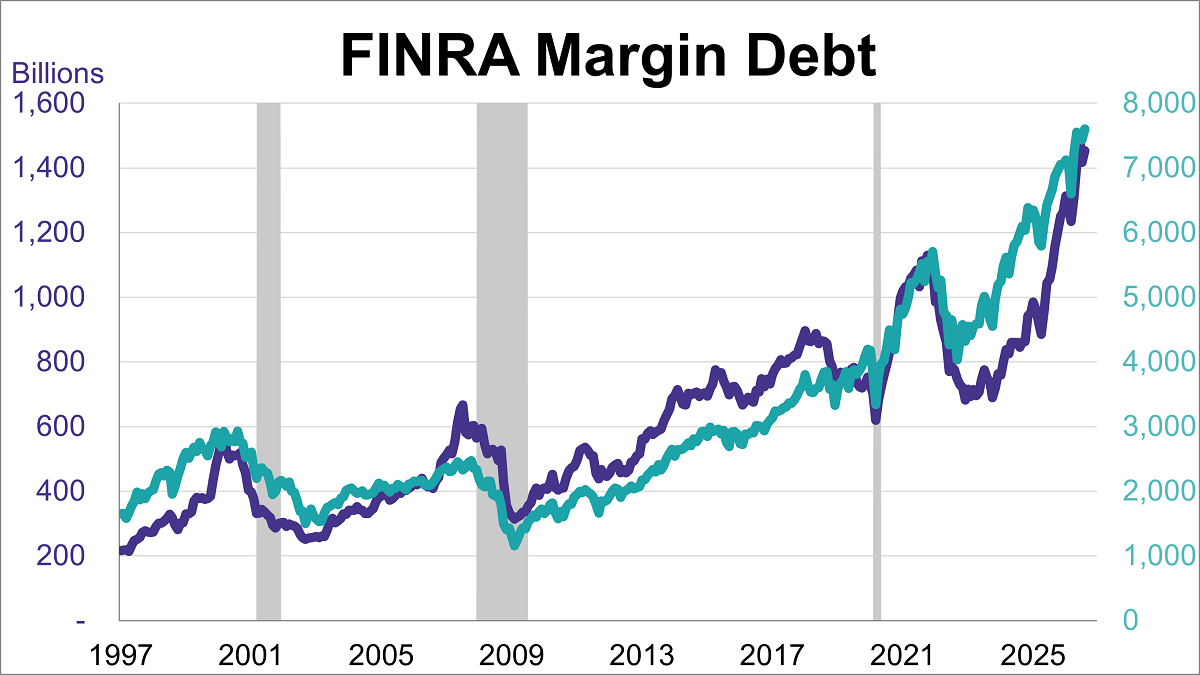
Margin debt increased in August to $1.45 trillion after decreasing last month. This marked a 2.6% increase from July and a 37.2% rise compared to the previous year.
The 2026 U.S. midterms are rapidly approaching, with major implications. Muni bonds, in particular, may be impacted.
Huawei Technologies Co. is accelerating the debut of its next-generation AI chip in 2027 by several months as it aims to replace Nvidia Corp. in China and compete on the global stage.
ETFs are increasingly breaking down the wall between public and private markets. Asset managers are finding ways to “ETF-ize” private equity and pre-IPO holdings — giving retail investors liquid, fractional access to growth opportunities historically restricted to institutional and accredited buyers. As companies stay private longer, the most explosive growth phases of high-profile startups often occur off public exchanges.
The shortened Labor Day trading week brought little cheer for stock and bond investors. Coming off a long weekend that saw increased hostilities between the US and Iran, oil prices pushed higher, topping $100/barrel. Gas and diesel prices also spiked: diesel hit an all-time high of $6/gallon, while regular gas jumped to a Labor Day record of $4.15/gallon.
Advancements in technology, combined with significant stock market gains in recent years, have created a new set of opportunities—and challenges—for investors. For example, investors holding a concentrated position in a highly appreciated stock may face a difficult trade-off between the risk of a market downturn and the potentially significant tax cost of diversifying the position.
The Federal Reserve today unanimously decided to raise its short-term interest rate target by a quarter percentage point to a range of 3.75 – 4.00%, the first hike since mid-2023. The Fed made two key changes to the statement announcing its decision, declaring that “domestic spending has been resilient” and the rate hike “will support a timelier return” to the Fed’s 2% inflation target.
When it comes to personal finance, conventional wisdom says the best way to live is debt-free. There are many important reasons why this is tried and true, but for high-net-worth individuals, lending can be an optimal way to access cash in the near term without sacrificing long-term gains on your assets.
Fed policymakers unanimously voted to raise rates 25 basis points, the first hike since 2023, and vowed to fight inflation. Another hike is seen this year, but 2027 is in question.
Most people have had that moment when they’re walking along outside, enjoying a sunny day, and suddenly something long and twisty on the ground catches their eye. Before they even know what’s happening, their whole body jumps and their brain shouts, “Snake!”
The Federal Open Market Committee (FOMC) decided to raise rates by a quarter-point, bringing the new fed funds trading range to 3.75%–4.00%. The money and bond markets had been pricing in a potential rate hike at this gathering, and Warsh & Co. ultimately determined that such a move was warranted. That said, the ‘rate hike’ story does not end here.
Janus Henderson launched a new international equity ETF on Wednesday, according to a Janus Henderson press release. The Janus Henderson International Core Alpha ETF (JINT) seeks long-term growth of capital across developed markets outside the U.S.
U.S. headline retail sales rebounded in August, up 1.2% to $773.9 in August, while core retail sales increased by 1.4%.
Clients value advisors who are knowledgeable about philanthropy as well as those who collaborate with philanthropic specialists when deeper expertise is needed. Advisors who coordinate deliberately with specialists, rather than working around them, are best positioned to meet those expectations.
With mass AI adoption across nearly every industry, a new challenge is emerging: When everyone has access to the same technology, everything starts to look and sound the same. Once you stop standing out and creating genuine connections with prospects, you face a big marketing problem.
In my years working with advisors, teams, and firms, I’ve had to confront the topic of compensation many times. It’s hard to grow when you don’t have the right incentives in place to encourage people to focus on actually doing it and hard to team effectively when people may think they are being treated unfairly.
US retail sales rose by the most in five months in a broad advance, showing consumers continued to spend despite rising gasoline prices.
One fear over the past few days is that an artificial-intelligence slowdown, whatever that looks like, might harm the stocks of chipmakers. If AI development takes a breather, the insatiable appetite that has propelled component makers to unprecedented heights would dissipate. Will AI companies still need all those data centers?
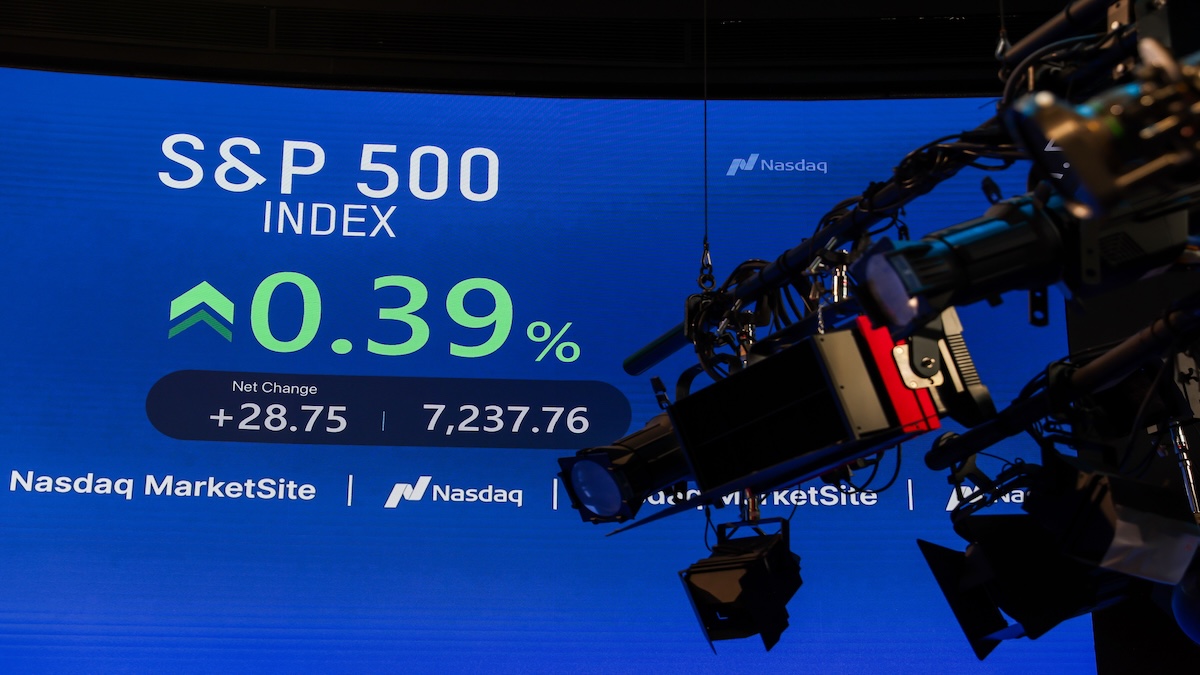
Every single sector in the S&P 500 is expected to deliver earnings growth for the third quarter, the first time since 2021, when corporate America emerged from the pandemic slump, Bloomberg Intelligence data shows.
Ed Yardeni, one of the biggest stock bulls on Wall Street, is slashing his year-end forecast for the S&P 500 Index a month after raising it, citing increasing risks of a downturn in the next three to six months.
Morgan Stanley’s investment manager secured $1.3 billion in capital commitments for a growth equity fund that’s already invested in startups including Databricks, Anduril Industries Inc. and Ramp.
Last December we published Riding the Wave: The Anatomy of Booms & Bubbles. In it, we argued that the AI spending boom would continue through 2026 without tipping into ‘bubble’ mania, and that the right posture was to stay overweight stocks while favoring US assets. Nine months on, we think that call has aged well.
Single-stock leveraged ETFs were unusual when they first arrived in the U.S. market just four years ago. Today, it might be hard to find a stock without one. Issuers are aggressively pushing beyond megacap tech into niche equities, pre-IPO registrations, and even experimenting with leverage levels and frequency.
With so much attention focused on what the Fed might do at its policy meeting this week, it’s a good time to look back at history to get a sense of how stocks might respond should policymakers hike rates as the market now expects. LPL Research had been characterizing the rate decision as a coin flip until Fed Chair Kevin Warsh’s hawkish comments at the Jackson Hole meeting and the strong August jobs report.
The August employment report was much stronger than expected and reinforces my view that the U.S. economy remains remarkably resilient. Payrolls increased by 162,000, above every estimate, while revisions added another 55,000 jobs to the previous two months.
AI-driven healthcare innovation is creating strong investment opportunities by improving efficiency, expanding access, and delivering better patient outcomes.
A week of rising oil prices and higher interest rates sent stocks lower across the board as investors increasingly priced in the likelihood that the Federal Reserve (Fed) will begin a rate-hiking cycle at its September 16 meeting. Following the August Consumer Price Index (CPI) report, futures markets implied an 88 percent probability that the Fed will, or at least should, raise rates at next week's meeting.
Discover how autocallables provide steady income and downside risk protection in volatile markets, and how autocallable ETFs can help.
In what is a good sign, many discussions around automation generally and AI specifically are increasingly moving to questions about compliance and liability. Basically, people are asking whether the agentic coworker they just hired is smart enough to trust.
I’ve written before about why the federal debt may be less dire than the headlines suggest, and I still think much of that argument holds. You cannot know whether a national crisis is coming. You can, however, assess the risk of a crisis for your own budget and take action to reduce that risk.
Anthropic PBC is pitching financial advisers on a version of Claude that blends the chatbot with financial analytics and risk management technology run by BlackRock Inc., Vanguard Group Inc. and other firms.
Kevin Warsh has rightly called into question the effectiveness of the Federal Reserve’s communications — but his arrival as chairman only seems to have made the problem worse. To put this right after the next Fed meeting this week, he’ll need to rethink his approach to explaining where things stand.
The latest inflation report points to a hard truth: The US is not going back to a 2% inflation rate anytime soon. At least not easily.
On September 2, TMX VettaFi Head of Research Todd Rosenbluth appeared on the Schwab Network to discuss ETF inflows nearing record highs in 2026 and the 50th anniversary of the first-ever index fund, the Vanguard 500 Index Fund. The fund’s ETF share class, which trades under the ticker VOO, is a bit newer, having launched in 2010.
Chris Galipeau discusses high-conviction insights that go beyond media headlines.
Most coverage of Trump Accounts treats them as a parenting question, or a discussion comparing them to 529s. For founders and business owners the analysis of them is slightly more nuanced.
Demand for fixed income ETFs hit a historic high-water mark in September. Investors and advisors turned to fixed income ETFs at a record-breaking pace, driving 2026 net inflows of $446 billion past all-time levels with months to spare. The massive tide of capital arrives at a critical juncture.
In our final chapter for this series, we will dig into that exact question. Unfortunately, there is good and bad news, and it can be summed up in a single sentence.