Fidelity Investments is expanding its reach in the competitive world of systematic strategies for the masses, with the launch of five new active ETFs.
Sirion Skulpone of Goldman Sachs Asset Management talks through the risks of being concentrated in individual stocks.
Why the equity market rally following the U.S. presidential election could continue into year-end.
To judge by the action in some foreign markets, Donald Trump’s election is pricing in economic winter.
Vanguard has a pair of bond options if fixed income investors are looking to get active with their portfolio.
In Europe, the ECB stimulates a sluggish economy while in the UK, the problem is inflation. In contrast, the US responds to stronger growth.
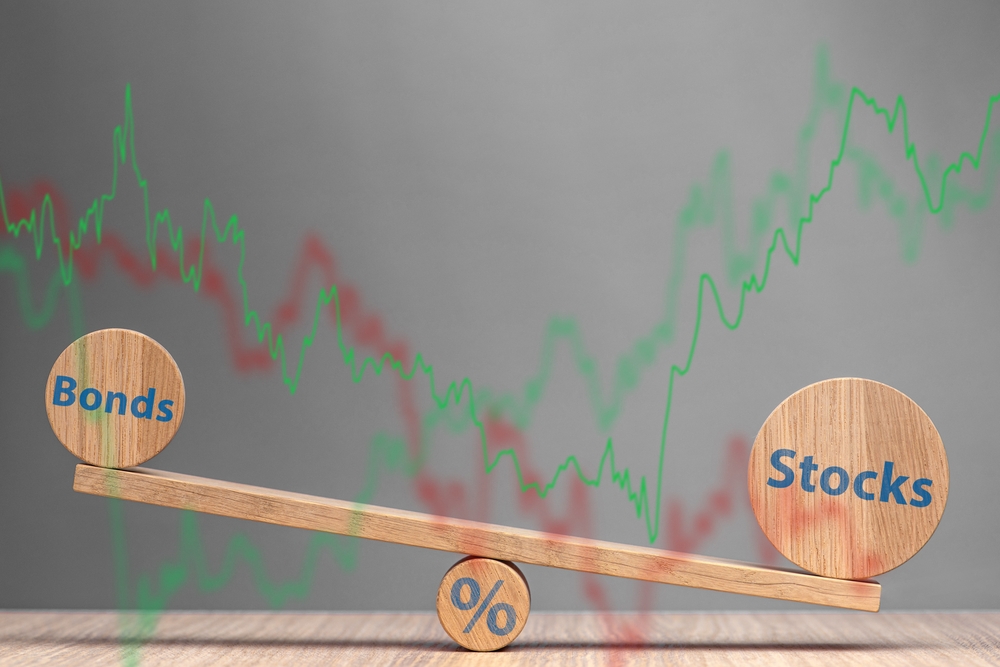
The inverse correlation between bonds and stocks has returned, broadening potential for risk-adjusted returns in multi-asset portfolios.
US banks enjoyed a sharp stock price jump on Donald Trump’s election victory; two weeks later, they’ve held onto those gains. There’s one good reason for this — and several poor ones, all to do with regulation.
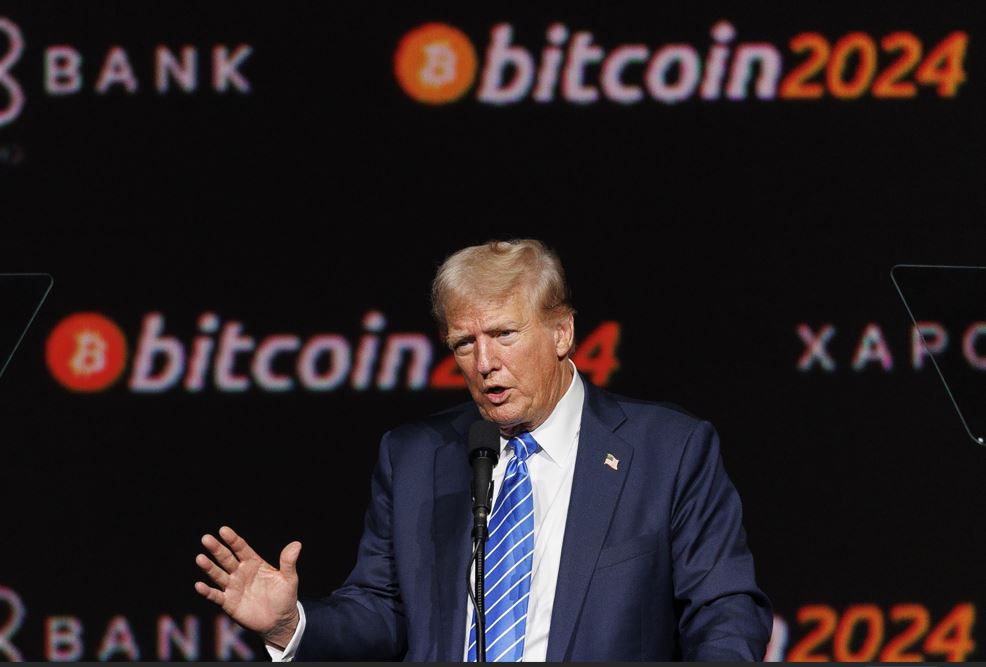
Bitcoin approached the historic $100,000 level, fueled by optimism that President-elect Donald Trump’s support for crypto heralds a boom as the US pivots to friendly regulations in place of a crackdown.
Nvidia Corp. assured investors that its new product lineup can maintain the company’s artificial intelligence-fueled growth run, though the rush to get the chips out the door is proving more costly than expected.
Is inflation tamed? It's a key question that got lost in election coverage. It looms more than a new administration does over portfolios.
For most of the last fifty years, fixed income investing has been characterized by owning some combination of Municipals, Corporates, Treasuries and Agency Mortgage-Backed Securities which has worked well with periods of secular disinflation.
Chief Investment Officer Sean Taylor considers the implications of a second Trump administration for emerging markets.
Paul Tudor Jones recently voiced concerns that rising U.S. deficits and debt and increasing interest rates could lead to a fiscal crisis. His perspective reflects the long-standing fear that sustained borrowing will trigger inflation, raise interest rates, and eventually overwhelm the government’s ability to manage its debt obligations.
Lost in the excitement of election week was a meeting of the Federal Reserve. At its conclusion, interest rates were lowered by another quarter-point. But where they are heading from here is a matter of increasing uncertainty.
Bitcoin climbed to a record high for a second consecutive day, with MicroStrategy Inc. accelerating the pace of its massive purchases of the cryptocurrency.
Nouriel Roubini is seizing on Donald Trump’s inflation-threatening policy agenda to make a case for an alternative haven trade to Treasuries in a world of elevated volatility.
The multi-trillion-dollar artificial intelligence boom was built on certainty that generative models would keep getting exponentially better. Spoiler alert: they aren’t.
Gen Z and millennials are widely considered to be the most diverse and socially conscious generations yet. They are vocal about their interest in driving social impact. And their values and priorities dictate their actions, all of which are actively shaping the future.
I think I have all the information I need to provide a view that others can confidently rely on, whether personal or professional advice. There’s just one problem: I’m often wrong. Why is that?
GMO has posted a new 7-Year Asset Class Forecast.
In this video, Part 2 of 2, Chuck Carnevale, Co-Founder of FAST Graphs, a.k.a. Mr. Valuation will be looking for value in the Consumer Discretionary Sector and go over the final 4 of the 15 consumer discretionary stocks that look reasonably valued.
In sport, play is limited by time or innings. Lineups are set, rules are fixed and boundaries are defined. Winners are determined objectively.
Bitcoin set another all-time high, supported by a series of developments highlighting the deepening embrace of the digital-asset industry in the US under crypto cheerleader Donald Trump.
Texas Capital’s Carlos Pena highlights an industry first, the Texas Capital Government Money Market ETF (MMKT). VettaFi’s Stacey Morris takes a deep dive into the world of energy ETFs and offers a preview of the energy sector in 2025.
Here are four key questions to help pinpoint where the break in your sales process might be occurring
Nvidia Corp., the chipmaker at the center of a boom in artificial intelligence use, is teaming up with Alphabet Inc.’s Google to pursue another technology once relegated to science fiction: quantum computing.
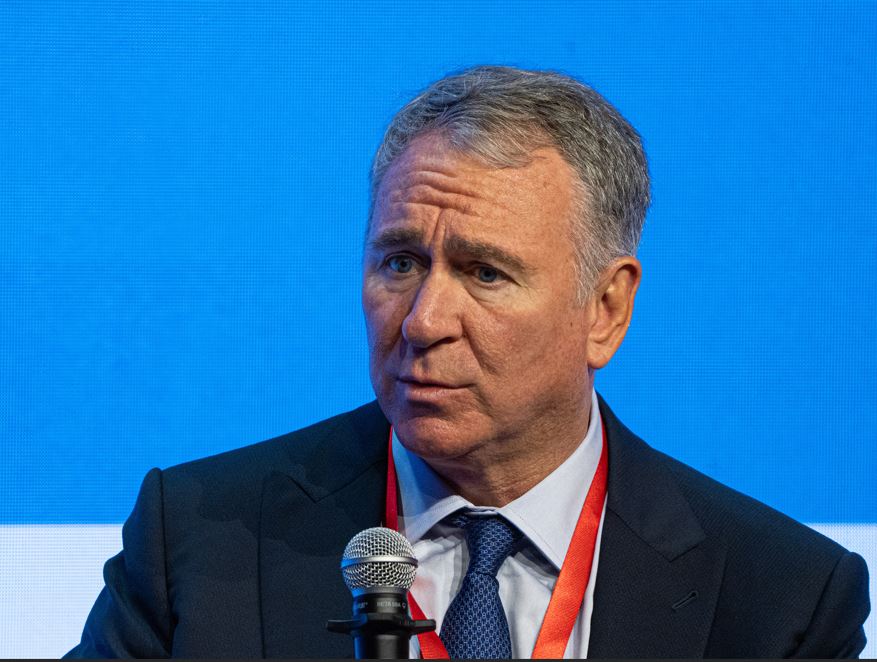
The era of explosive growth in multistrategy hedge funds is over, according to billionaire Ken Griffin, who runs one of the biggest such firms.
Alphabet Inc.’s Chrome browser could fetch as much as $20 billion if a judge agrees to a Justice Department proposal to sell the business, in what would be a historic crackdown on one of the world’s biggest tech companies.
Reengineering processes through automation, streamlining, and delegation enables financial advisors to provide greater value while spending more quality time with clients.
The global transition to clean energy should open opportunities for fixed income investors in bond funds that focus on the ESG theme.
Small-cap stocks and related ETFs are among the most mentioned assets as levered to benefits from the “Trump trade.”
Change is the sum of fundamental trends, the gradual elimination of accumulated extremes, and the random arrival of new shocks.
Investor exuberance has rarely been so optimistic. In a recent post, we discussed investor expectations of returns over the next year, according to the Conference Board’s Sentiment Index.
Last week showcased the complexities driving markets and the economy, with inflation data, Federal Reserve commentary, and political developments at the forefront. While inflation metrics in the CPI came in as expected, the PPI surprised on the higher side, pushing up estimates for the Fed's preferred PCE inflation gauge.
From stock picking to benchmark selection, the construction of an active thematic equity portfolio will play a crucial role in its ability to deliver on a theme’s return potential.
AI chip-leader Nvidia reports Wednesday after recent guidance from cloud providers suggests the demand powering its shares could continue. Its own guidance, however, could be key.
The Q3 earnings season is coming to a close in its usual fashion, with a word from retailers. With 93% of S&P 500 companies reporting at this point, YoY S&P 500 EPS growth has settled around 5.4%, while revenue growth increased 5.5% for the quarter.
Market prognosticators and the financial media will often point to a particular piece of anecdotal evidence as bullish or bearish. Quite often, the evidence is intuitively appealing as a contrarian indicator.
The MACD is one of my favored technical indicators to help forecast prices and manage risk. Accordingly, let's learn more about the MACD to see how it detects trends and potential trend changes, and assesses momentum.
On this episode of the “ETF of the Week” podcast, VettaFi’s Head of Research Todd Rosenbluth talks about the SPDR S&P Regional Banking ETF (KRE) with Money Life host Chuck Jaffe. The pair discussed use cases for the ETF as well as its outlook.
The S&P 500 index has had a spectacular run from its October 2022 trough to its present all-time peak, which has some (me included) wondering when the bull market will end. I approach this question in three steps.
Germany’s Carl Benz might have invented the automobile, but it’s the United States that got us to drive them.
The crypto party seems to be getting restarted. Bitcoin is surging and big players are celebrating amid expectations that President-elect Donald Trump will make the US, as he put it, “the crypto capital of the world.”
Last week’s selloff, which comes on the heels of what has been a generally successful earnings season for Corporate America, has investors bracing for one final test: a reading on the state of the consumer from a series of retail bellwethers who report in the coming days.
Morgan Stanley strategist Michael Wilson, well known for his bearish views on US equities in recent years, has an outright bullish outlook for 2025.
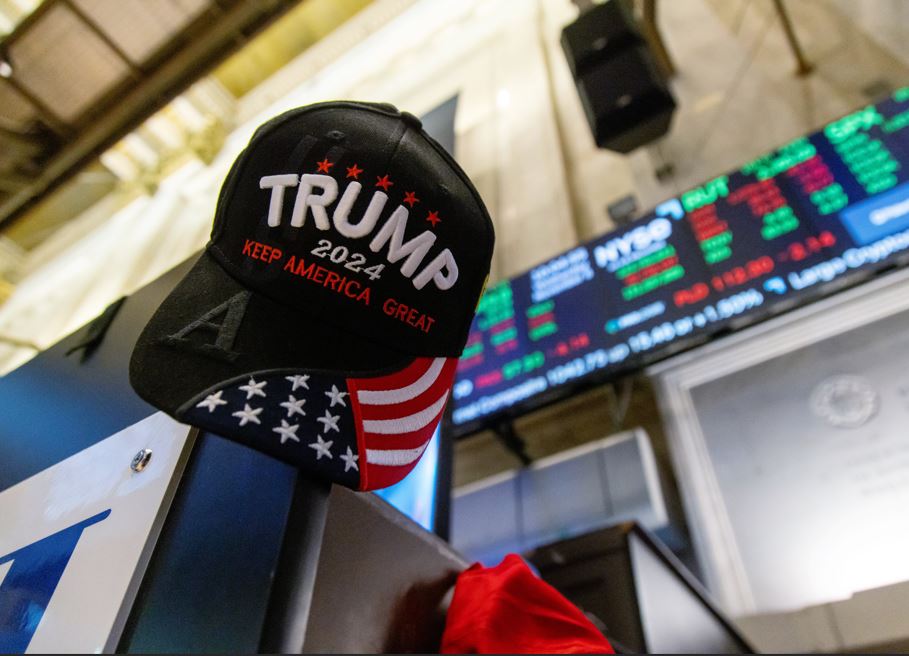
If Wall Street learned one thing during Donald Trump’s first term as president, it’s that the stock market is a way he keeps score. At various points he took credit for equities rallies, urged Americans to buy the dip, and even considered firing Federal Reserve Chairman Jerome Powell, who he blamed for a selloff.
Two weeks ago, I opened this letter by noting the election uncertainty, once over, would give way to a different uncertainty about what comes next. That’s where we are now.
With President-elect Donald Trump set to assume office in January, the U.S. military and cybersecurity sectors could experience sweeping changes, creating opportunities for investors who recognize the long-term growth potential in defense and technology.
The Northern Trust Economics team shares its outlook for U.S. growth, employment, inflation and interest rates.