The bull market in US stocks is showing few signs of stress as it approaches its fourth anniversary: Corporate profits are rock-solid, the S&P 500 Index is near a record and volatility appears subdued.
Is it time to bail out of stocks — or to stay the course? Who knows? In the meantime, we can array recent stock returns against history to put 2026 into context and allow readers to judge for themselves.
“Nobody knows anything,” the screenwriter William Goldman famously said of the movie business. Much the same can be said today for artificial intelligence, a technology that’s moving fast, destination unknown.
Consumer confidence is collapsing, hiring is weak and the housing market is largely frozen. All of which serves to underscore that the US economy is only holding up because of the boom in artificial intelligence and an aging population spending ever more on healthcare.
Wall Street’s biggest banks are set to extend a months-long borrowing binge and issue more bonds than usual in the fourth quarter, raising funds to meet the insatiable financing needs fueling the artificial intelligence boom.
Amid heated discussion of the astonishing (and also rather worrying) capabilities of artificial intelligence, investors are realizing that the underlying computing and energy infrastructure relied upon by OpenAI, Anthropic PBC and their ilk is much harder to construct than a chatbot prompt.
Morgan Stanley Investment Management’s Vishal Khanduja, a top-performing bond investor, is turning bullish on US debt for the first time in a decade, with yields at two-decade highs serving as a check on economic growth.
Free-market-oriented economists probably live in a state of perpetual despair these days. Politicians and voters on both the left and right are turning on markets. Polls suggest widespread support for interventionist policies that economists long discarded for causing more harm than good.
Interest rates are on the rise, and, according to market expectations, the ascension may not be over quite yet.
The economist Robert Solow’s famous 1987 adage about the computer age — it can be seen everywhere except the productivity statistics — also applies to generative artificial intelligence.
International stock funds outpaced U.S. large caps in September, as ETF inflows cooled and investors leaned toward defensive sectors.
Make communication a priority. It is often considered a natural thing that everyone knows how to do, but it is the most difficult thing to master and to maintain. Focus on it, and let your team know you care about getting better.
China’s latest effort to prop up its battered housing market and spur the economy is getting a poor reception. The measures are underwhelming and unlikely to achieve much beyond improving Beijing’s chances of meeting its already restrained growth ambitions.
When Parthenon Capital Partners set out to extend its control of Kroll Bond Rating Agency, the private equity firm also sought a higher share of profits — known as “super carry” — to manage a new fund that would hold the prized portfolio company.
Signs of resilient economic momentum are reinforcing the bull case for US small caps, which have been under pressure lately in the face of soaring borrowing costs.
A measure of SpaceX’s credit risk surged to a fresh high and the company’s bonds tumbled in the secondary market on Wednesday, following reports the company is in talks with banks and investors to raise $40 billion to buy chips from Nvidia Corp.
The new iPhone Pro range has been out for nearly three weeks, and from the get-go analysts noted somewhat flat consumer interest compared with last year’s Pro models.
The most-read articles on Advisor Perspectives in September included a variety of topics, though the top story for the month focused on a key part of practice management — how you charge your clients.
Rather than dive straight into a technology investment, a firm should start by clearly defining what it is trying to accomplish, then determine how people, processes, data, and technology can best work together to achieve that outcome.
Diversifying your portfolio across the globe will not completely insulate you from a bad year in equities, because global markets tend to rise and fall together. However, that diversification can help shield your retirement resources from the decline of any single country.
While the majority of advisors, 62%, still use an AUM-based fee model to charge clients, a growing number have said they now charge a retainer fee. In 2023, only 14% of advisors offering financial planning services said their compensation model was an annual retainer, while 38% said the same in the 2026 State of Financial Planning Fees study.
How’s the US economy doing in President Donald Trump’s second term? Going by the topline economic statistics, not too bad. Second-quarter gross domestic product was revised higher last week, to a 2.2% annualized rate from a previously reported 1.5%. At 4.2%, the jobless rate is consistent with an economy considered to be at full employment.
Nvidia Corp. is on the verge of becoming the first company with a $6 trillion market capitalization as investors rotate back into the artificial-intelligence chipmaker after a disappointing start to the year.
Paramount Skydance Corp. closed its $110 billion acquisition of Warner Bros. Discovery Inc. on Tuesday, completing one of the biggest media mergers of all time after engaging in a bruising battle for control with Netflix Inc. and fending off antitrust lawsuits.
Google parent Alphabet Inc. agreed to buy nuclear power from Constellation Energy Corp. in a deal that will spur the addition of 890 megawatts of new reactor capacity. The power producer’s stock soared.
The S&P 500 rose 0.6%, reaching its first record high in two months, buoyed by resilient corporate profits and a pullback in oil prices.
How much one needs for retirement is both a mathematical and emotional equation to solve. For both my clients and myself, enough is never enough because we fear a stock market plunge, inflation, or both (stagflation). But these four practical uses of TIPS provide near certainty of having enough to enjoy the rest of one’s life. Rarely do math and emotion each arrive at the same solution.
Today, TINA logic is less compelling. Risk-free five-year and longer Treasury notes and bonds yield over 5%, and investment-grade corporate bonds yield even more. At the same time, stock valuations sit near record levels, implying weak forward returns. The acronym that best describes today's market is TIGA (there is a good alternative).
Financial planners are used to reviewing their executive clients’ financial plans when a major life event occurs, whether it is a promotion, a significant salary increase, retirement, or a liquidity event. But what happens when the client stays in the exact same seat while the organization around them changes fundamentally?
Wall Street has spent weeks trying to make peace with the great bond selloff. Friday offered some short-lived relief — along with a warning about the damage from stubbornly high yields across investment strategies of all stripes.
The dollar neared its strongest levels this year as fiscal strains and renewed political uncertainty in Europe boosted its haven appeal, even as its run of gains stoked concerns the rally is becoming overstretched.
Larger asset managers including Goldman Sachs Group Inc. have been looking to snap up CLO management businesses as they hunt for lucrative fee streams in the $1 trillion US market.
Oil fluctuated in jittery trading, as Saudi Arabia cut prices of its benchmark grade to Asia, the kingdom’s state producer warned about the risk of low stockpiles and as fighting in Yemen intensified.
Remember when near-zero interest rates squeezed retirees on fixed incomes and left pensions with huge shortfalls? I suspect they’re happy to see US interest rates returning to normal.
Municipal bond asset managers are finding opportunities in the rout that tore through markets this month, with cheaper valuations and the highest yields in years drawing investors.
Broadcom Inc.’s Wall Street syndicate is starting to gather $60 billion of fresh AI chip financing to benefit Anthropic PBC and other companies, according to people with knowledge of the matter.
With Microsoft Corp.’s best quarter for decades in the books, Wall Street is betting the stock can keep rallying as the tech giant’s standing in the artificial intelligence landscape continues to improve.
Tesla Inc. shares have tumbled in 2026, but Wall Street analysts are increasingly reluctant to tell investors to sell.
Head over to Polymarket’s US website and you’ll be greeted with a panoply of crystal-ball trades on everything from the midterm elections to the likelihood of a fully reopened Strait of Hormuz. Try that in France, where I live, and you’ll see something very different.
Treasuries might look cheap against stocks, GDP and the global cycle, but on their own historical terms they have more to fall before they become oversold and ready for a durable bounce.
Blackstone Inc. is investing $1 billion to form a defense-technology company as the US and its allies face growing threats from inexpensive drones and other weapons that can be broadly deployed.
The Yorkville financial group was once little known on Wall Street. Now though, it is harder to miss: its affiliates help manage Donald Trump’s Truth Social-branded ETFs, have taken over the MAGA and YALL funds, and recently hired retail-investor favorite Dan Ives to co-build an investment-banking arm.
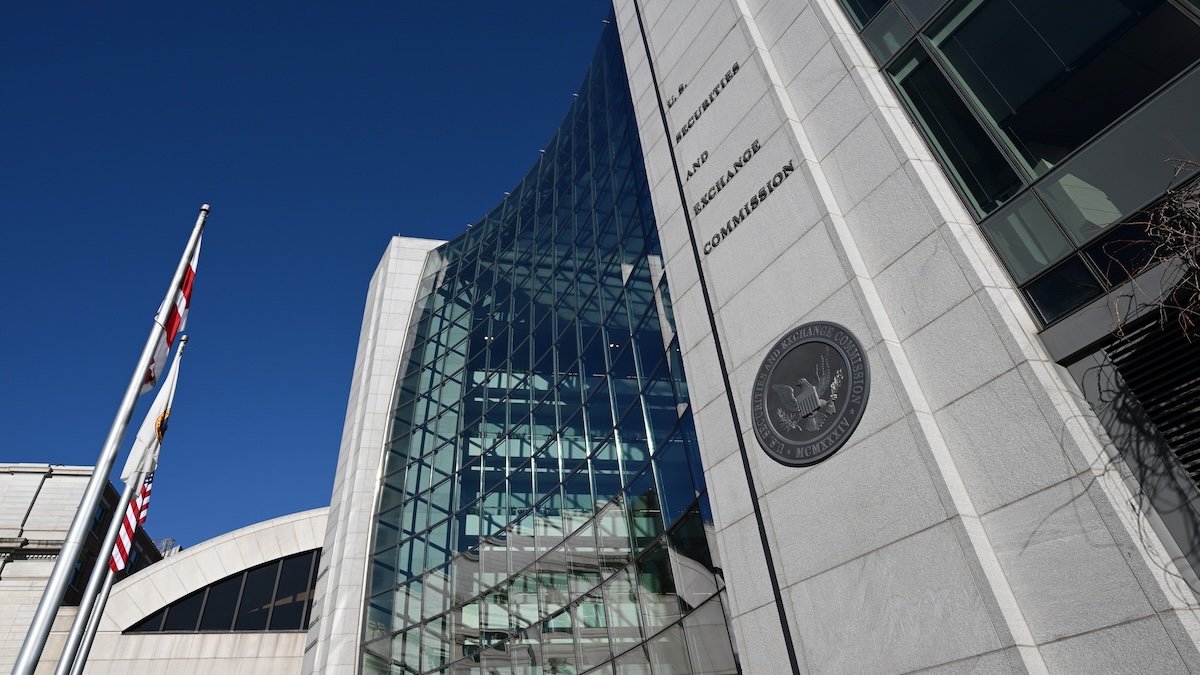
The Securities and Exchange Commission is proposing a series of moves to help expand retail investor access to private markets, so more individuals can access private equity, early-stage startups and other assets.
Higher-for-longer interest rates are forcing buyout firms to face facts. Struggling since 2023 to sell companies purchased in the long decade of ultra-cheap debt before the Covid pandemic, they’ve tried to placate investors with clever financial engineering to help keep some money turning over.
With more than 100,000 advisors planning to retire in the next 10 years and an overwhelming majority of independent RIAs facing major challenges in succession planning, making your firm as attractive as possible, whether you’re looking to acquire or to be acquired, is quickly becoming much more than a good idea; it may soon be a survival tactic.
With a process and an approach in place, you should move toward a final solution more easily. All you can do is set it up to be as open and fair as possible, with someone holding the absolute final say once the decision is made.
Finance leaders can use agentic AI to boost budget visibility, develop more accurate forecasts efficiently, and find insights in data that would typically require extensive manual effort. With the right platform and a careful approach to governance, finance functions can start reaping the benefits of augmentation within months.
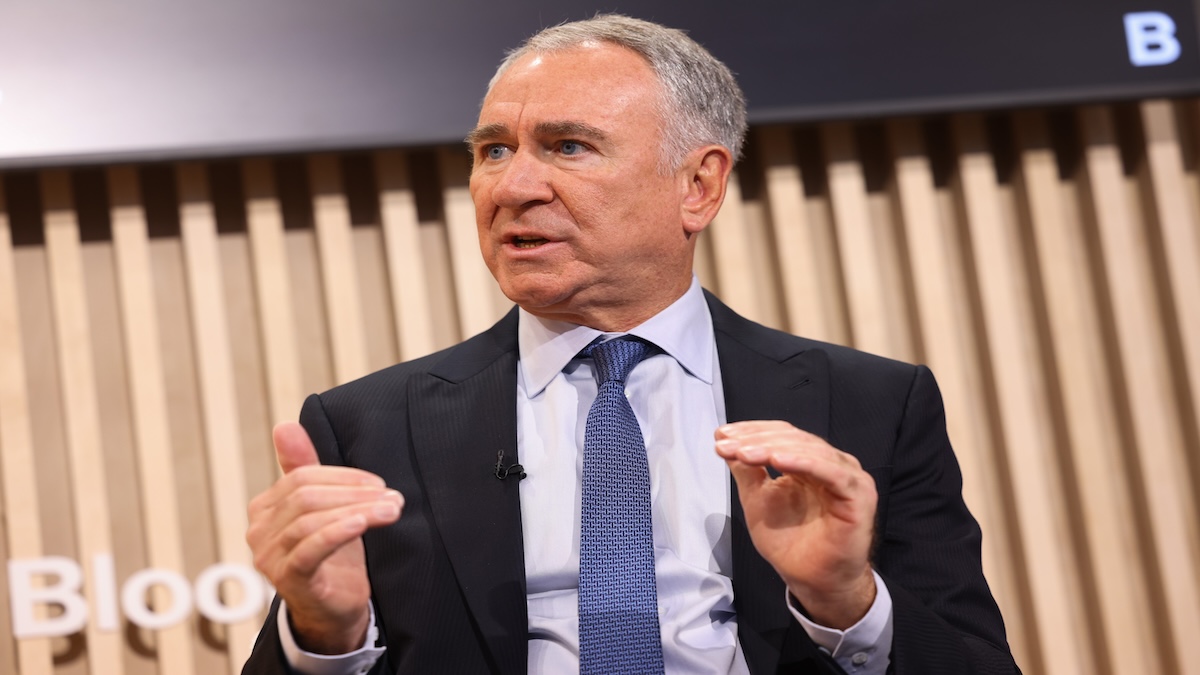
Ken Griffin is donating $3 billion to Carnegie Mellon University, most of it to establish a new campus in Miami, in the largest single gift committed to a US university.
Stock-market risks are everywhere. But you’d be hard pressed to tell anything was wrong by looking at the surface of major US equity gauges.
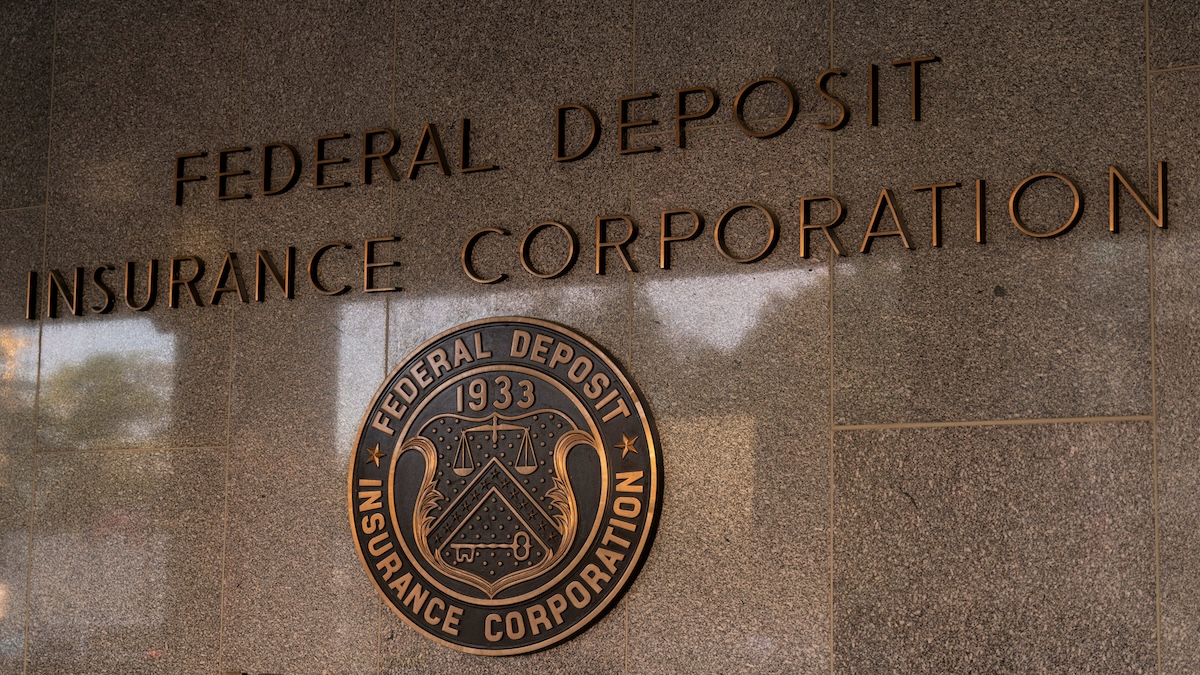
Banks in the US have plenty to celebrate these days, from record profits and higher stock prices to a strong economy and easier regulation. One thing they don’t need is an added discount on their deposit insurance — a crucial buffer that should be reinforced when times are good.