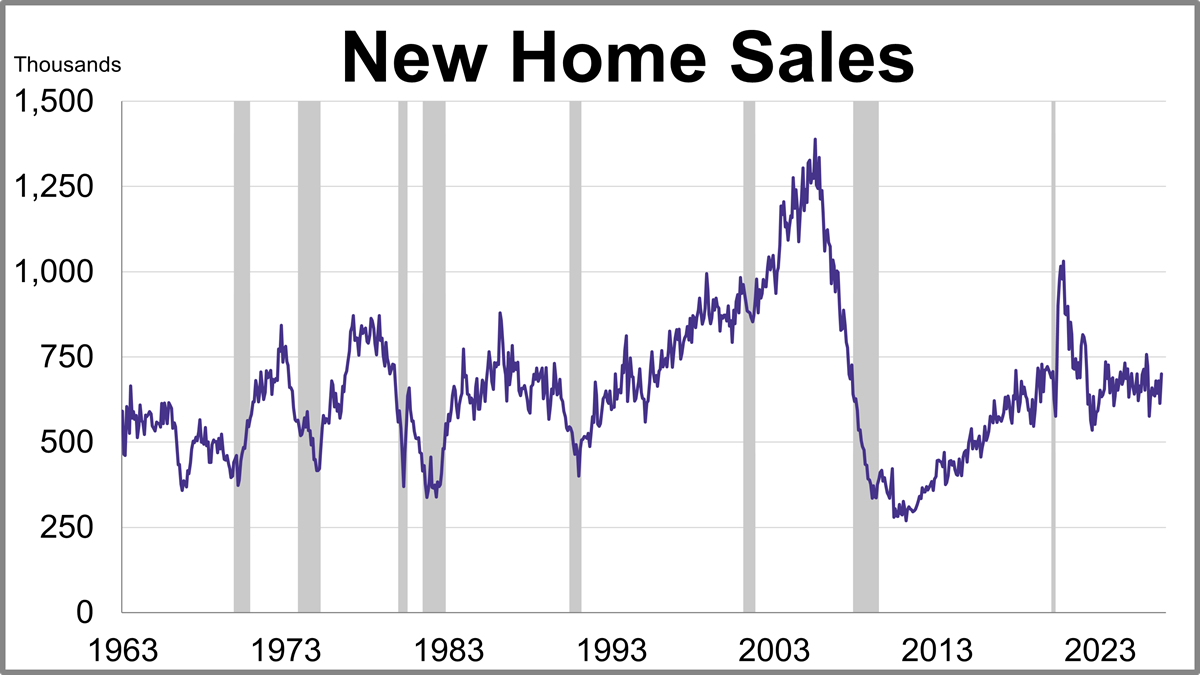
New home sales unexpectedly jumped to its highest level of the year in October.
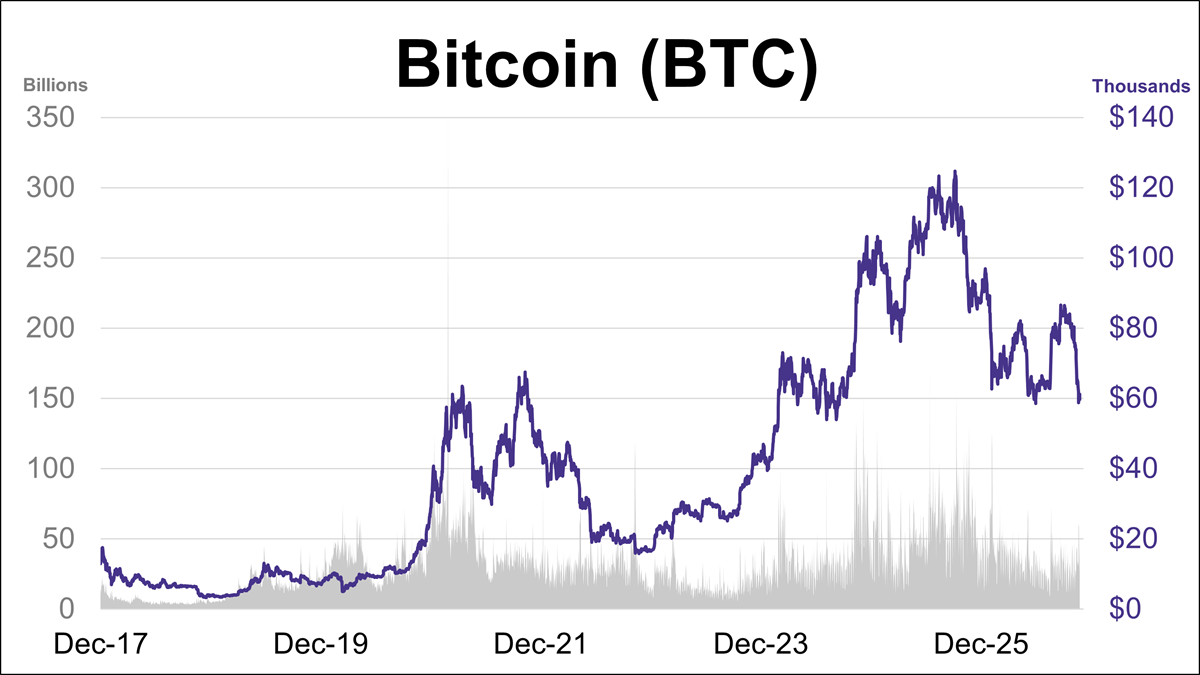
Bitcoin's closing price fell further this week, dropping 8% to its lowest level since June. BTC is currently down approximately 32% year-to-date and sits about 52% below its October 2025 record high.
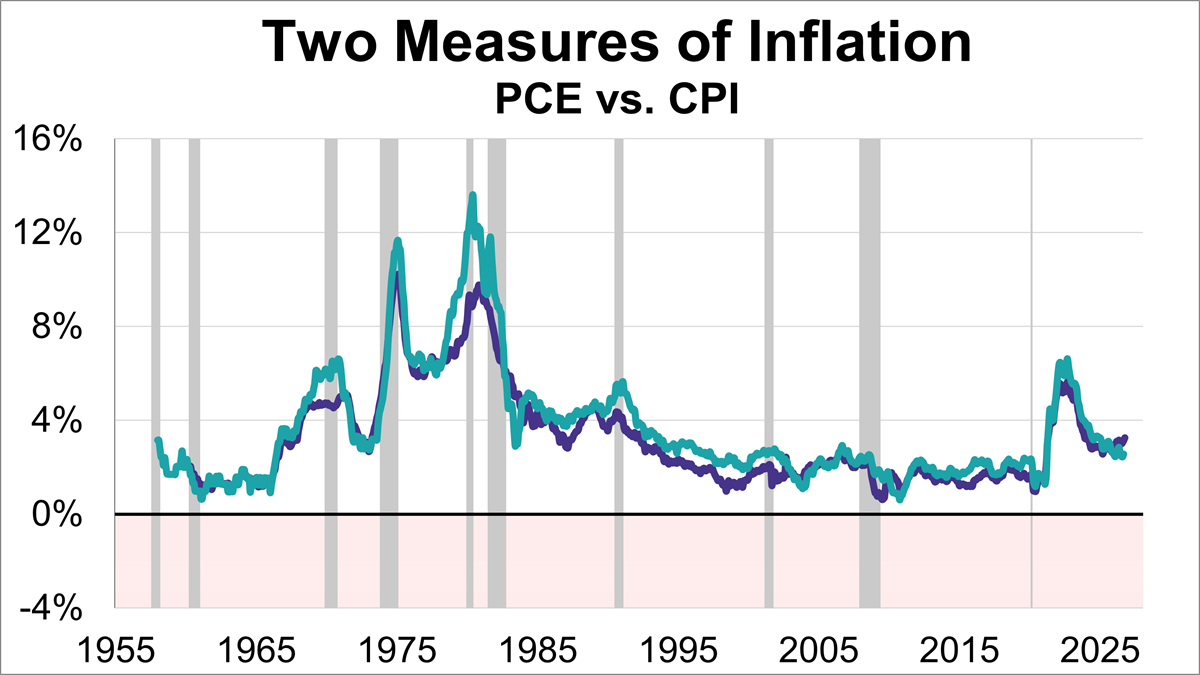
Inflation remains a hot topic, directly impacting everything from your grocery bill to interest rates. The latest data of the two main inflation gauges show that prices are still well above the Federal Reserve's 2% target.
US equity futures fell for a second day, extending losses on a wave of heavy selling as traders dumped technology shares, with worries around AI dominating sentiment on Wall Street.
Markets have watched debt-limit episodes play out twice in the past four years, first in 2023 and again in 2025, but the next one may unfold differently. In 2023, roughly $2.25 trillion sitting in the Fed’s overnight reverse repo facility (RRP) helped absorb the Treasury’s post-ceiling wave of bill issuance.
The key question is whether AI investments can generate enough cash flow to justify continued spending and earnings expectations. We believe the answer generally remains yes in 2027, though estimates for 2028 and beyond may be too optimistic. Given favorable long-term fundamentals and reasonable valuations, we maintain our positive technology sector view while recognizing near-term volatility may persist.
When a stock in either portfolio goes ex-dividend, the payout buys the digital currency at the next day’s market open, she said. As a result, the funds add bitcoin almost daily without new cash.
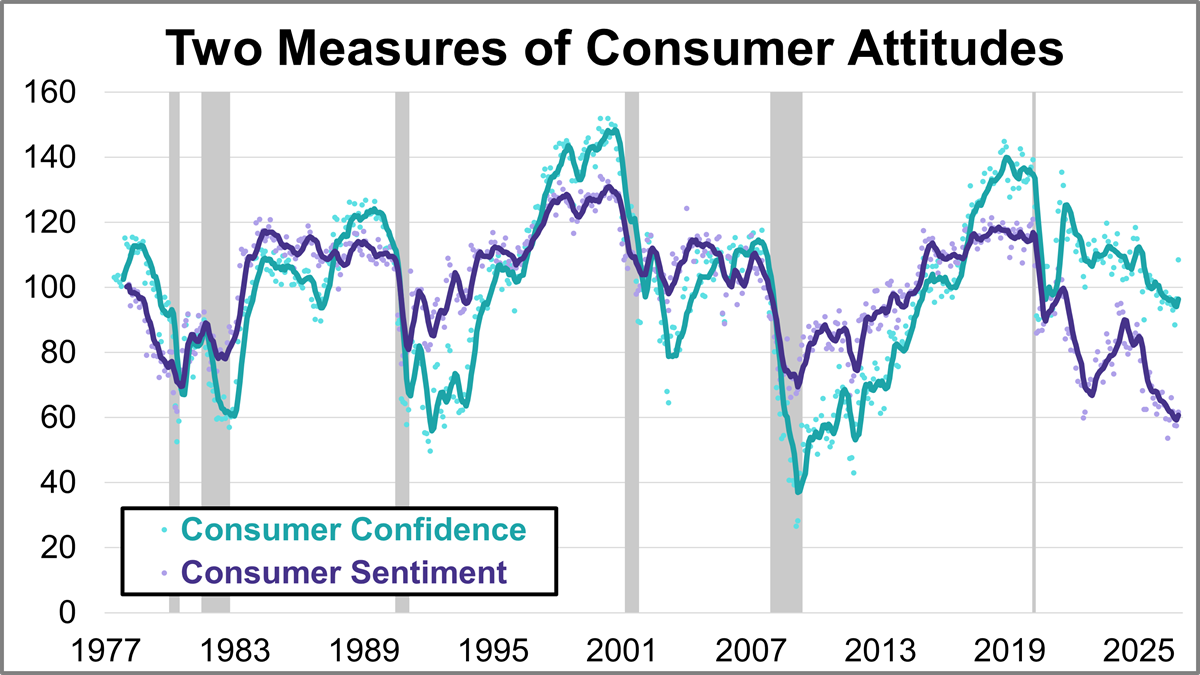
What are consumers thinking about the economy? Their collective mood offers crucial clues for businesses, investors, and policymakers alike. In November, the two leading benchmarks, the University of Michigan’s Consumer Sentiment Index (MCSI) and the Conference Board’s Consumer Confidence Index (CCI), offered similar views with both showing significant improvement on the heels of the midterm elections.
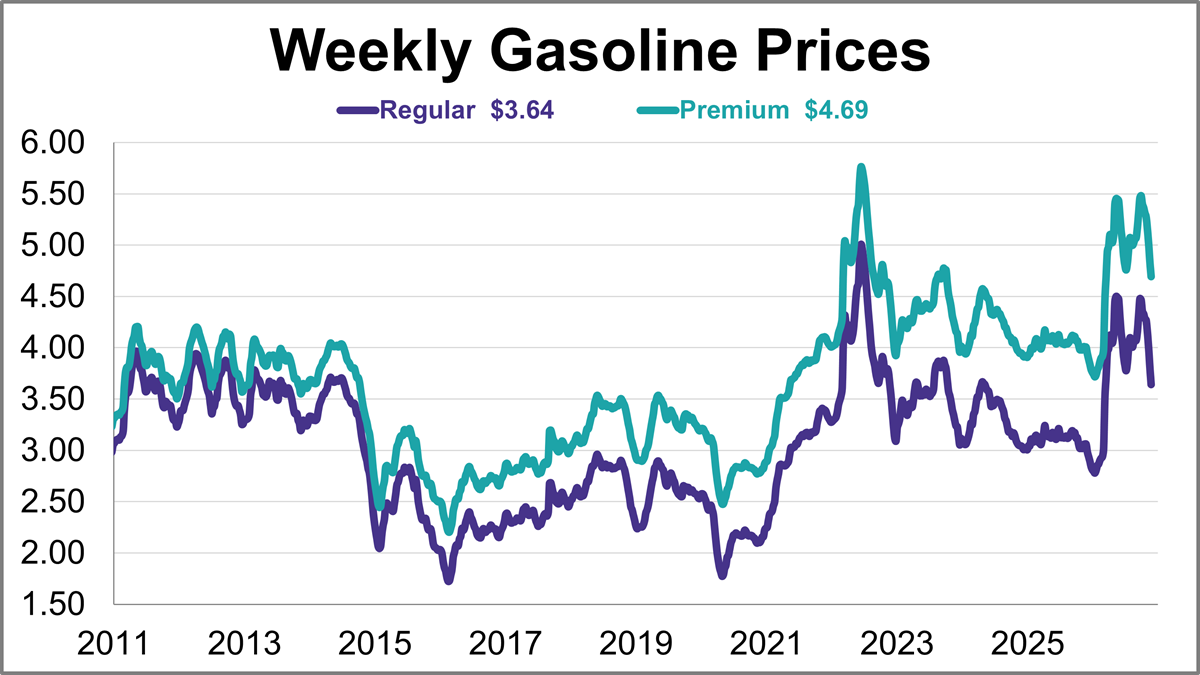
Gasoline prices dropped for a ninth straight week, hitting their lowest level in over eight months.
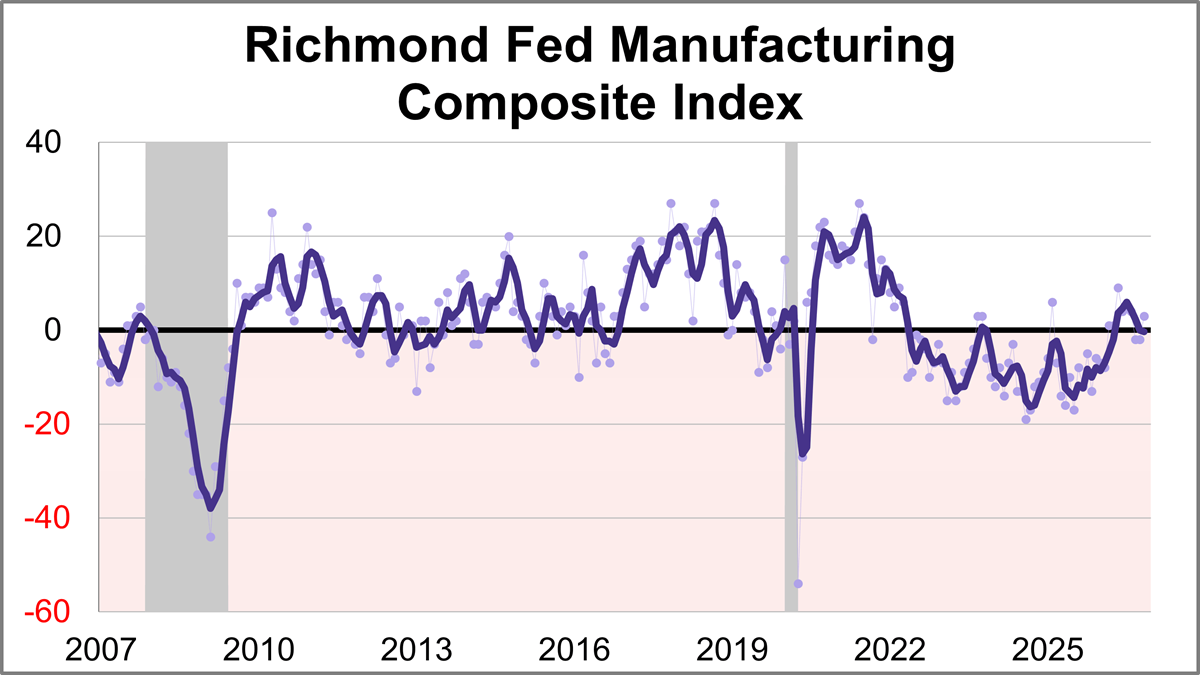
Fifth district manufacturing activity improved in November, according to the most recent survey from the Federal Reserve Bank of Richmond. The composite manufacturing index rose five points to 3, marking its first positive reading since August.
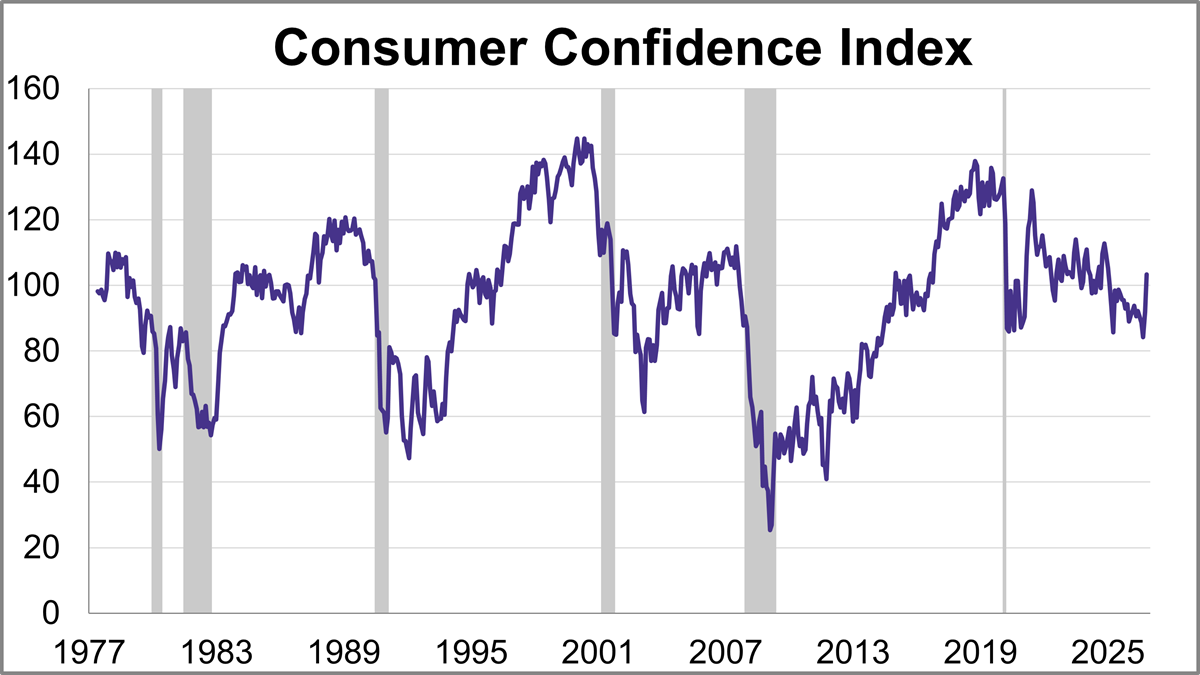
The Conference Board's Consumer Confidence Index® jumped to its highest level in almost two years in November, rising 11.4 points to 103.3. The index was far above the forecast of 92.4.
You might be tempted to call whiplash the new normal in today’s market — and you wouldn’t be wrong. Markets stumbled into the fourth quarter with a brutal rout that wiped out nearly $6 trillion in S&P 500 market value, sending the index down almost 9% and the VIX surging to 40.
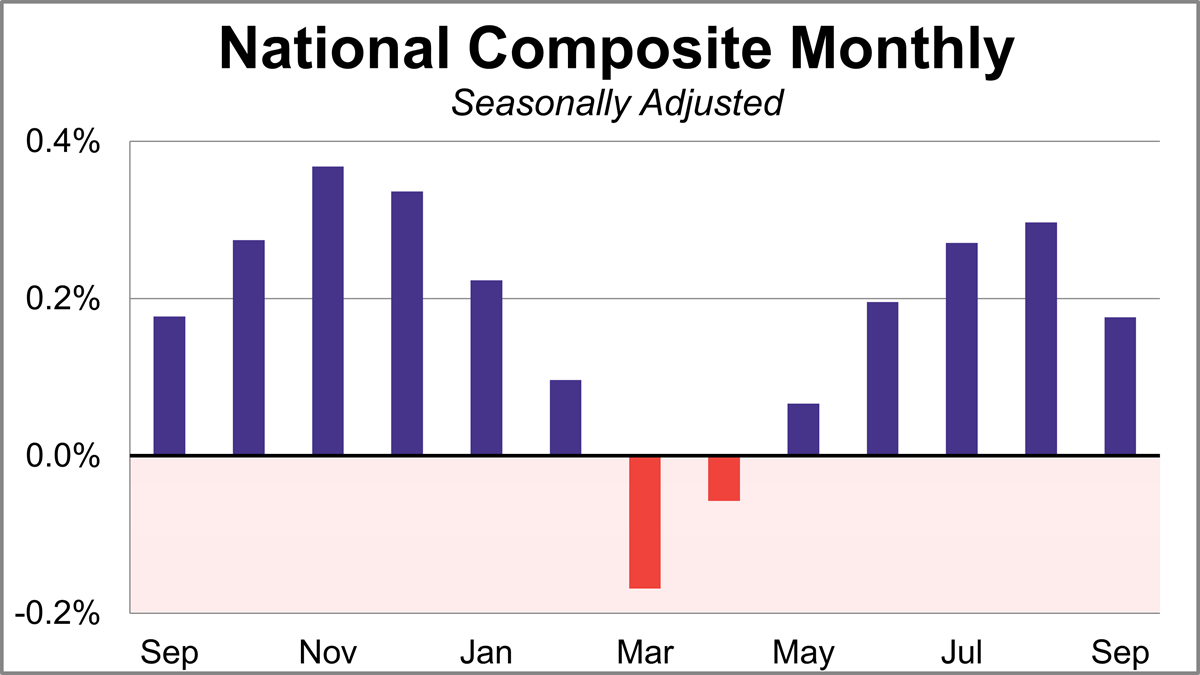
Home prices rose for a fifth straight month according to the S&P Cotality Case-Shiller index, but inflation continued to impact real housing returns.
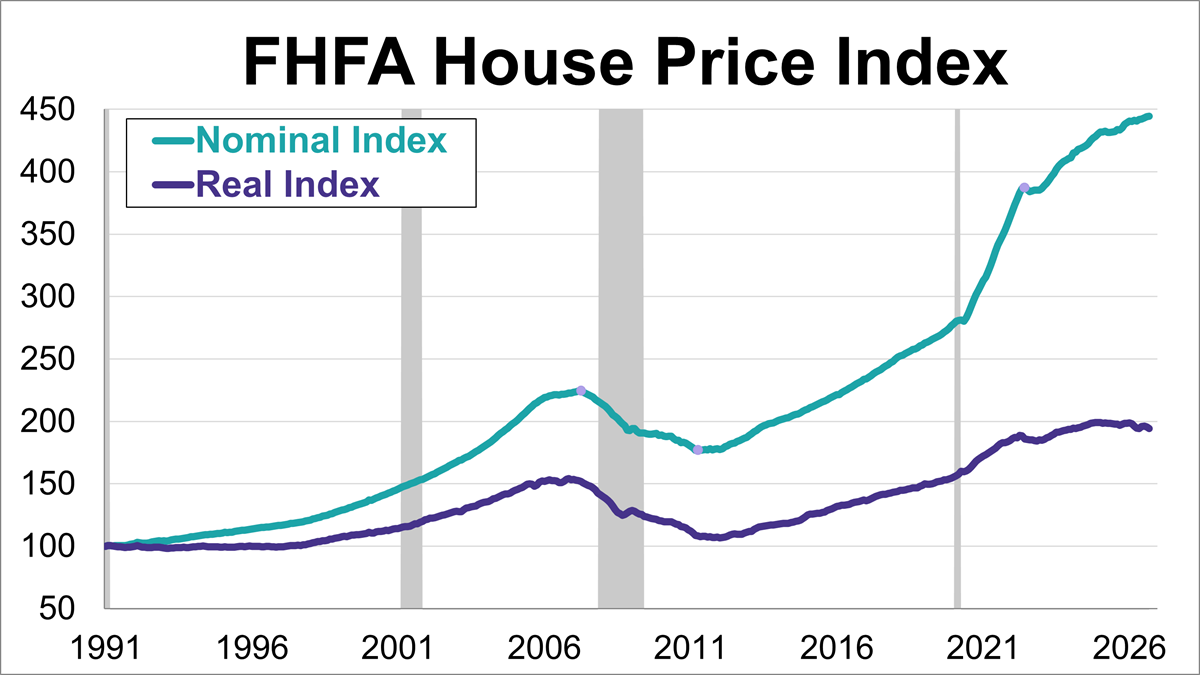
The Federal Housing Finance Agency (FHFA) House Price Index (HPI) rose less than expected in September, but still managed to reach a new record high.
The drama within Nvidia’s C-suite finally seemed to be subsiding. Yet this week has already begun with Jensen Huang back in the headlines.
The AI trade had quite a week. Anthropic listed on the Nasdaq, Nvidia’s CEO is out and Washington just tightened the screws on China’s access to American chips.
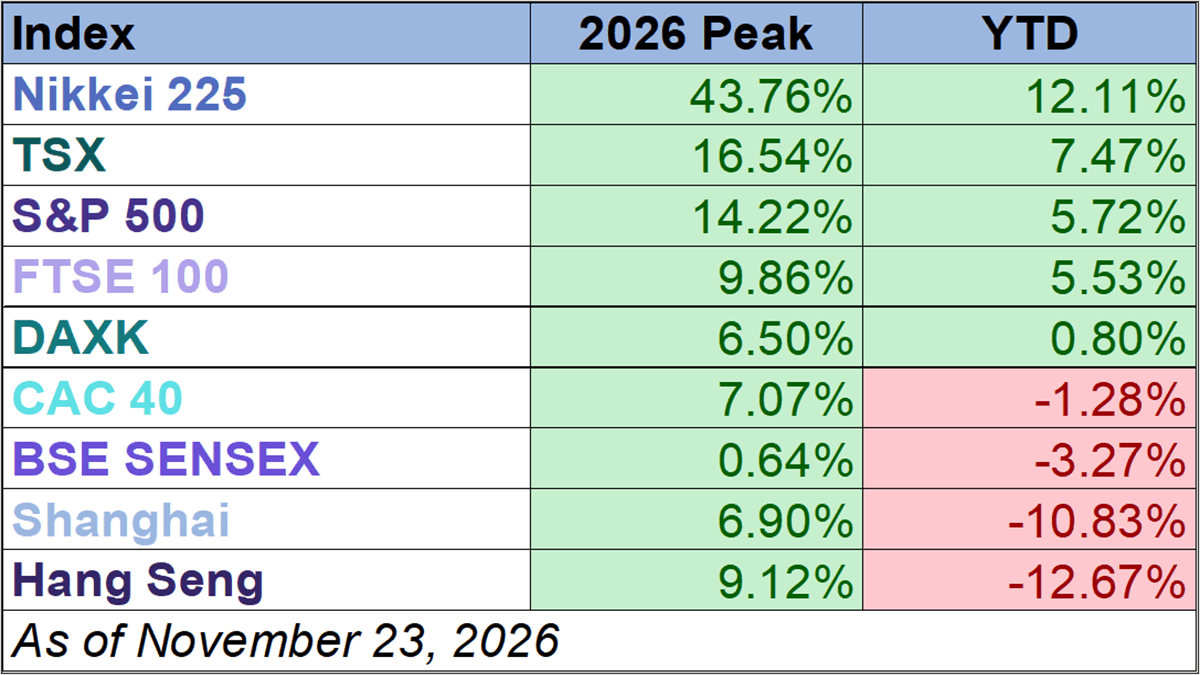
Five of the nine indexes on our world markets watch list posted year-to-date gains through November 23, 2026.
Join the experts at GraniteShares and VettaFi for a state-of-the-category briefing covering where flows are heading, what advisors are reallocating from, and how the autocallable has held up in different rate and volatility regimes.
Buy an S&P 500 index fund, set up automatic contributions, and forget about it. It's one of the most common pieces of retirement advice. The active, risk-based allocation shifts we discuss are just the tip of the iceberg, but they alone can help ensure a well-planned portfolio doesn't go awry.
Morningstar reports managed accounts (MAs) outperform target date funds by 5.9%, but Ron Surz warns that the stated MA advantage conflates non-QDIA professional advice with QDIA data-driven automation.
Gold jumped, rebounding from its biggest weekly decline in eight months, with dip-buyers stepping in as the market pared bets on a Federal Reserve interest-rate hike in December.
Quantum computing and strategic metals may look like separate investment themes. One centers on machines that could tackle problems beyond the practical reach of conventional computers. The other concerns the physical materials and processing capabilities needed to build advanced technologies.
Upon becoming chair of the Federal Reserve in May, Kevin Warsh pledged to run a tight-lipped central bank, one where decisions about the future path of monetary policy are made amongst policymakers behind closed doors rather than providing so-called forward guidance in public.
By October 31, the price of silver bullion dropped by 18.74% over the month, as noted by recent research from the Sprott team. According to Sprott’s Paul Wong, CFA, and Kenny Zhu, CFA, silver struggled as geopolitical uncertainty and risk-off sentiment affected precious metals.
October offered a reminder of how quickly market leadership can change and why strategies providing downside protection are always valuable, even if they’re not the flashiest allocation in a portfolio
Today we continue my series on debt and taxes. In brief, the federal government has a huge amount of spending, a less huge amount of tax revenue, and thus a huge debt. Almost everyone agrees we need to close this gap. We differ on how to do so.
An equity cash-and-carry strategy allows investors to seek additional return on excess cash by purchasing physical equity exposure, such as an ETF, and simultaneously selling corresponding equity index derivatives, such as futures or total return swaps.
Most investors spend their time thinking about what they own and who manages their money—active or passive, stocks or bonds, public or private. But few stop to consider how those assets are held. Two investors with identical strategies might see very different outcomes simply because of vehicle choice. That structure—or “wrapper”—can also impact taxes, flexibility and, ultimately, returns.
This week, Microsoft’s Outlook service went down. A software problem disrupted banking transactions at JPMorgan Chase and other major banks. And apparently, one router in Arkansas triggered an air traffic control communications failure that brought departures across the country to a halt.
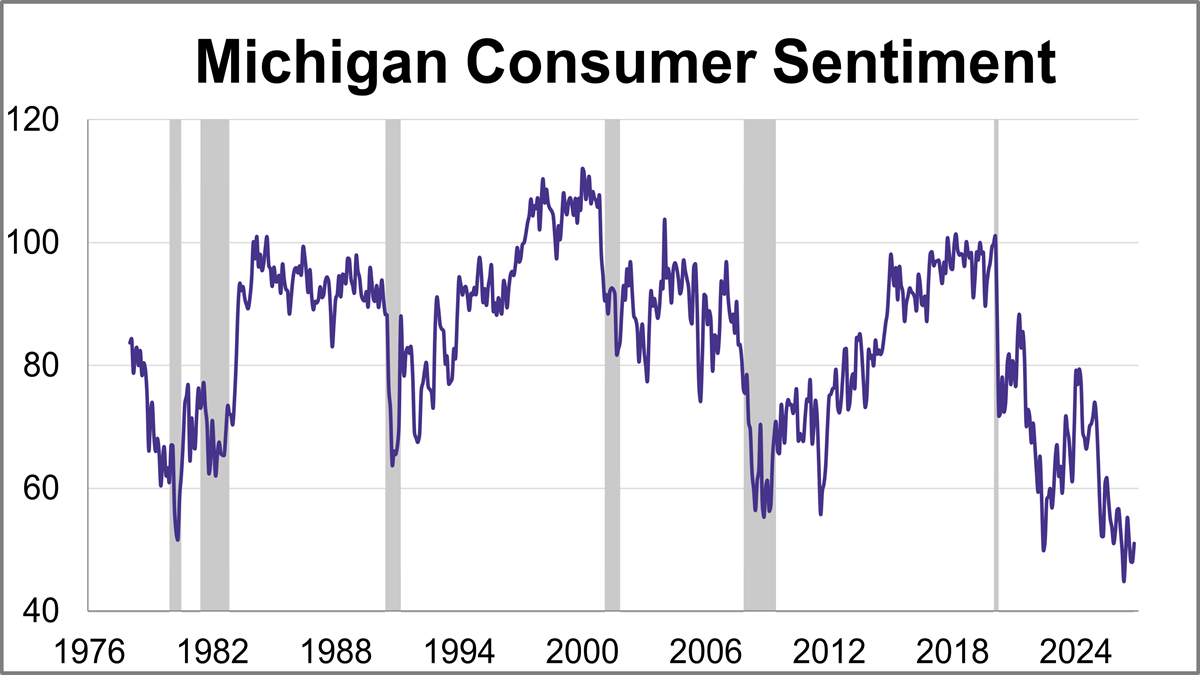
Consumer sentiment rises in November to the highest level in three months. The final November reading for the University of Michigan Consumer Sentiment Index came in at 51.5. This marks a 7.3% (3.5 points) increase from October.
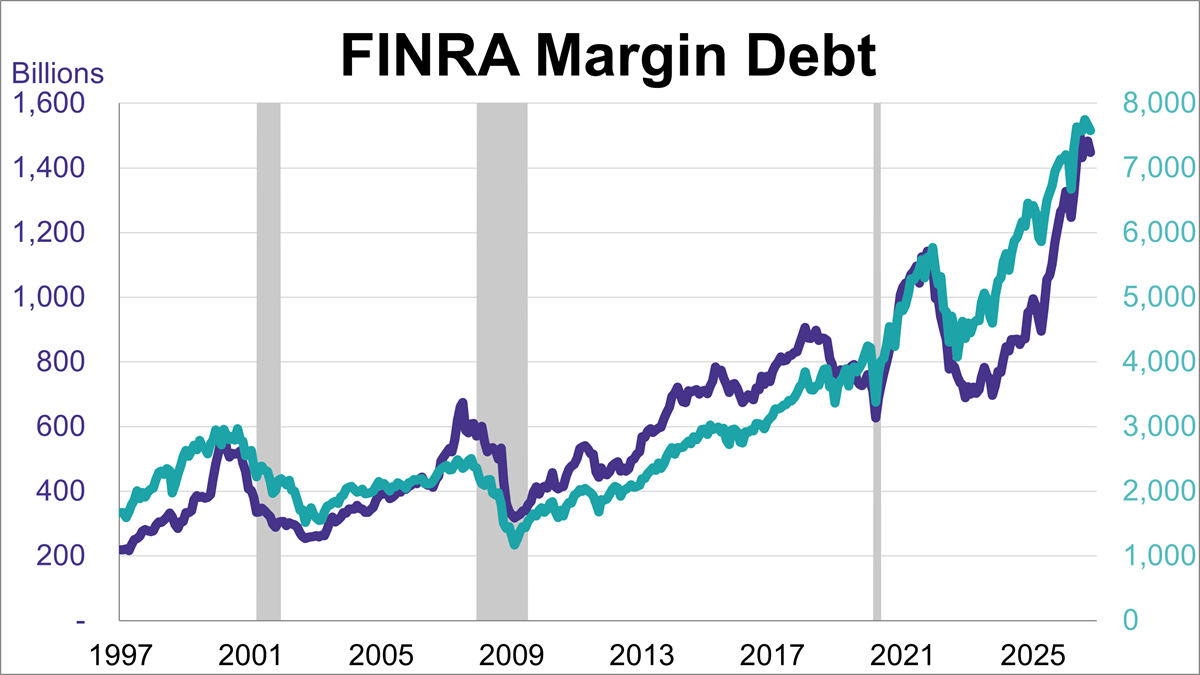
Margin debt decreased in October to $1.45 trillion. This marked a 2.3% decrease from September. Year-over-year figures are not available due to last year's government shutdown.
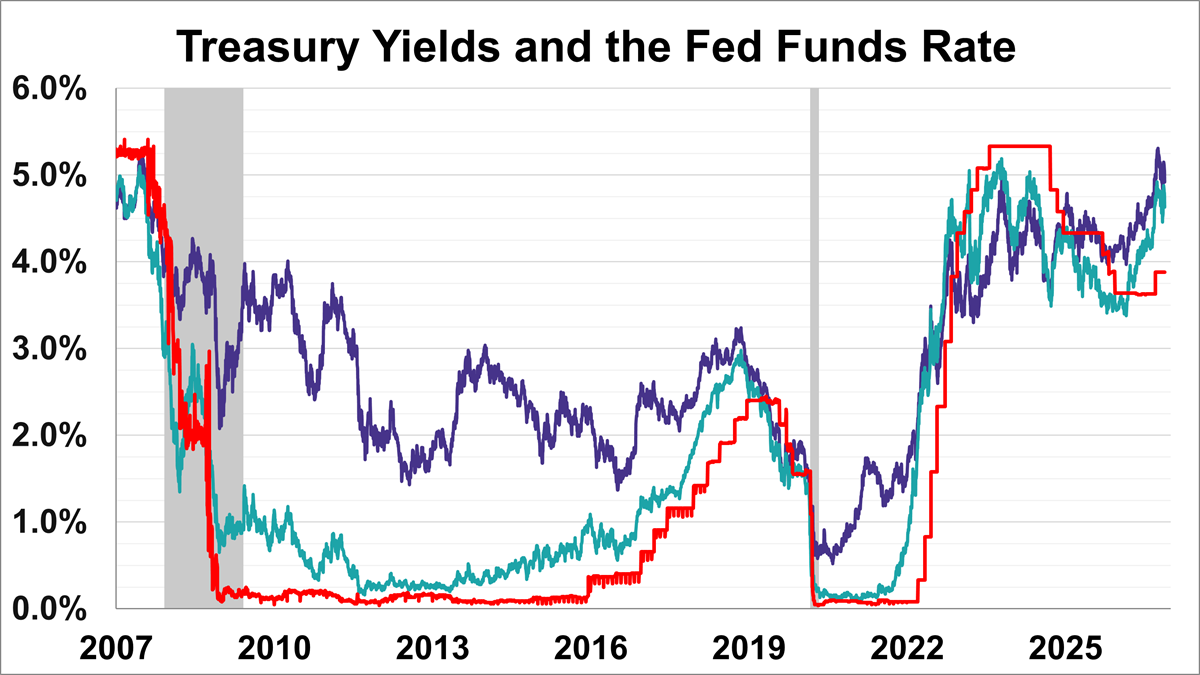
The yield on the 10-year note finished November 20, 2026 at 4.92% while the 2-year note ended at 4.63%.
Insurance was once viewed as stable, predictable—maybe a bit boring. But over the past decade, insurers have been innovators across the balance sheet. There are new asset classes and strategies on the asset side, new products and funding structures on the liability side, and recently, new equity approaches.
Gold fell for a fifth day — heading for the biggest weekly decline since March — as a hawkish Federal Reserve signaled more interest-rate hikes and a rout in AI stocks spurred selling across metals markets.
The dollar is headed for a fourth straight weekly gain as demand tied to the Anthropic PBC IPO added to support from expectations of further Federal Reserve interest-rate hikes and elevated US Treasury yields.
An OCIO provider should understand your organization's objectives beyond the investment program. Strategic recommendations should reflect broader institutional priorities and financial obligations.
Imagine an AI assistant that knows when you need to restock household essentials, finds a gift that fits your budget, and plans your vacations, all without cluttering your browsing history.
For much of the past several years, investors have been captivated by the extraordinary potential of artificial intelligence. Semiconductor companies, infrastructure providers and other beneficiaries of the AI revolution have attracted enormous amounts of capital, driven by expectations of a technological transformation that could reshape the global economy.
The Schwab U.S. Dividend Equity ETF (SCHD) is now the largest dividend ETF in the U.S. As of mid-November 2026, the fund held $125 billion in assets under management. It combines rigorous fundamental screening with a low 0.06% expense ratio. The 15-year old SCHD has gathered an impressive $28 billion of new money in 2026.
Eye-popping pay packages have made executive compensation a perennial Big Tech flashpoint. Yet headline pay figures often tell investors little about the quality of a company’s incentive structure. By contrast, compensation design can offer insight into accountability, innovation discipline and long-term shareholder outcomes—for technology companies of any size. We believe three dimensions of executive compensation can serve as a useful investment lens.
Earlier this year CME Group Inc. and Intercontinental Exchange Inc. each unveiled plans to build a futures market for compute: the processing power in data centers used to train and run artificial intelligence models. It’s a business dominated by closed-door deals involving the world’s most valuable tech giants.
Yields for municipal bonds and corporate bonds are currently attractive in our view, but what should investors consider when choosing between the two?
Since long and short-term interest rates reset in 2022, we believe there has been a proliferation of investors who continue to sit in cash rather than invest in securities. The thesis is usually two-fold: cash is ‘safe’, and it currently has a competitive yield.
It is too soon to say the worst is over, but the U.S. economy has grown through these and many other challenges. Our base expectation of continued growth remains intact.
Richard Clode considers what Nvidia’s first results of the post-Jensen Huang era reveal about the strength of AI demand, the evolving debate around 2028 capital expenditure, and the investment implications of its leadership transition.
The 2026 midterm elections could have significant implications for the future direction of federal tax policy. While Democratic control of both the House and the Senate may not have come as a surprise, the sheer number of seats gained in both chambers was largely unexpected.
GMO has posted a new 7-Year asset class forecast for October 2026.
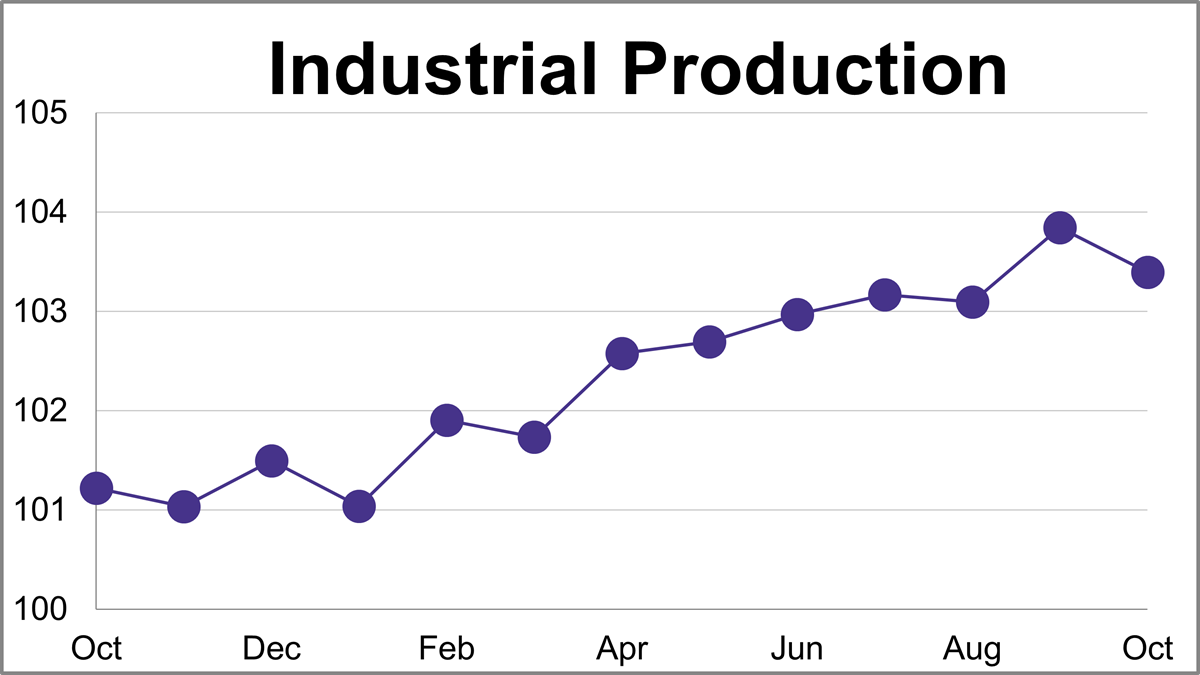
Industrial production fell 0.4% in October after September's 0.7% growth. This was lower than the expected flat growth and marks a 2.1% increase compared to one year ago.
Out of 340.1 million Americans, about 61 million Americans are 65 or older, and on average, more than half of financial planning clients are over 60. This means that the annual Medicare Open Enrollment period is a huge planning opportunity for financial advisors.
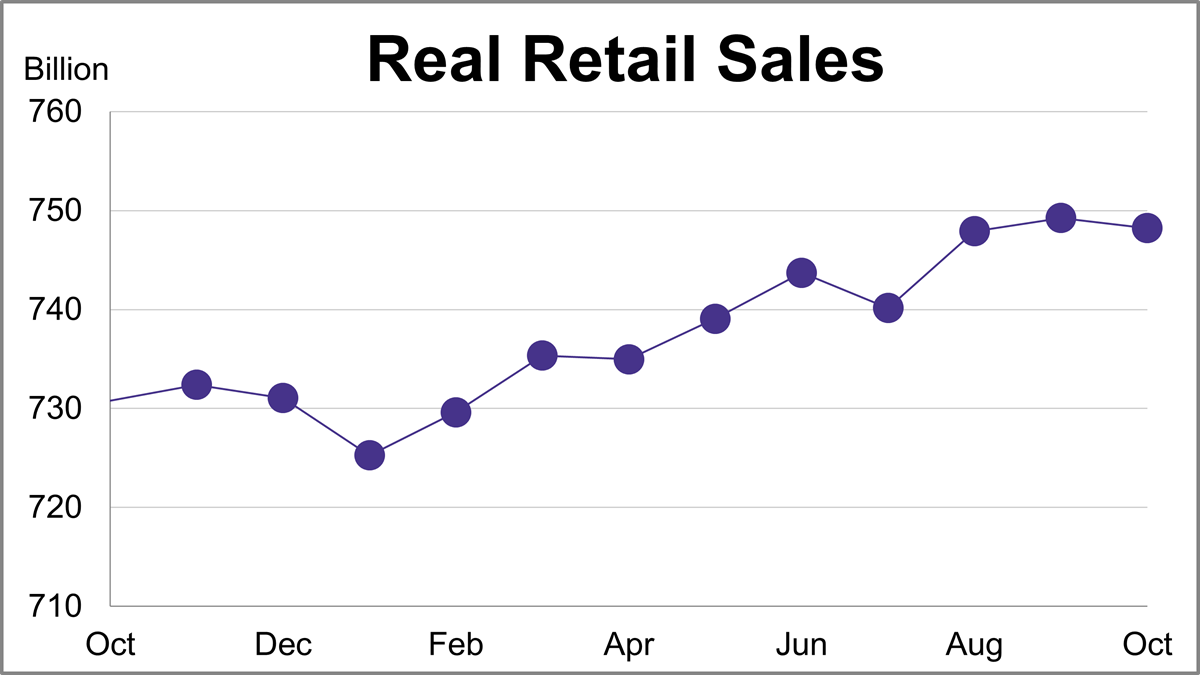
Nominal retail sales were up 0.2% month-over-month and up 6.8% year-over-year in October. After adjusting for inflation, real retail sales were down 0.1% month-over-month.