This year has offered a vivid reminder of how quickly market conditions can shift—from policy uncertainty, to a sharp geopolitical shock, to a focus on an AI-driven rally. As the themes of the day changed, the case for an overlay persisted.
When we talk about inflation, we usually focus on the Consumer Price Index (CPI). However, the Federal Reserve’s “preferred” inflation measure is the Personal Consumption Expenditure (PCE) index. What’s the difference and why does the Fed prefer the PCE?
The AI question is not really a technology question for your firm; it is a documentation question wearing a technology costume. Your advisors are already using it, and the SEC has already told you it is watching how you handle it. The only open question is whether, when an examiner asks, you can show your work.
Outlining clear expectations for success — desired outcomes that are both quantifiable and qualitative. It means setting objectives to meet these desired outcomes every week and then checking in to see to see if they met them.
This article is the first in a series about implementing AI while maintaining rigorous data regulation and governance practices. It’s no secret that the SEC understands the tectonic fracturing felt throughout the advisory space. How is the SEC adapting for AI implementation among RIA firms?
One of my most controversial opinions is that the 401(k) is one of the great financial inventions of the 20th century. It is not a view shared by many people — including, apparently, the inventor himself, Ted Benna, who argues that the 401(k) has mainly benefited the wealthy.
The US Treasury on Wednesday retained its previous guidance for future debt issuance, signaling no change in note and bond auction sizes well into 2027 even as federal borrowing needs climb.
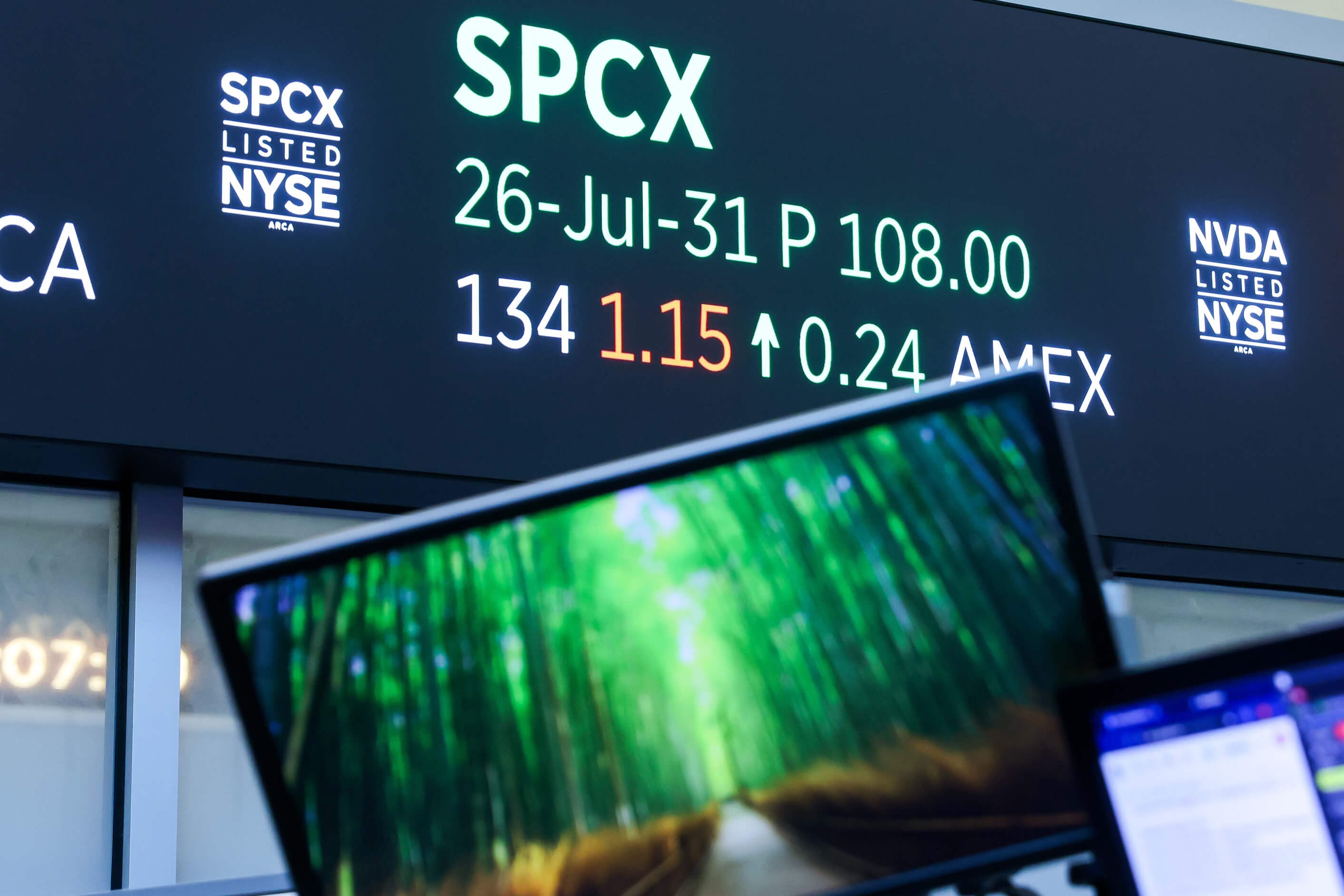
Investors hanging onto SpaceX shares after a plunge below their IPO price are bracing for the next potential hit, when $101 billion worth of stock becomes available for trading on Thursday.
High-net-worth investors and institutional managers continue to allocate heavily to muni bond ETFs to lock in attractive yields.
Developing economies must move fast in adopting artificial intelligence for their governments and businesses, the World Bank said, urging countries to adapt existing tools to local needs.
July 2026 was a flattish month for markets. The S&P 500 index was down slightly. Value did well, while momentum did poorly. Smallcaps, midcaps, and emerging markets, all of which have been the year’s best performers, had a bad month. Commodities, driven largely by oil prices, led the pack, as the fragile ceasefire in Iran failed to hold.
The greatest danger posed by AI is not the technology itself, but the race to deploy it before we know how to control it. The recent Hugging Face breach shows how seemingly minor human errors can be amplified by AI, underscoring the risks of treating safety as an afterthought.
The numbers are in, and the story of ETF adoption goes on undeterred. In July, ETFs saw their third month this year of asset inflows exceeding $190 billion. If 2025 was a record-breaking year for ETF asset creation, 2026 is promising to upstage it.
New clients frequently arrive with portfolios that have been built over many years, often across multiple market cycles and advisory relationships. While these portfolios may have generated strong returns, they can also contain concentrated positions, legacy holdings or allocations that no longer align with the client's objectives.
Many of the most critical components of AI infrastructure are produced by a small and increasingly consolidated group of highly specialized companies.
While the Fed left interest rates unchanged, Treasury yields moved notably higher throughout the week, with 30-year yields eclipsing their highest levels in nearly two decades as investors reassessed the outlook for inflation and monetary policy. The S&P 500 ended 1.06 percent higher to close a volatile week of trading, recovering from a mid-week sell-off.
Kevin Warsh considers fewer Fed meetings, the Fed holds rates steady, the Senate moves to avert a shutdown, a new BLS chief is confirmed, and midterms near.
LPL Research highlights strong corporate earnings, AI-driven growth, and a favorable equity outlook while monitoring inflation, oil prices, and risks.
July was an eventful month for both domestic and international markets, with US-Iran tensions flaring up, increasing energy prices and changing investor expectations for the Federal Reserve (Fed) cutting rates.
The financial markets expected the Federal Reserve to leave interest rates unchanged at its recent meeting, and it did just that. However, three members of the FOMC dissented, voting to raise rates by 25bps in an effort to combat stubbornly high inflation.
A period of financial recovery for US hospitals is coming to an end as healthcare systems brace for the full force of federal policy changes and a wave of aging baby boomers.
The Federal Reserve’s preferred gauge of price inflation is set for a methodological update, as the Bureau of Economic Analysis (BEA) is expected to implement revisions to its price index for Personal Consumption Expenditures (PCE) as early as September.
State Street's July Flash Flows report highlights record ETF inflows, and a major rotation into value and dividend strategies.
Many ESG advisors can explain what’s driving their clients’ performance, but they stop short of detailing why. When an advisor fails to reveal the reasoning behind a strategy, that’s when a client loses trust — and how accounts are ultimately lost.
The concept of the 530A accounts is sound, and the initial $1,000 deposit is worth having. So claim the seed money if your child qualifies. But before you make additional contributions, compare these accounts to the other options and choose what is appropriate for your circumstances.
A good wine tasting can reveal preferences people didn’t know they had, and a good advisory process should do the same. Because the most important time to discover that a client’s portfolio exceeds their tolerance for risk is not after the market has fallen. It is before the bottle is opened.
Social Security’s short-term financing crisis is no longer a distant actuarial projection — it is a near-term event with direct implications for current retirees, individuals approaching retirement, and younger workers. Advisors must understand not only the potential fixes, but also the hard constraints that sharply limit what Congress can realistically do in the next several years.
This summer has offered little opportunity for a lull. Investors have contended with Federal Reserve (Fed) policy uncertainty, renewed tariff-driven inflation concerns, escalating tensions in the Middle East, questions about the durability of AI-related investment spending and a packed earnings calendar.
Treasuries rose on Tuesday as signs of progress toward a diplomatic resolution of the Iran war sent oil prices lower, curbing expectations for more than one Federal Reserve interest-rate hike in the coming year.
Northwell Healthcare Inc., the largest healthcare provider in New York, is considering selling up to $800 million of municipal bonds, according to a Friday filing.
Investment firms for billionaires hailing from the US, Europe and Asia are driving a wave of deals for robotics AI businesses, defying fears about a bubble in the machine-learning sector.
SpaceX’s first earnings release following its record initial public offering is one of the most anticipated reports of the summer for traders on Wall Street and beyond. Whether it’ll give investors a reason to buy the sinking stock is another matter.
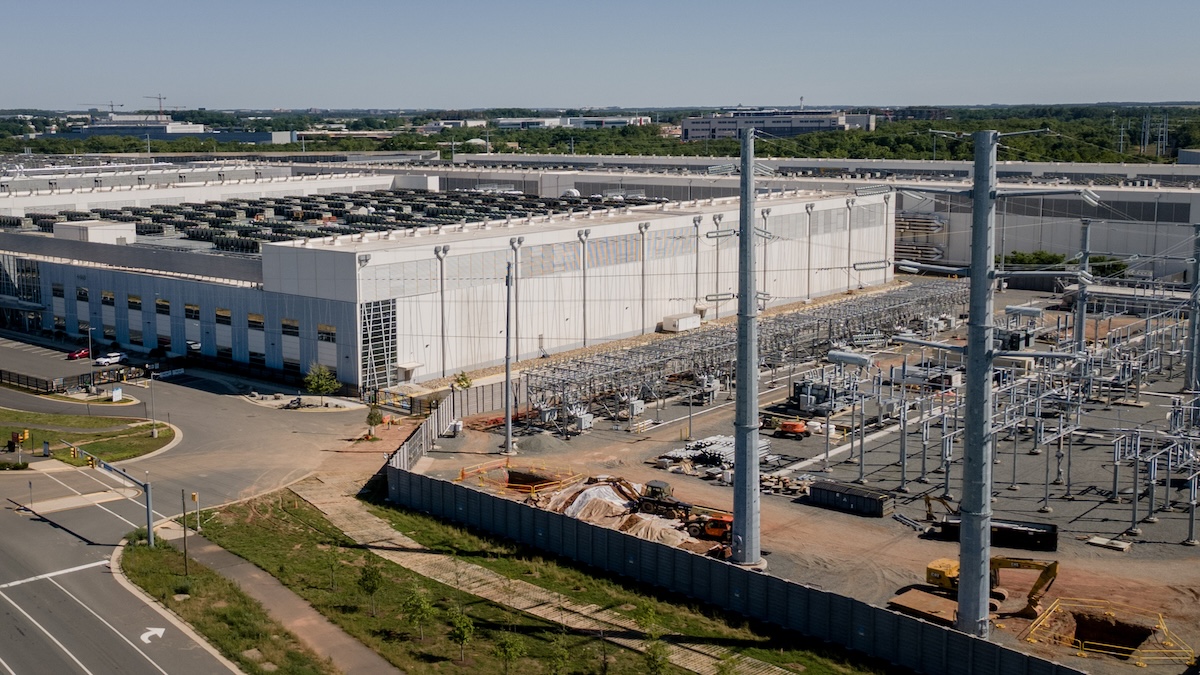
Power utilities across the US are already strained from AI data centers. But they’re increasingly facing an even bigger threat: that developers will be forced to walk away from projects, leaving households on the hook for massive infrastructure bills.
The market spent much of this week trying to interpret what Fed Chair Kevin Warsh meant rather than what he actually said and that was entirely avoidable. The decision to leave rates unchanged was defensible. What wasn’t defensible was Warsh’s lack of explanation.
Just as important, the dollar and U.S. Treasuries have continued to behave like hedges in periods of broader market unrest (driven by geopolitics or other conditions). When risk assets come under pressure, Treasury yields have generally fallen, or the dollar has tended to find support.
Lately, it seems like you can’t open a financial publication without stumbling across another article declaring the 60/40 portfolio dead. The pitch is everywhere: bonds are broken, the old rules no longer apply, and investors should modernize by swapping the bonds in their portfolio for Bitcoin, gold, or whatever alternative the asset management industry is currently selling.
The latest earnings reports from Big Tech have laid bare a growing divide in the market's appetite for massive AI spending.
Kevin Warsh became Fed Chair barely ten weeks ago. He has presided over just two sets of monetary meetings and held two press conferences. Nonetheless, more than any chairman since at least Alan Greenspan, he has come under harsh criticism by the press right out of the gate.
You spent years building your retirement savings with one goal in mind: having enough to live comfortably when you stop working. The strategy that got you here probably leaned heavily on growth. But as retirement gets closer, that same approach may not be the right one to carry you through it.
In January 1790, the House of Representatives put a simple question to its new Treasury Secretary: what should America make for itself? Alexander Hamilton took almost two years to answer.
S&P 500 companies are turning in their strongest earnings season in five years. And a handful of sectors are doing most of the heavy lifting.
Advisors and investors of all kinds are used to closely watching the outcome of each of the Federal Reserve’s meetings, given how critical interest rates are to equity and fixed income markets alike. However, the recent July Fed meeting was particularly crucial. Many were uncertain what direction the central bank would go with interest rates.
Every time China tightens its grip on rare earths, the rest of the world becomes a little better at finding them.
The US economy grew less than expected during the second quarter of the year, up 1.5% quarter over quarter, dragged down by strong growth in imports. However, final sales to private domestic purchasers increased by 3.9%, underscoring the strength in domestic demand, which continues to rely too heavily in AI investment spending and strong spending from high-income consumers, or what has been called the K economy.
Market volatility—and the feelings of uncertainty that follow—tend to frighten investors. Yet for investors with an overlay program, one approach to volatility is evergreen—rebalancing.
Electricity has become a major global focus. It essential to powering the modern economy: regions with capacity will generate growth, while those without adequate supplies may be vulnerable to shocks.
As companies race to capitalize on the AI boom, water security is emerging as a material risk across the value chain. While data centers attract headlines, semiconductor fabrication remains one of the value chain’s most water-intensive activities, requiring reliable supplies of high-purity water.
There are 38% fewer companies listed on U.S. exchanges today than at the peak in the mid-1990s. The forces behind that decline—regulatory burden, the abundance of private capital, and the quiet disappearance of mid-sized public companies—are structural, not cyclical.
Growing demand for AI-savvy workers has led some companies, including software makers International Business Machines Corp., Shopify Inc. and Cloudflare Inc., to ramp up entry-level hiring, betting that recent Gen Z graduates will be able to do more with AI tools than existing employees.
Sequoia Capital led a $1 billion funding round for Valar Atomics Inc. that the nuclear startup says will help it shift from demonstrating small reactors to producing them in volume.