Join the experts at SS&C ALPS Advisors and CIBC Private Wealth for a product due diligence session covering the ALPS Clean Energy ETF (ACES).
After years of working with advisors and studying client behavior, the reasons clients leave come down to three core patterns. They are predictable. They are preventable. And they almost always trace back to a conversation that never happened in the first meeting.
I have spent the better part of my career watching how organizations manage access to sensitive data — who has it, who should have it, and how long it takes anyone to notice when those two things stop matching. In financial services, that gap tends to be measured in months.
A wave of profit taking in the gold market has brought a three-year bull run to an end, but there’s little evidence yet that investors are putting on large-scale short positions in anticipation of further declines.
In 2003, the Pentagon’s Defense Advanced Research Projects Agency made a visionary attempt to use prediction markets for geopolitical forecasting. However, it created a huge controversy in Congress and was quickly killed.
During the June 30, 2026, World Cup round of 32 match between France and Sweden at the 82,500-capacity MetLife Stadium, the logistical scale of a global mega-event was on full display. Moving 80,663 fans safely through a sprawling transit corridor and securing a massive open-air venue demands complex engineering. Underpinning the operation is a capital-intensive ecosystem of physical AI, advanced sensors, and automation software.
Rising prices increase the value of collateral in every margin account, which automatically increases how much each investor can borrow under Reg T. Debt rises BECAUSE the market rose, not the reverse. That single fact is what breaks the ratios we’re about to examine, and it lies at the core of why margin debt risk is so often misjudged.
Fixed income transition costs are increasingly driven by what happens in credit markets. As credit trading becomes more efficient, the cost of transitioning fixed income portfolios is coming down, and how those transitions are executed is changing too.
AI may reshape the labor market in ways that are difficult to predict, and it won’t be the first time this has happened. In the short term, the labor market appears to have stabilized and there are some early signs of acceleration.
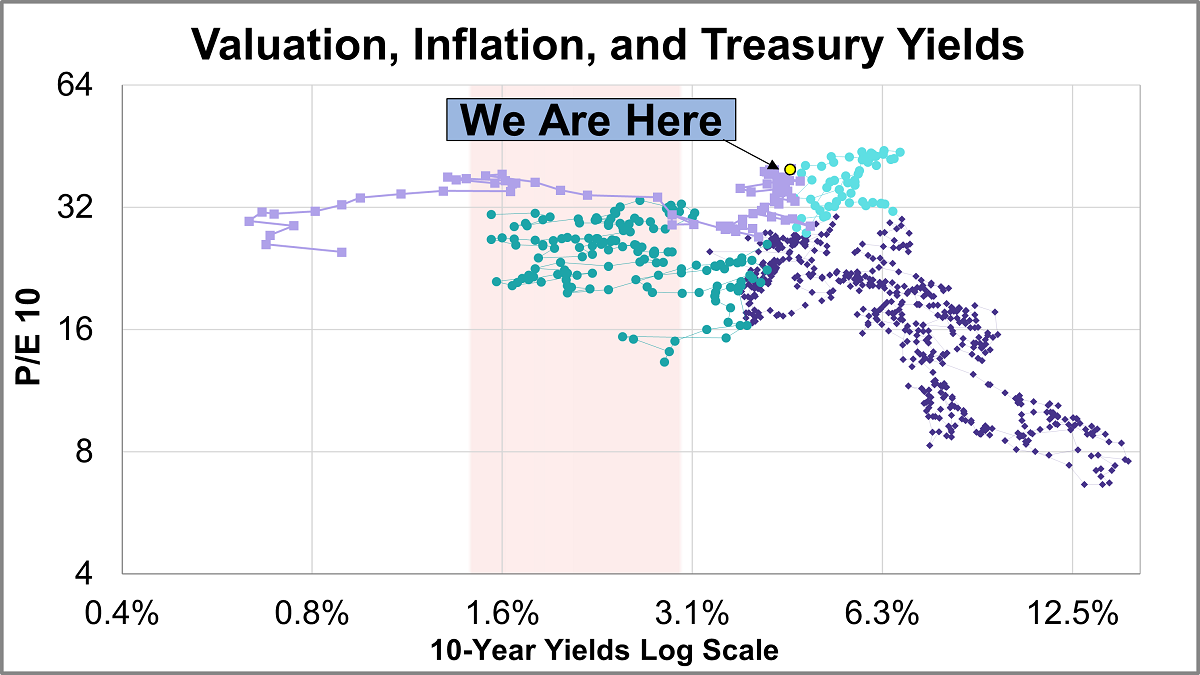
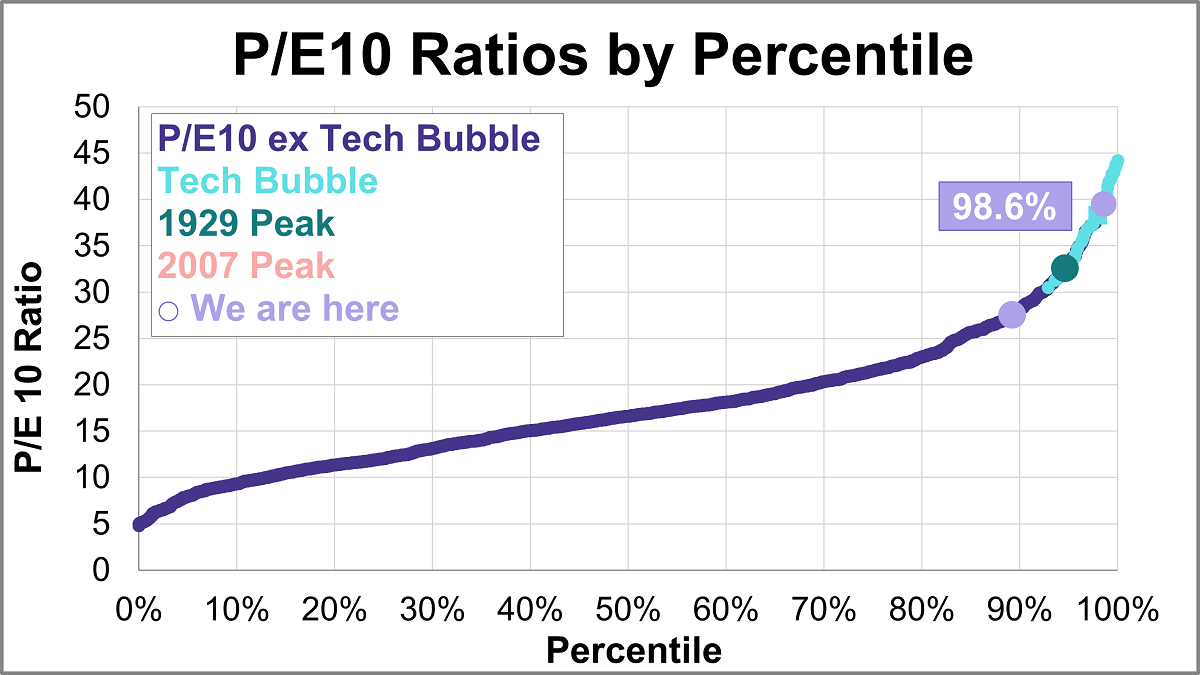
Our monthly market valuation updates have long had the same conclusion: US stock indexes are significantly overvalued, which suggests cautious expectations for investment returns. This analysis focuses on the P/E10 ratio, key indicator of market valuation, and its correlation with inflation and the 10-year Treasury yield.
Here is the latest update of a popular market valuation method, Price-to-Earnings (P/E) ratio, using the most recent Standard & Poor's "as reported" earnings and earnings estimates, and the index monthly average of daily closes for the past month. The latest trailing twelve months (TTM) P/E ratio is 25.3 and the latest P/E10 ratio is 39.5.
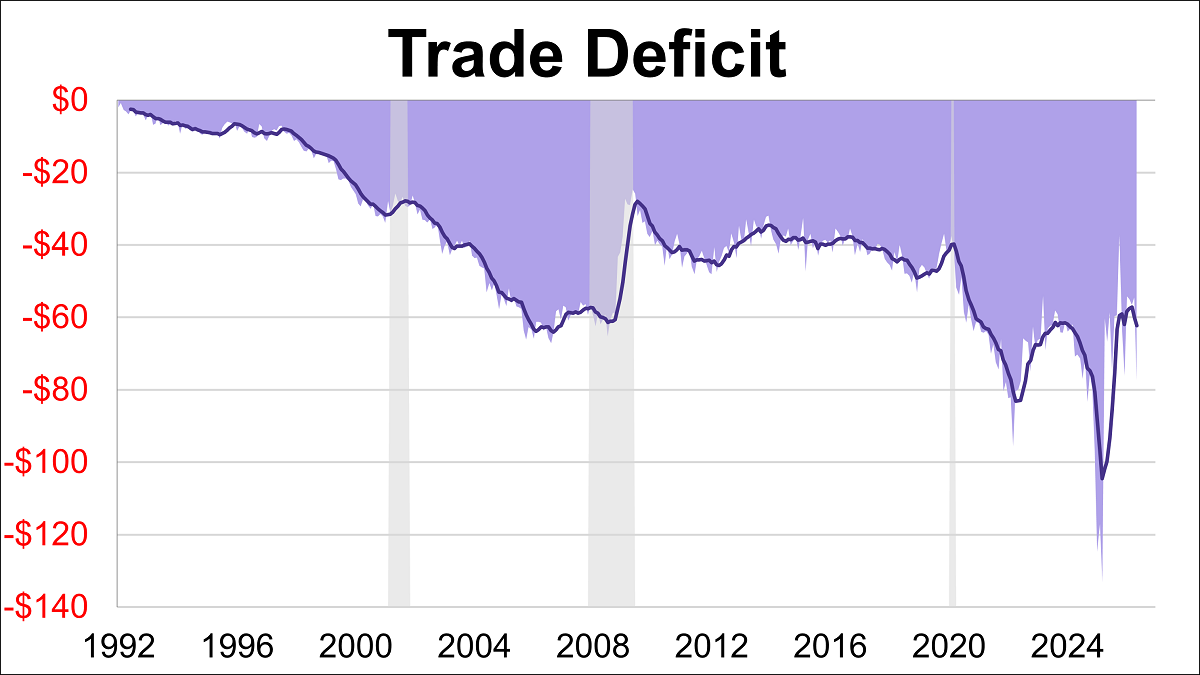
The U.S. trade deficit expanded over 40% in May to $77.59B, its widest gap since March 2025. The latest reading missed the forecast of -$78.30B.
For years, the Magnificent Seven tech giants commanded investors’ attention, dominating the S&P 500 Index and determining which way the overall stock market was headed. Those days are over.
The higher the rally in technology high-flyers, the louder the anxiety around a new wave of turbulence in the group.
ETF Database saw a massive surge in readers this past June. The most popular pieces focused on everything from breaking SpaceX IPO news to the technical mechanics behind top-performing ETFs.
Chris Galipeau discusses high-conviction insights that go beyond media headlines.
Higher rates, weaker underwriting, and software concentration are exposing vulnerabilities in direct lending and leveraged loans, while high yield bonds appear better positioned.
Right now, advisors are facing a massive generation of clients trying to navigate retirement. That’s challenging enough, but with inflation and the cost of living rising, assuaging those clients’ concerns and delivering for them has become much trickier. Income ETFs can help meet those clients’ goals, with new, daily covered call ETFs an appealing option.
Close to 40 years ago, I moved from Canada to the U.S. after acquiring a controlling interest in U.S. Global Investors. I’ve built my entire life and career here, and in all that time, I’ve never stopped marveling at my adopted country.
Bypass the headaches of individual closed-end funds. Discover how Invesco's PCEF bundles over 100 CEFs to capture June's debt rallies.
The U.S. Treasury launched the Trump Accounts for childhood wealth building. Discover the five low-cost index ETFs anchoring the program.
Every sector chart tells you where the crowd is. Almost none tell you the thing a stock picker actually needs to know: Inside a given sector, how much room is there to beat the average name?
Wage growth peaked four years ago. Since 1985, it has led CPI by three to seventeen months in every single cycle. The May 4.2% inflation print is the noise. Watch the wages.
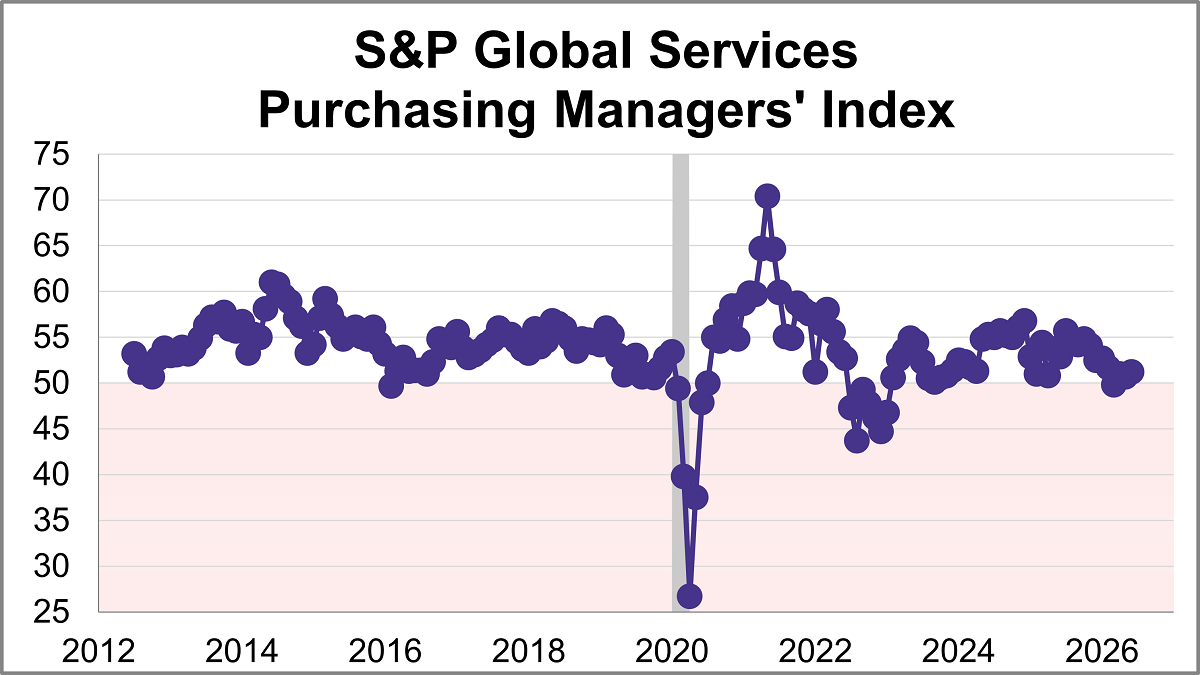
The June U.S. Services Purchasing Managers' Index (PMI) from S&P Global rose 0.5 points to 51.2, indicating a modest rise in service sector activity. The latest reading was just below the forecast of 51.3 and marked the strongest expansion in four months.
While the Federal Reserve left interest rates unchanged at the latest meeting, investors increasingly speculate that rate hikes are on the table in 2026.
The US industrial robot industry is characterized by low growth and highly customized projects. Artificial intelligence holds out the hope to change that, especially when it comes to robots that can move and work safely around humans.
Goldman Sachs Group Inc. sees the yen weakening to 165 per dollar in a year’s time, driven in part by Japan’s interest rate differentials with the US.
Oil held onto its recent run of losses, with traders looking for clues on flows through the Strait of Hormuz as barrels continue to return to the market after months of disruption.
US stock futures climbed early Monday as investors gauged whether the artificial-intelligence trade can regain its footing after one of its sharpest pullbacks in more than two years.
The most interesting shift in market price action in June was the strong outperformance of value stocks compared to the broad market and tech
Six months is enough time for a lot to change. Your income, your expenses, your goals, and even the broader economy may look different than they did at the start of the year. And a plan that made sense in January might not fit the reality you're living in now.
The U.S. nuclear sector advanced on two fronts in recent days. Advanced microreactors completed a key federal target while the existing commercial fleet signed a landmark agreement with a major retailer. These moves show momentum at both the innovation edge and the operating base.
The war in Iran has delivered an oil shock into a bond market that had not fully shaken inflation pressures. Higher energy prices have revived concerns about the path of inflation just as central banks were edging toward rate cuts, forcing a reassessment of what investors require to hold long-term bonds. That reassessment is now playing out in higher long-term yields and steeper yield curves globally.
This July, the United States marks its 250th anniversary, and that has many Americans thinking about what independence really means. In many ways, genuine independence is about more than political rights. It’s financial.
Federal estate taxes may not affect most households, but state death taxes can still be significant. Learn key planning considerations and strategies to help preserve wealth.
The strong run by the Nasdaq-100 and the S&P 500 the last few years has loaded portfolios with heavy concentration risk. As a tiny group of mega cap tech giants shapes the market, finding meaningful diversification has become a priority for advisors. Data from last week’s VettaFi Mid-Year Market Outlook Symposium confirms that wealth managers are actively looking down the market-cap spectrum to rebalance risk.
At VettaFi, we’ve been talking a lot about bottlenecks as a concept. Some of the brightest equity market opportunities for capital growth are tied to bottlenecks in a supply chain-context.
Slate Auto, the electric vehicle start-up backed by Jeff Bezos, is a grand experiment in whether austerity sells — and a warning for the US auto sector.
U.S.-listed ETFs locked in a record-breaking first half of the year. Read the analysis on active ETFs, fixed income shifts, and equity flows.
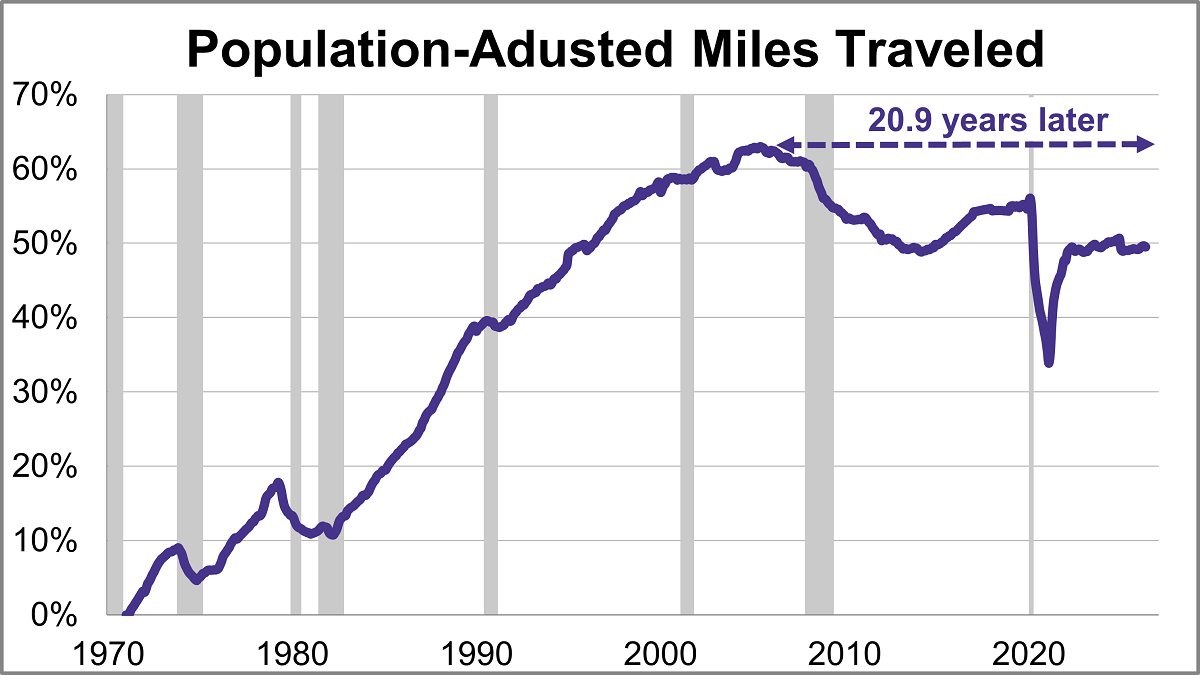
Travel on all roads and streets decreased in May. The 12-month moving average was down 0.06% month-over-month but was up 0.93% year-over-year. However, if we factor in population growth, the 12-month MA of the civilian population-adjusted data (age 16-and-over) was down 0.10% month-over-month and up 0.32% year-over-year.
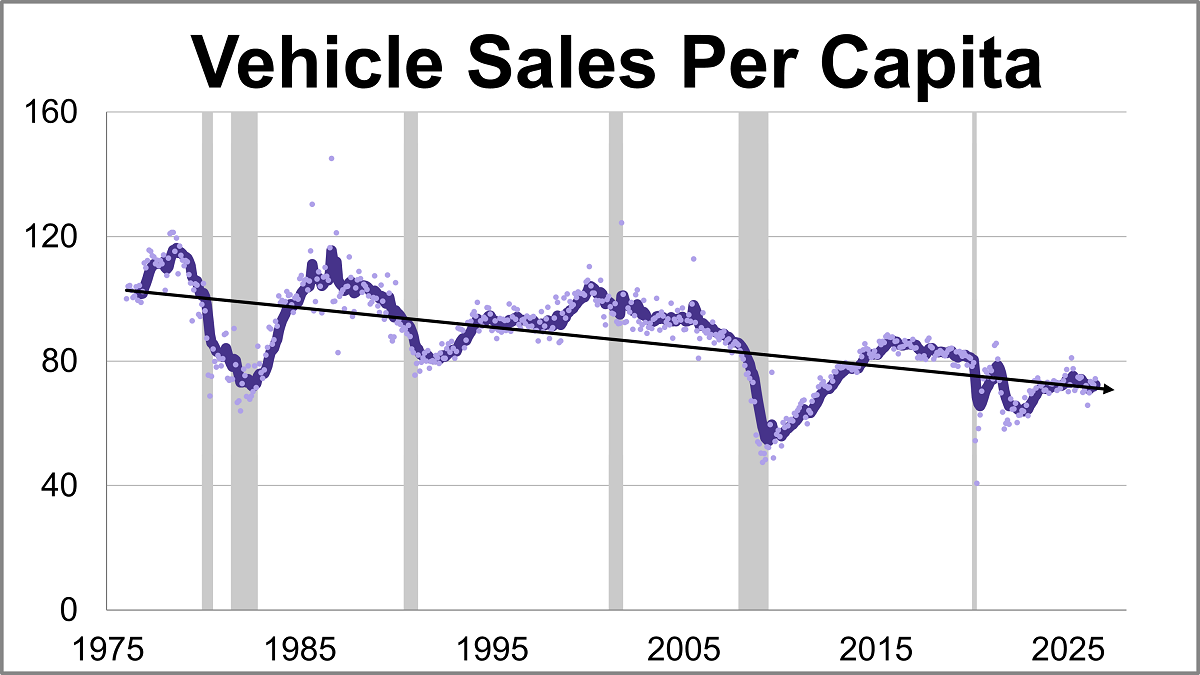
Vehicle sales rose to their highest level in nine months in June, coming in at a seasonally adjusted annual rate of 16.523 million units. This represents a 2.8% increase from the previous month and a 4.4% rise from one year ago.
The second quarter wraps up today, and it was a good one. With the S&P 500 having returned more than 14% (including dividends) with just one trading day left, it will almost certainly end up being the best quarter for the index since the second quarter of 2020. Technology was the leader despite the June weakness.
The Mag 7 has been the single largest driver of the stock market’s performance three straight years, accounting for over 20% of the S&P 500’s performance. However, there is a performance divergence happening in 2026 as the S&P 500 continues to go up, while the Mag7 go down.
The artificial intelligence boom has a power problem, and Wall Street is betting billions on companies that promise to solve it — even if some of the technology hasn’t been fully developed yet.
At first glance, allocating to emerging markets appears to add diversification to a portfolio. Look more closely, and the reality is more nuanced. In the late 1990s, the MSCI EM index was dominated by materials and telecoms, driven by the growth of mobile telephony and the internet bubble.
The business of overseeing individually tailored municipal-bond portfolios has continued to grow rapidly, turning those money managers into the biggest holders of state and local government debt, according to JPMorgan Chase & Co.
Federal Reserve Chairman Kevin Warsh said price risks have come down in recent weeks, while repeating his determination to bring inflation back to the US central bank’s 2% target.
Markets may have ended the first quarter with a thud, but stocks put another record run in the books to close out the first half of 2026. The U.S. ETF market had already shattered records, crossing the $15 trillion threshold and cruising past $1 trillion in net inflows right before summer officially began.
It’s been a long time coming for the asset management world, but ETF share classes are now a reality. Fidelity Investments has joined that movement, with the launch of its first ETF share classes for some of its mutual funds.
As growth stumbled, the S&P 500 Momentum Index captures a 7.5% gain in June and a 44% gain in the second quarter.