Investors often treat growth and dividends as opposing camps, but in practice, this means the two can complement each other.
Equity investors are meting out some of the harshest punishments ever for companies that miss expectations, just as strategists sound the alarm that earnings growth has likely peaked.
Advisor Perspectives is launching a new website in January 2027. Learn what’s changing, and what to expect from the updated experience.
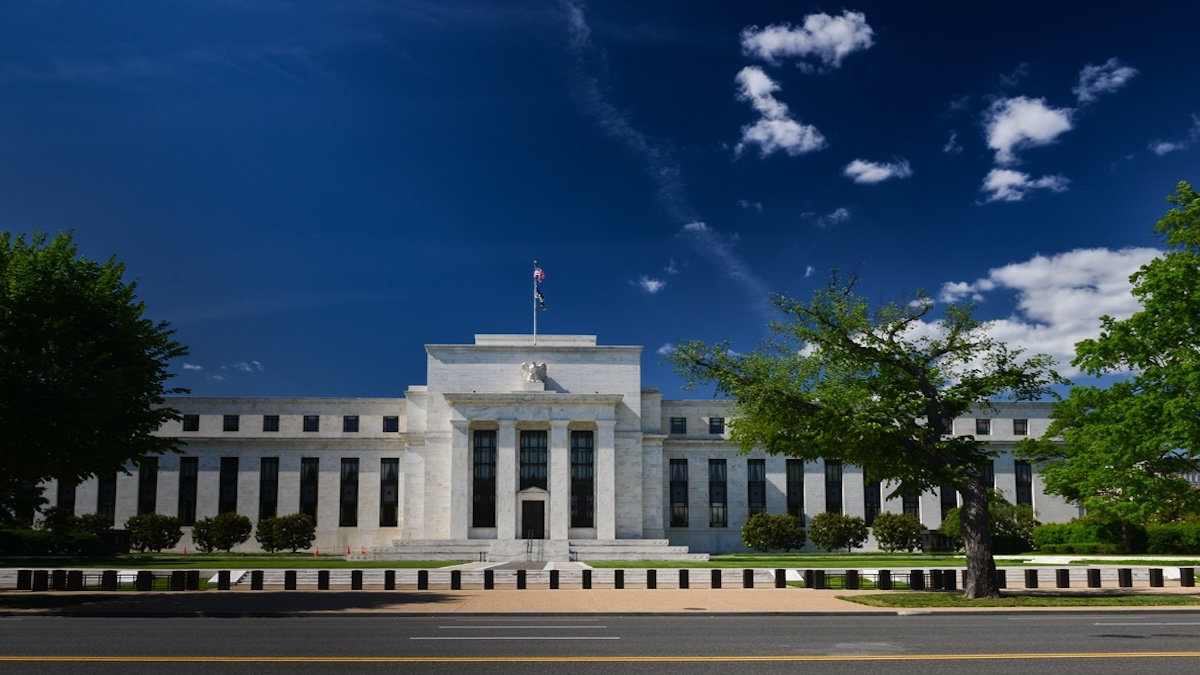
The Federal Open Market Committee (FOMC) decided to keep rates unchanged, maintaining the fed funds trading range at 3.75% to 4.00%. After some early back and forth on the chances for a rate hike at this gathering, this result was largely expected. In fact, fed funds futures were pricing in more than a 90% chance that the fed funds target would remain unchanged.
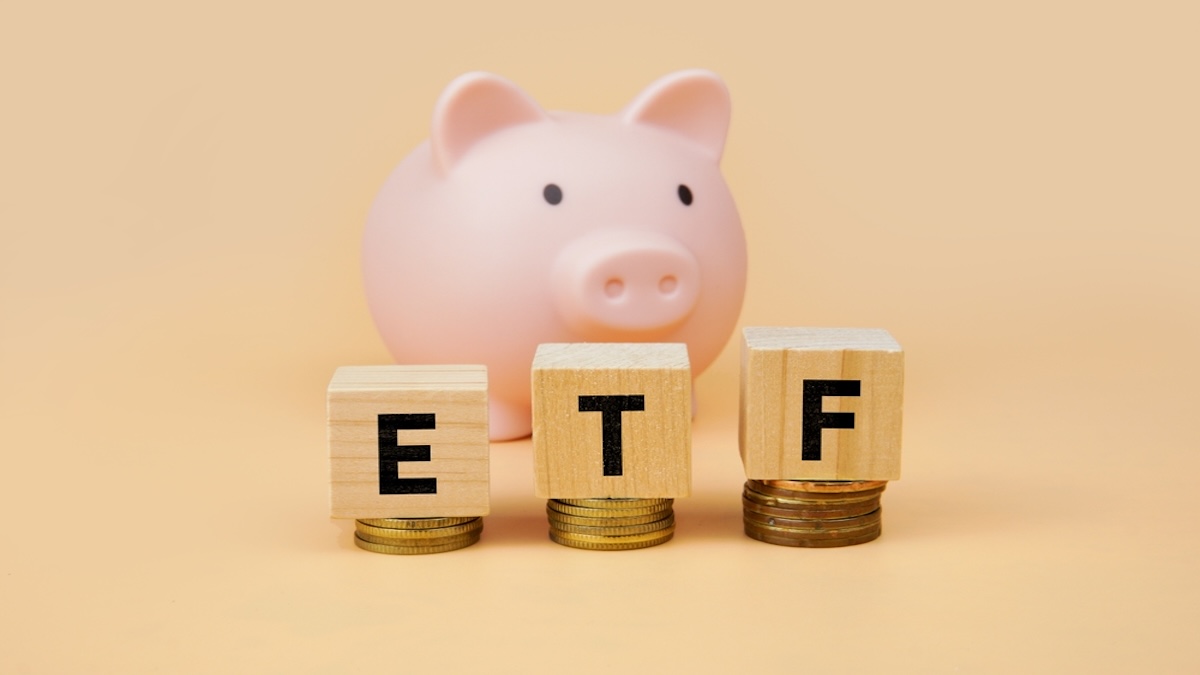
Franklin Templeton plans to launch two ETFs Thursday that use stock dividends to buy bitcoin instead of more shares.
Royce Investment Partners: Co-CIO Francis Gannon details why recent volatility looks like the typical pattern of a US small-cap leadership cycle.
After overshooting projections for years, AI capex is slowing down. The shift doesn’t spell the end of the AI trade but a move to a more mature, predictable cycle that favors higher-quality borrowers.
Milton Friedman famously said, “inflation is always and everywhere a monetary phenomenon,” emphasizing that sustained inflation occurs when money expands persistently faster than real output.
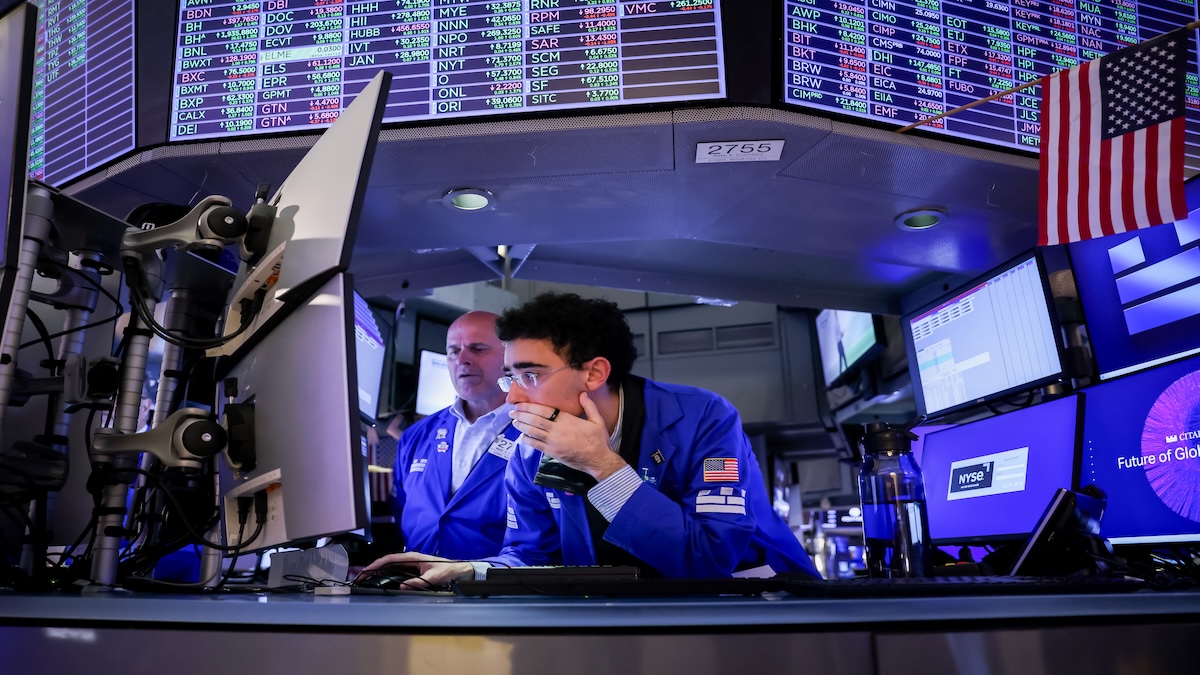
Investors were thoroughly unimpressed with Alphabet Inc.’s third-quarter earnings on Wednesday evening. Shares tumbled nearly 11% after the company missed sales and profit expectations. It was a sign, Bloomberg News reported, that Wall Street wasn’t satisfied that Google is seeing enough of a return on its artificial-intelligence bets.
Federal Reserve Chair Kevin Warsh champions parsimony in central bank communications and loathes so-called forward guidance. But he’s said plenty about the future of artificial intelligence: He’s an arch optimist on the technology who thinks it will help him vanquish inflation.
Could the near to medium term finally see value ETFs take the starring role back from growth? Value indices have provided some steady returns this year, but the question is, can they accelerate into the new year? Economic headwinds and concentration risk for the AI hyperscalers could see value stocks outperform. The American Century U.S. Quality Value ETF (VALQ) presents a strong candidate to do well if value stocks do.
Wall Street’s recent risk aversion toward stocks may have created an opening for a sharp rebound, particularly in technology shares, if Anthropic PBC’s planned initial public offering reignites enthusiasm for artificial intelligence.
Many long simmering tensions boiled over in France’s protests and riots. Rising borrowing costs for the government proved a crucial pressure point — a message from bondholders grown impatient with a lack of pension reform and the country’s enormous welfare state. Americans would do well to pay attention.
How many eyeball-grabbing headlines can we stuff into the next few weeks? For tech investors, AI concerns mount, with rising credit default swap prices among the hyperscalers and sagging neocloud equities.
With the recent movements in both the stock and bond markets, there was some noteworthy news that got kind of lost. Indeed, the U.S. government posted a $1.99 trillion budget deficit for fiscal year (FY) 2026. While technically it is not a record amount of red-ink, it represented the largest non-COVID-related shortfall ever recorded in modern history.
It’s extremely hard for a chief executive officer to get investors to turn positive about her company when it has posted annual net losses since 2020 and likely won’t make money until 2028. JetBlue Airways Corp.’s Joanna Geraghty made a good start on Tuesday.
LPL Research examines three keys to earnings season: broader profit growth, margin pressures, and high expectations amid continued AI investment.
Gold has traditionally been one of the most popular ways for investors to gain commodity exposure, but its recent weakness highlights the differences across various commodities. While precious metals have struggled, energy and certain agricultural commodities have seen stronger returns. Existing diversified strategies are also giving investors more ways to access commodities beyond traditional gold funds.
Founded in 2019 with backing from Japanese investment holding company SoftBank, SB Energy began as a U.S.-based utility-scale renewable energy developer. Today, SB Energy has three lines of business—power, data centers, and solutions.
Welcome to open enrollment season, when millions of Americans are yet again wracked with anxiety over the sizable chunk of their paychecks being sucked up by healthcare costs.
Reasonable minds can disagree about the ideal scope of government, but no one argues against nations providing for their defense. As conflicts emerge and tensions rise, defense spending will take a larger role in all nations’ budgets, with effects that will flow across the economy.
Income ETF strategies have exploded in popularity in recent years. Historically, investors have looked to bond coupons to add durability to their portfolios. The explosion of ETF popularity, launches, and adoption, however, has seen some intriguing options join the fray. The Goldman Sachs Municipal Income ETF (GMUB), which hits its three-year ETF milestone next year, represents just such a strategy.
Investing giant Pacific Investment Management Co. helped supercharge the artificial intelligence debt boom with billions of dollars in lending in 2025 — and has cut positions just in time to skirt losses and eke out a profit.
Hungary unveiled an inter-governmental agreement with the US on nuclear energy, a lucrative area that may bolster ties with Washington following the ouster of Viktor Orban.
Anybody who has lived through the past quarter century or so is familiar with the concept of a debt doom loop. Big government deficits, say, cause higher interest rates, making the government pay more to borrow and also bail out the banks that own its sinking bonds, driving it even deeper into debt. Rinse, repeat.
Investors concerned about market turbulence don’t have to sacrifice return potential to reduce risk. Historically, short-duration high-yield bonds have delivered returns neck-and-neck with those of the broader high-yield market but with substantially less volatility. The recent rise in yields makes today an especially compelling entry point.
Gallup estimates that 70% of a team’s overall success lies with the leader of the team. Here are five takeaways from this year’s class that might be helpful, whether you are firmly in a leadership role, leading without formal authority, or presently climbing the ladder at your firm.
As information and AI-powered insights become more accessible, experience, judgment, and discernment are becoming increasingly valuable. The advisor's role is evolving from simply providing answers to helping clients interpret complexity, evaluate trade-offs, make decisions with confidence, and execute those decisions effectively.
Economic data that continued to show a strong U.S. economy, housing aside, took a back seat this week as investors once again focused on potential risks to future growth: rising energy prices, sticky inflation, and most importantly, questions about the sustainability of the artificial intelligence (AI) boom.
There was very little macroeconomic news last week, but there was certainly no shortage of action in the markets. We saw an extraordinarily sharp rotation out of growth and into value, with both the Russell Value Index and the S&P Value Index reaching all-time highs even as the Nasdaq suffered one of its largest recent selloffs. That is a dramatic divergence, but historically it is not unprecedented.
Geopolitical tensions are already driving demand for energy exposure through rising oil and gas prices. Combining this cyclical strength with long-term AI momentum creates a strong potential for noticeable returns.
Clients want to understand how the advisor thinks, what they value, and what guides them when hard decisions arise. Your clients want to hear a familiar voice, not another generic, institutional message that could have come from any firm in the country.
Record ETF launches are compressing product shelf lives and raising closure risks. Learn the real costs for advisors and clients.
No one wants to pay more to fly, but travel-hungry US passengers are giving airlines little reason to halt price increases. Air travel demand is holding up and encouraging carriers to raise fares faster and further to make up for soaring jet fuel costs. Once up, prices will likely stay there even after the energy crunch subsides.
This growth is being fueled by massive spending on AI, which isn’t seen slowing anytime soon. Last week, Meta Platforms Inc. boosted its capital expenditure plans for the year. Wall Street anticipates that Microsoft Corp., Amazon.com Inc. and Alphabet Inc. will affirm or raise their AI spending plans when they report earnings this week.
Anthropic PBC set itself a challenge by opening its books to prospective IPO investors right after a punishing week for the artificial intelligence trade. When Wall Street took a close look, it generally liked what it saw.
Ken Griffin told a room full of investors recently that we are “almost certainly” in an AI bubble. He may well be correct in that assessment, and there are plenty of media narratives that support that view.
The bond market is flashing levels not seen in nearly two decades. The 10-year Treasury yield is hovering near 5%, while real yields — measured by Treasury inflation-protected securities (TIPS) — are at their highest since before the 2008 financial crisis.
Last year, U.S. charitable giving hit a record $617.20 billion, according to Giving USA. That’s the first time it’s ever topped $600 billion. Individuals gave $394.2 billion of that, foundations gave $117.15 billion, bequests added $62.19 billion and corporations contributed $43.67 billion.
Insurance-licensed RIAs grew fastest as fee-only firms’ asset share fell to 34%, though fiduciary clients report higher satisfaction.
Join VettaFi and Fidelity for a product due diligence session exploring the expansion of active management and a deep dive into Fidelity’s enhanced equity ETFs.
Wall Street strategists are warning that declines in shares of AI cloud-computing providers will spill into other corners of the tech trade, potentially dragging the US stock market down to its June lows.
Our higher education system is broken. Families pay a fortune for degrees that do not pay off like they used to. However you feel about the future of advanced degrees, they’re certainly a mispriced asset — a mispricing that started in the market for student loans.
US stocks gained on Monday as investors digest Anthropic PBC’s filing for its initial public offering and look forward to key big tech earnings this week as well as the Federal Reserve’s next decision on Wednesday.
The Fed is hiking to prove it can beat inflation. The danger is that it proves the point with the one economy that can’t afford to lose.
In a world that must fund trillions of dollars of sovereign debt not just in the US but all over the world. Plus, other “normal” business investments which will be even more hundreds of billions, if not trillions. And that brings us to the thrust of today’s letter: who will get access to this money and what are the returns going to be?
In late October, VettaFi hosted an interactive virtual event featuring market leaders from State Street Investment Management, Janus Henderson, and Horizon. During the presentation, advisor sentiment polls revealed a decisive shift in how many are approaching their fixed income allocation. Higher yields have restored bonds as a compelling asset class. However, advisors were looking for tools beyond a traditional index-based bond ETF.
Our Director and Head of Canadian Investment Strategy BeiChen Lin sees two main forces behind this week’s more cautious market tone: higher energy prices and renewed questions around artificial intelligence investment.
With several provisions of the One Big Beautiful Bill Act (OBBBA) taking effect in 2026, year-end planning may present new opportunities and considerations for taxpayers. It’s important to assess personal finances before the end of the year to determine if action is needed.
The S&P 500 has been a reliable index for building exposure to U.S. stocks for years, and for good reason. It’s a valuable barometer for investors who want to make sure they are tracking large-cap U.S. equities.