As volatility rises, staying invested is a strategic priority for capturing long-term return potential in a broadening market.
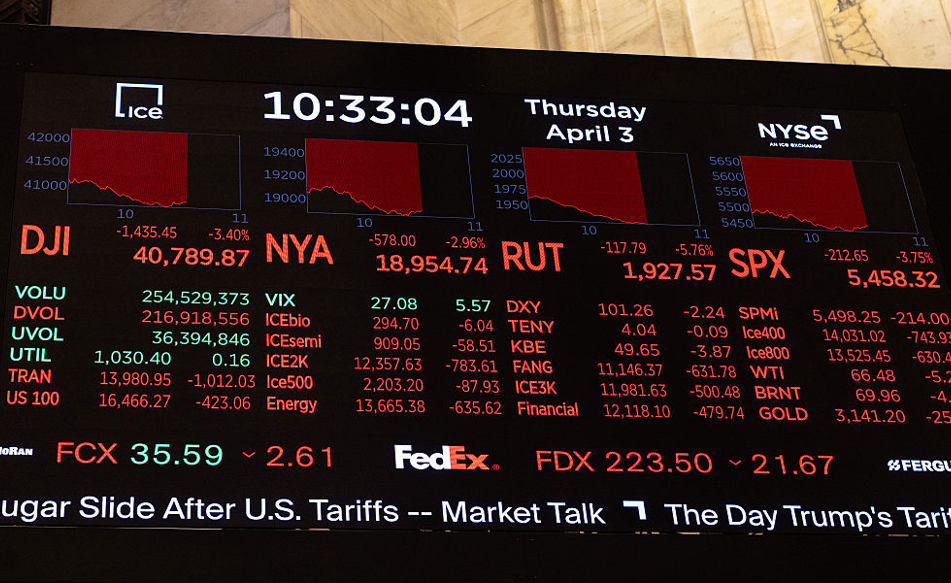
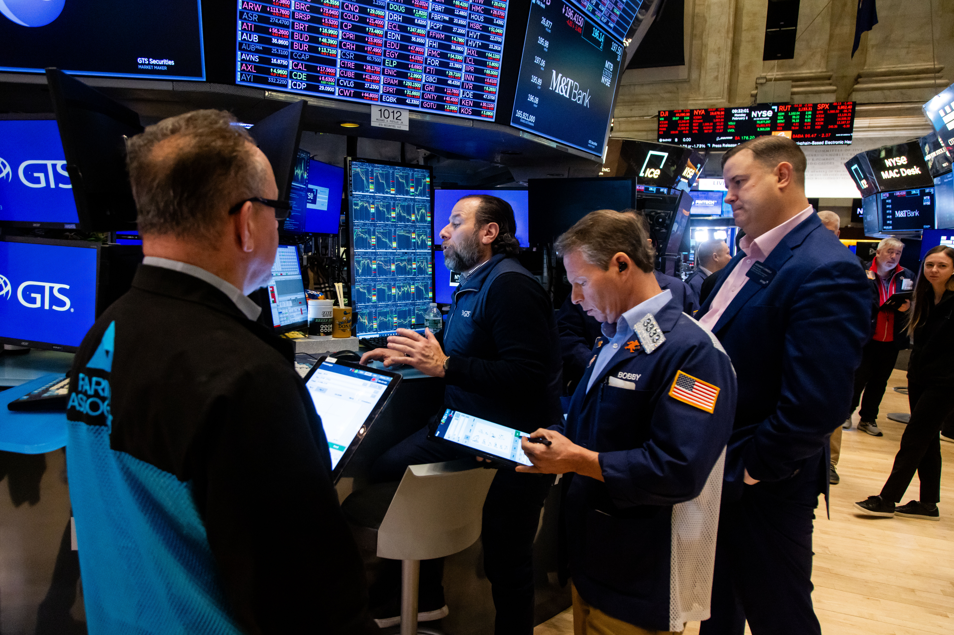
U.S. indexes suffered their worst day since the pandemic, hurt by Trump's massive tariffs that sparked recession fears. Almost every sector fell, with retailers and tech hard hit.
The Nasdaq-100 Index (NDX) slipped nearly 2.5% last week. That sparked fresh fears that current geopolitical and macroeconomic climates remain headwinds to growth stocks. Those headwinds may imply investors aren’t flocking to AI stocks
Alphabet Inc.’s Google and Amazon.com Inc. have found an avenue to profit from Elon Musk’s chaotic Department of Government Efficiency.
Traders boosted their bets on Federal Reserve interest-rate cuts this year and US Treasuries rallied as a solid report on American jobs failed to calm markets.
President Donald Trump’s new reciprocal tariff policy is straightforwardly bad for the US economy and markets. The only conceivable reason that the S&P 500 Index was down just 4% on Thursday is that investors still don’t believe it will stick. Unfortunately, there’s no quick way out of this quagmire.
The popularity of Buffered ETFs, also referred to as Defined outcome ETFs, has exploded over the last five years. Historically there has been a wide deviation in caps over the years.
Portfolio managers that didn’t fully embrace the AI trade withstood their share of criticism over the past year or two, as many AI-linked stocks reached great heights.
Adam Hetts, Global Head of Multi-Asset & Portfolio Manager, and Oliver Blackbourn, Portfolio Manager, give their thoughts on how US President Trump’s ‘Liberation Day’ tariffs have reshaped global trade dynamics, emphasising the benefits of diversification at a time of heightened uncertainty about the prospects for growth.
Active ETFs just topped the $1 trillion threshold, making up nearly 10% of the total ETF pie. Enhanced yield is the name of the game.
With nearly half of the bond market now outside of the Agg, a number of opportunities exist for those seeking exposure beyond the benchmark.
U.S. ETFs saw record first quarter flows this year, bringing in $296 billion during the first three months of 2025.
Bond traders ramped up bets on interest-rate cuts from the Federal Reserve amid concern that Donald Trump’s trade war will backfire on the US economy, sending the yield on benchmark Treasuries toward the closely-watched 4% level.
Meta Platforms Inc.’s head of artificial intelligence research plans to leave the company, creating a high-level vacancy just as Meta seeks to invest and compete aggressively in AI.
The tariffs that the U.S. is imposing on its trading partners will bring about several costs that are important for investors to understand. Some of those costs are inherent to what a tariff is, while others stem from the fact that U.S. industrial policy has, and looks to continue to have, a huge amount of uncertainty associated with it.
The first quarter of 2025 took investors on a rollercoaster, driven by on-again, off-again tariff policy announcements.
Investors face new challenges as their wealth grows. So it’s a good thing that direct indexing is designed to fit their allocations just the way they are.
An early-term recession, though difficult, can create strategic opportunities to push a bold and transformative agenda forward.
In recent weeks, market volatility has surged, driven by uncertainty surrounding the growth picture and Washington's economic policy
This video provides an update on the monthly moving averages we track for the S&P 500 and the Ivy Portfolio after the close of the last business day of the month.
This year’s whiplash headlines and thrashing in equity markets have done little to slow down the ETF industry.
Goldman Sachs Group Inc. is expanding its private equity offering to wealthy individuals across Wall Street and beyond, in the latest sign of investment firms gradually broadening access to the much sought-after private markets.
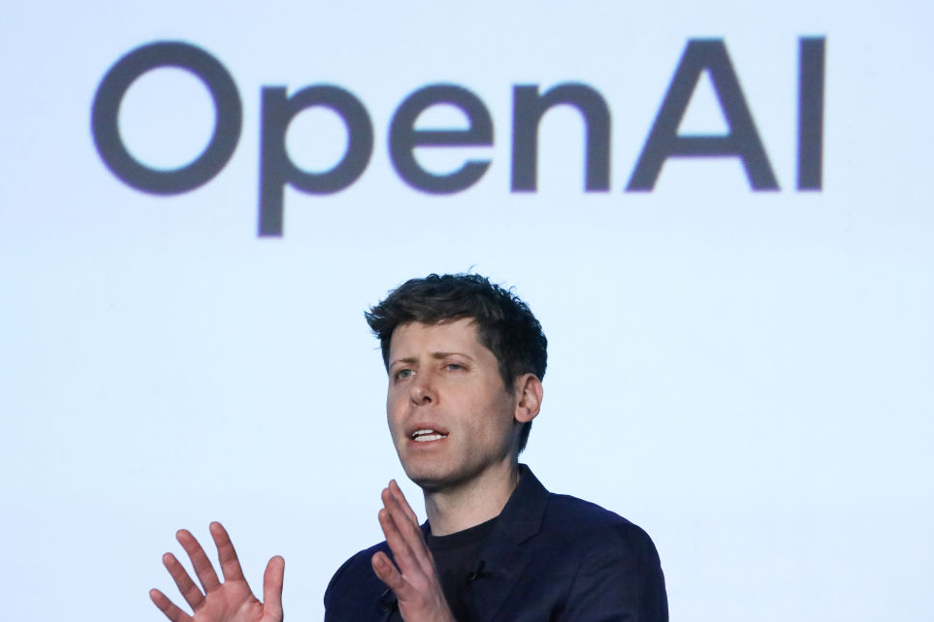
On Monday, OpenAI announced $40 billion in new financing, the largest funding round in history, and one that nearly doubled the artificial intelligence company’s valuation to $300 billion.
Investors often debate the merits of value versus growth investing, but when it comes to developed international equities, the conversation isn't static; it moves in cycles.
The world has entered a period of geopolitical uncertainty, with the U.S. now at the center of the storm.
Fixed income investors can opt for corporate bonds to maximize yield opportunities without sacrificing too much credit risk.
Connective Communication’s CEO & Founder Jennifer Morgan lit up the Exchange stage with her workshop, Escape the Sea of Sameness.
They took the concept of a mutual fund, rewrapped it in a low-cost, easily traded package, and offered it to investors on a silver platter. Today, ETFs account for $15 trillion AUM globally, making them one of the most dominant forces in modern markets. And behind the scenes, they’re working even harder than you think.
When you discover your identity has been used in a pump-and-dump scheme on WhatsApp or other platforms, taking swift and decisive action is essential. This guide outlines the specific steps you should take to report the crime, protect your clients, and help authorities bring the perpetrators to justice.
Kristin Myers, Editor-in-Chief at etf.com, offers a preview of their highly anticipated 2025 industry awards ceremony. VettaFi’s Zeno Mercer breaks down the recent surge in gold and international equity ETFs.
Join the experts at Calamos as they unpack how protected ETFs can help investors stay in the market and weather the storms of volatility.
US stocks flipped between small gains and losses following the opening bell on Tuesday after closing out their worst quarter in nearly three years, as traders await President Donald Trump’s next tariff deadline on Wednesday.
A duo of emerging-market bond veterans at Jeffrey Gundlach’s DoubleLine Capital is taking no chances as Donald Trump rolls out his trade agenda.
Investors are fretting that a year-long rally in global credit is papering over the risk that US policy uncertainty tips the world’s largest economy into a recession.
Investors just can’t get enough of ETFs, and issuers are more than happy to oblige. Through the middle of last week—still with a handful of days left in the quarter—208 new U.S. ETFs were launched in Q1, according to Wall Street Horizon data.
In the current installment of The Roundup, Oaktree experts explore various investment risks and opportunities, including the heightened demand for mezzanine financing, potential entry points for special situations investors, the limited competition for unrated asset-backed finance investments, and the growing need for specialized life sciences lenders.
Following the latest Federal Reserve meeting, there was a massive surge in media headlines stating “stagflation.” The media’s stagflation panic is unsurprising as it elicits memories of the late 1970s during the Arab oil embargo.
Economic activity hit a soft patch in the first quarter—whether it was fueled by the big pullback in confidence or one-off factors such as cold weather, a harsh flu season and an acceleration of imports ahead of pre- announced tariffs, our economist expects the slowdown will prove short-lived.
CNBC Senior Markets Correspondent Bob Pisani and Research Affiliates Founder and Chairman Rob Arnott talked value at Exchange.
Dr. David Kelly, chief global market strategist, J.P. Morgan Asset Management, provided insight on current opportunities at Exchange.
On this week’s episode of “ETF of the Week,” Chuck Jaffe of “Money Life” discussed the Invesco CEF Income Composite ETF (PCEF) with Roxanna Islam, head of sector and industry research at VettaFi. The pair discussed several topics related to the fund to give investors a deeper understanding of the ETF overall.
In a recent piece, I analyzed the construction of downside-protected strategies. Here, I propose a measure of the relative attractiveness of these strategies over time and examine their historical performance.
If a dividend is not a gain, then what is it? Here is my irony-drenched-but-accurate definition
This article explores the GDPNow and Nowcast models to understand the recent forecast divergences. A better understanding of the two models helps us appreciate the current state of the economy and, therefore, better estimate the first quarter GDP.
Last week's economic reports painted a stark picture of rising inflationary pressures and plummeting consumer confidence.
The US stock market is about to conclude its worst quarter compared to the rest of the world since the 1980s.
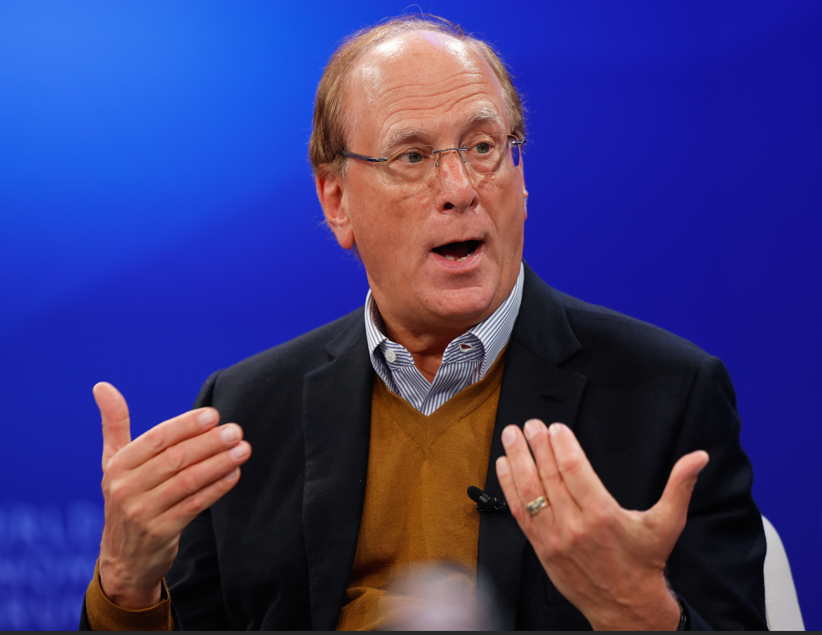
BlackRock Inc. Chief Executive Officer Larry Fink pledged to open up private markets to millions of everyday investors, not just the wealthy few, contending individuals should share more of the gains from economic growth.
Today I’ll try to cut through some of this fog and look at why the US has a trade deficit. As you’ll see, it is a built-in, necessary feature of our money. Plus, it is time to start watching for a recession. Let’s jump in.
On March 18, 2025, Jensen Huang stepped onto the stage at Nvidia's GPU Technology Conference (GTC) in San Jose with the presence of a man who knows he's about to redefine the trajectory of an industry—again. His message was clear: AI has hit an inflection point, and if you're not paying attention, you're already behind.
Uncertainty dominates the day, with market volatility sparking investor questions not seen in years. With this in mind, we’ve put together a concise cheat sheet covering key topics on everyone’s radar.