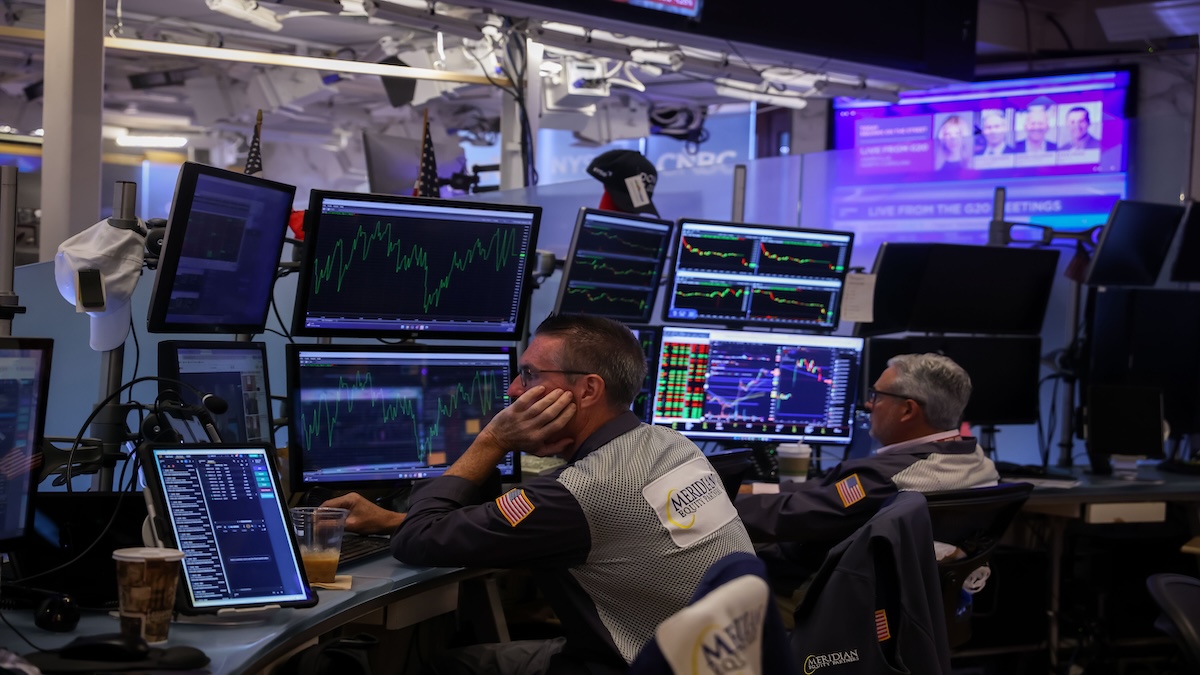
US stocks flipped between small gains and losses on Wednesday after a three-day skid, as oil prices halted a sharp advance, easing inflation concerns as traders weigh the Federal Reserve’s potential path for interest-rate hikes.
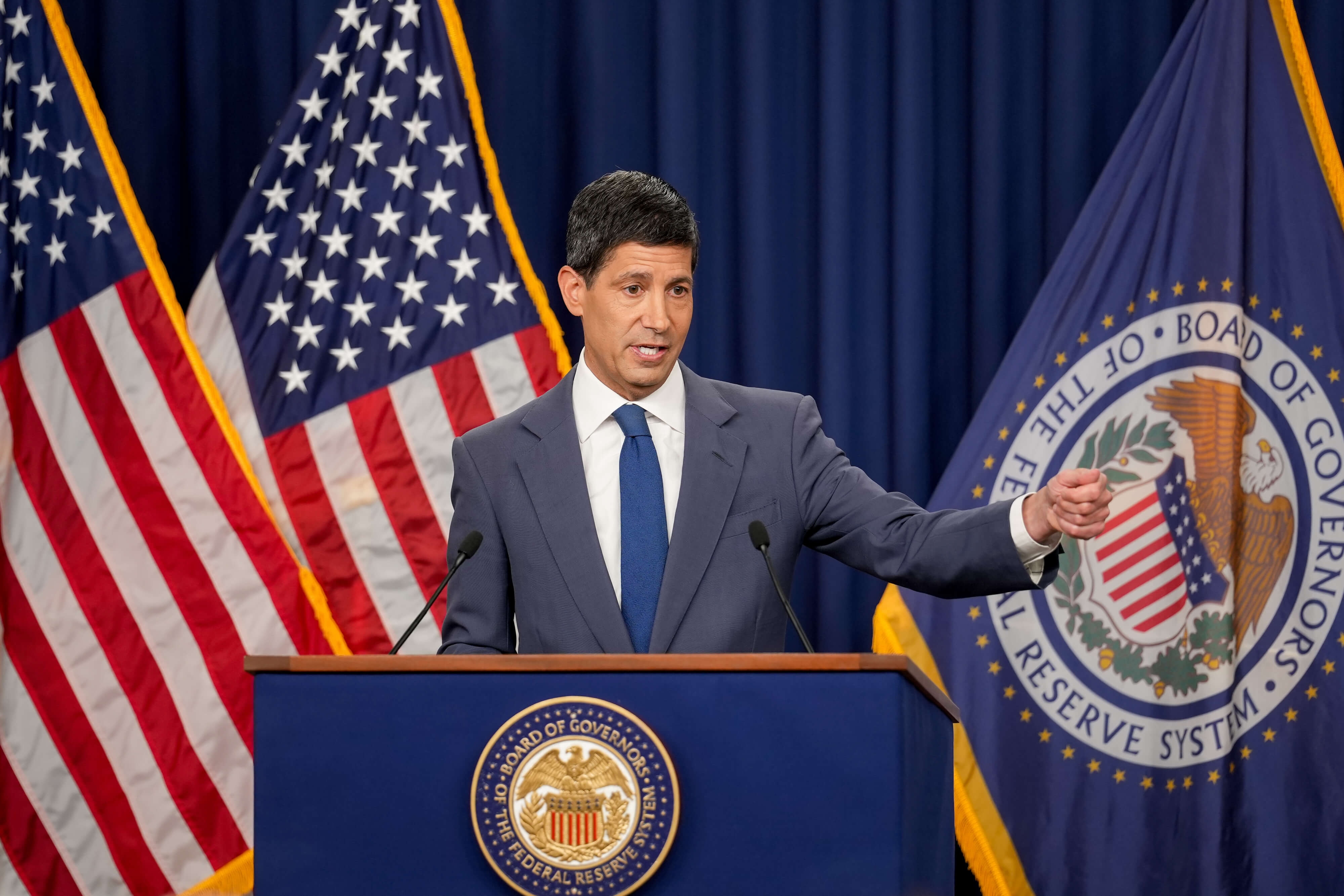
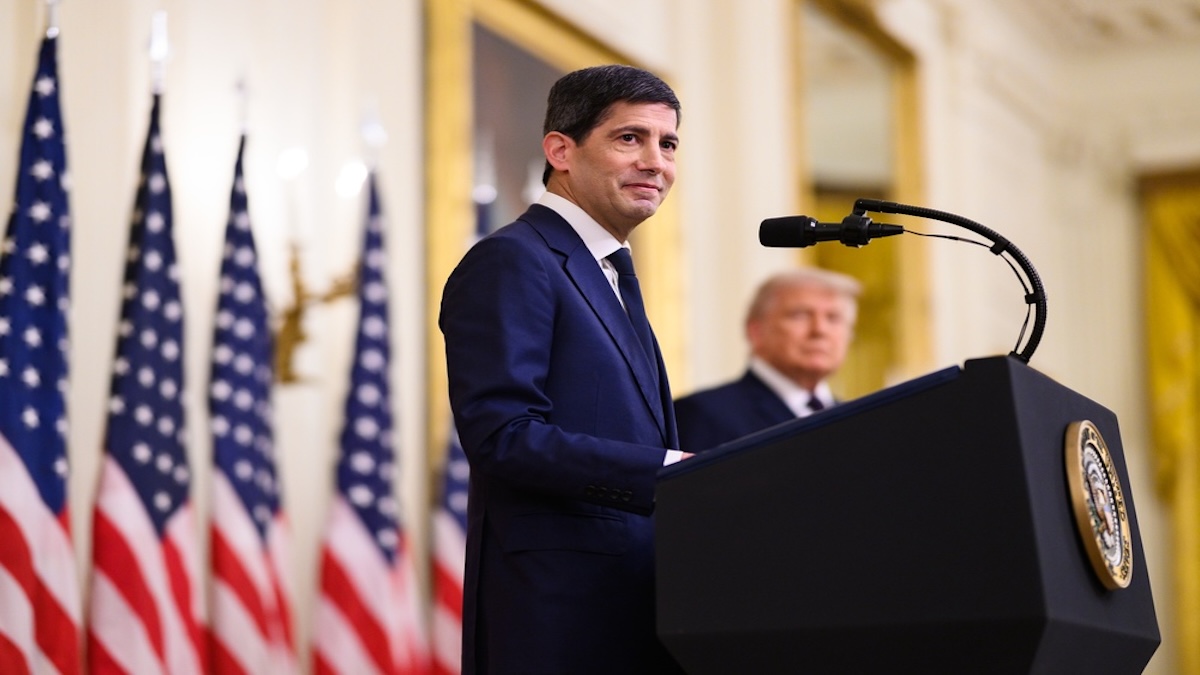
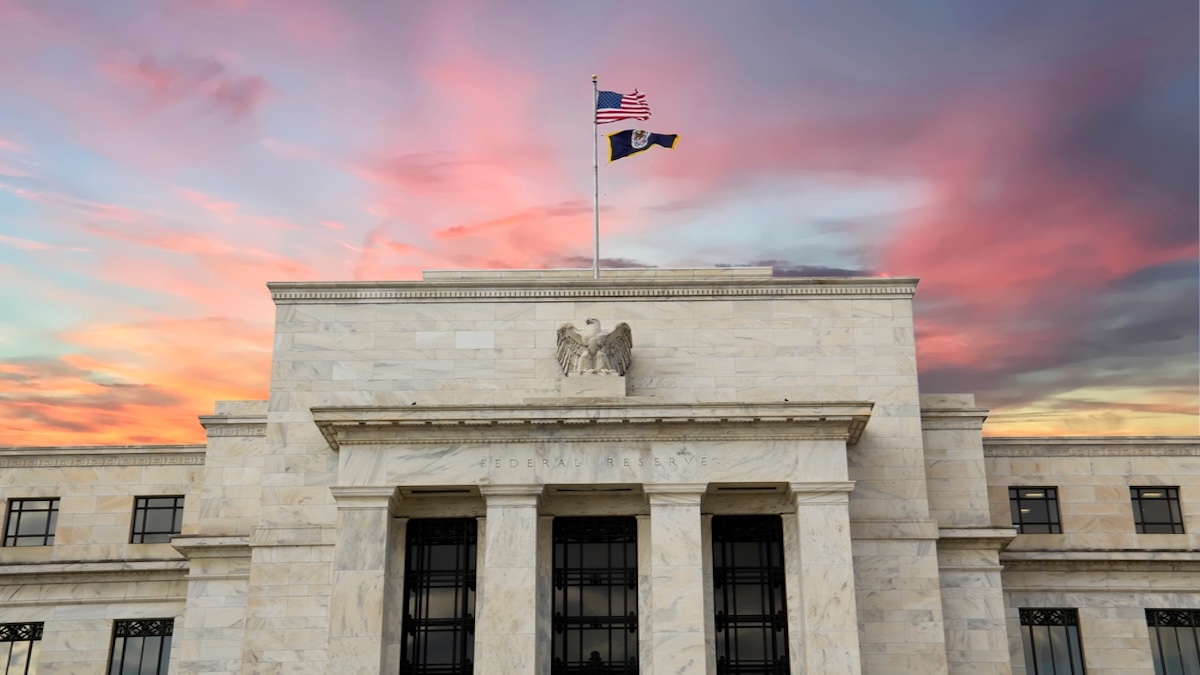
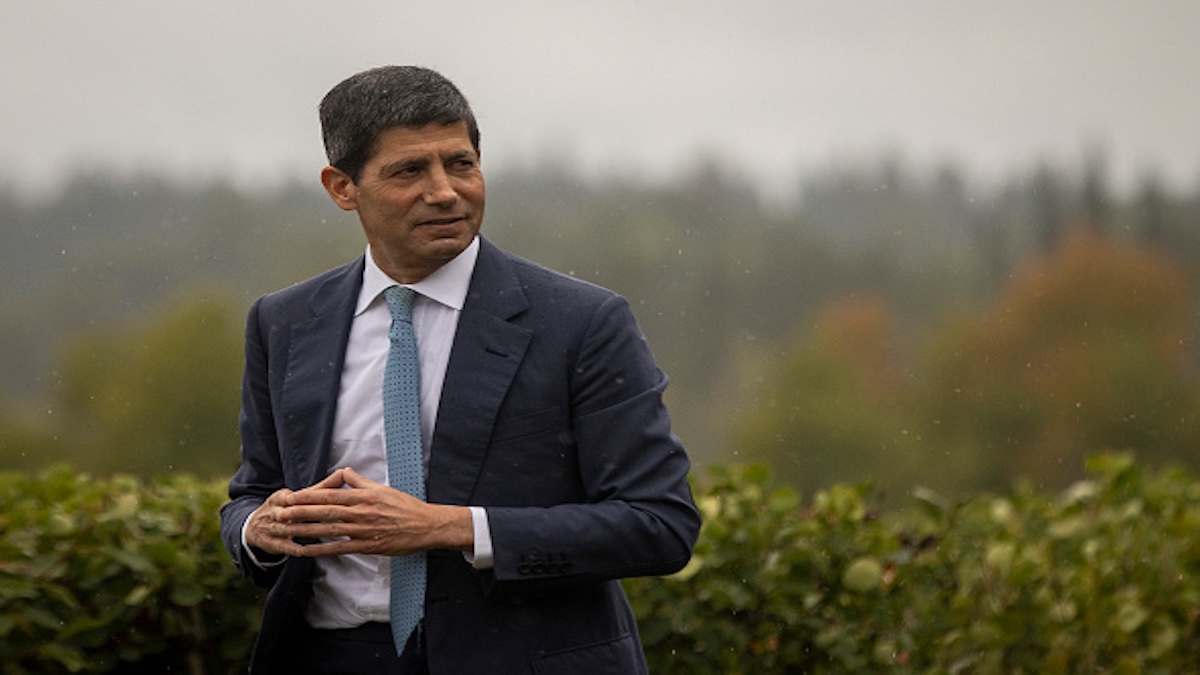
Federal Reserve Chairman Kevin Warsh used his keynote speech in Jackson Hole, Wyoming, last week to map out some of the key data points he leans on to read the US economy, offering new insight into his approach to policy making.
Most people experience transportation through roads and airports. Traffic jams on highways and delays at major hubs are familiar frustrations. But the world's most important transportation network lies largely out of sight.
Kevin Warsh’s Jackson Hole speech was notably hawkish. But I came away from the speech even more confident in Warsh and thought it was one of the best speeches I’ve heard from a Federal Reserve chair. Most importantly, Warsh is refocusing on factors missing from the Fed’s framework for years: an explicit recognition that money supply and bank credit matter for the Fed’s inflation outlook.
Highly concentrated US equity markets have been a consistent theme in recent years. Now, after the latest reconstitution of a major US equity benchmark, concentration is taking on a new form, with the Magnificent Seven’s grip loosening and semiconductor stocks gaining more influence. In essence, millions of passive investors received a new portfolio without making a single decision.
Brightline has reached a deal with municipal-bond insurer Assured Guaranty Ltd. that would provide the debt-laden Florida railroad with at least $350 million in new loans if it heads into Chapter 11 bankruptcy, according to people familiar with the matter.
AI-driven scarcity is allowing companies perceived as lower quality to post the revenue growth, margin expansion and rising returns that investors associate with quality, lifting estimates, multiples and stock prices.
The high-yield market appears expensive at first glance. Spreads sit near the tight end of their historical range, which implies limited compensation for credit risk. However, spreads relative to their historical levels do not capture the full opportunity set of the asset class. Corporate fundamentals remain healthy, defaults are low, and the quality of today’s high-yield universe is higher than its long-standing reputation might suggest.
The backup in global yields since late February has reignited the debate over the potential knock-on effects for corporate borrowers, particularly through higher refinancing costs and weaker debt-servicing capacity.
Should the recent value rotation be viewed as a regime shift-driven change in market preference, or a simple reversal trade? We think there is a compelling case to be made for the former. In a regime of higher interest rates and stubbornly above-target inflation, the market is increasingly focused on capex intensity, free cash flow conversion, and the cost of capital.
State Street’s top inflows for its SPDR ETFs during the year-to-date period and the past four weeks suggest that while investors have confidence in U.S. large caps, they’re still looking to hedge their bets by allocating to gold.
The autism care economy is expanding across healthcare, technology, education, and behavioral services. As a result, investors are beginning to look at the companies serving it through a broader investment lens.
Artificial intelligence is quickly becoming a bigger part of financial advisors’ workflows, but the technology is still in the early stages of adoption. LPL Financial experts share how agentic AI can help advisors with workflows
Advisors who build a third-quarter planning call into their process tend to see fewer IRS notices land on their clients' desks. Tax season teaches clients to think about taxes once a year. The advisors who win their trust are the ones who think about taxes all year round.
An estimated $124 trillion is expected to transfer through 2048, including about $105 trillion to heirs. We have spent a great deal of time estimating the value that will transfer from one generation to the next. However, if advisors expect to maintain the value received, we should be equally interested in whether the value we provide in exchange is evolving with it.
Billing and compensation may not be glamorous, but they're foundational. And for leadership teams, the question isn't only whether software can be built faster with AI. It's whether they want to own the budget volatility, compliance exposure, integration complexity, support responsibility, and distraction of running an internal platform this close to revenue.
There is a reasonable argument that population decline is not a catastrophe. Fewer people means less pressure on housing, energy, and food. Automation may cover some of the missing labor, and countries have absorbed demographic shifts before. Those adjustments take decades, though, and you will likely retire before they finish.
Regional lenders Truist Financial Corp. and Fifth Third Bancorp. have paused distribution of products tied to billionaire financier Mark Walter’s biggest insurance firm, according to people with knowledge of the decisions.
In Part I of Indexing Redefined, the foundational strategies comprising Research Affiliates’ fundamental indexing methodology (RAFI) were introduced. With the baseline premise established, there is one myth to debunk: Some detractors may assume that RAFI is merely a niche value strategy.
Not since 2006 have yields on the longest-maturity Treasuries been this high for this long, with a gaping budget deficit, another wave of corporate issuance and a potentially decisive Federal Reserve meeting set to keep investors wary of US debt in coming weeks.
T. Rowe Price Group Inc.’s chief executive officer sees tax-loss harvesting strategies as a growth area, but remains confident that its offerings won’t draw regulatory scrutiny.
An almost-vertical rally in gold-miner stocks in the past month is whetting the appetite of investors who have been whipsawed by messages from Washington policymakers.
As government bond yields across the world erupt, corporate credit has rarely looked calmer. Yet even in that market, about $1 trillion of bonds are telling a much different story.
Massive AUM may earn an RIA a buyer’s attention, but it does not automatically earn a premium valuation in the rapidly evolving M&A landscape.
The first two articles in this series were about behavior. This one is about arithmetic. There are three numbers that decide most of your investing life. Let’s do the math Wall Street skips, one number at a time.
Despite ongoing geopolitical tensions, growing questions about the scale of AI-related spending and steadily rising bond yields, market volatility remained remarkably subdued this summer.
Federal Reserve Chairman Kevin Warsh used his Jackson Hole speech last week to lay out what he thinks of monetary policy. Two things jumped off the pages of his speech.
A credit-allocation problem is complicating the Fed’s dual mandate, with current policy restrictive for many consumers and weaker borrowers, but less so for large corporates, higher-quality issuers, and borrowers with access to private credit.
In a week that saw NVIDIA, the largest company in the world, report strong earnings that sent its stock sharply higher and reinvigorated optimism in the artificial intelligence (AI) trade, fiscal and monetary policymakers continued to provide the biggest headlines.
As the month of August came to a close, the first index mutual fund got to celebrate a key milestone. The mutual fund in question is the Vanguard 500 Index Fund (VFINX), which originally launched on August 31, 1976.
A hard line on trade was a popular plank of the first Trump candidacy. But once in office, his advisors used slow, conventional investigations and negotiations toward the goal of fairer terms of trade.
Beneath relatively muted index-level volatility, single-stock implied volatility remains high. In today’s low-correlation environment, individual stocks are moving more independently, keeping single-name volatility high even as those moves offset at the index level.
San Antonio has been my adopted home for close to 40 years now. I’ve watched it grow through more than one boom cycle, but recent Redfin data suggests we could be looking at a bust.
Join the experts at CIBC & Precidian Investments for a product due diligence session exploring their ADRhedged ETF (ADRH).
Over seven years ago, I wrote a piece using the 1960s TV sitcom Gilligan's Island to provide a simple example of why productivity is the most important driver of economic growth. In this article, I present the next episode of Gilligan’s Island, describing what happens after the benefits of innovation stop driving economic growth.
Most of us keep a chunk of cash on hand — for rent, groceries, the occasional emergency, or simply because we haven’t gotten around to investing it yet. In the finance industry, this is called your “float.” We think the single best thing most people can do with it is own a Treasury Bill ETF — and yet almost nobody does.
The TDF industry is an oligopoly where four firms dominate more than 75% of the $5 trillion market. Competitors that are desperate for market share have turned to “managed” QDIA accounts — a gimmick masquerading as personalization.
The US plans to use its newfound assertion of control over billions of barrels of Venezuelan crude oil to refill the nation’s depleted emergency reserve, President Donald Trump said Sunday.
The appeal of democratic socialism is real because the pain it speaks to is real. I won’t pretend otherwise. But intentions are not outcomes, and history has handed us the outcomes in ink, from Caracas to the old Soviet bloc to the Nordic countries that quietly kept their capitalism. The promise is a beautiful cake. The aftertaste is shortages, capital flight, inflation, and a new elite standing where the old one used to be.
Our real gross domestic product (GDP) forecast for 2026 is 2.5% (based on our Global Investment Management Survey) versus the Federal Reserve’s (Fed's) forecast of 2.2% and the Wall Street consensus of around 2%. The economy remains resilient and the consumer is strong.
Anthropic PBC’s IPO is casting a long shadow over companies’ US listing plans, as they try to find room for their deals to grab attention after the Sept. 7 Labor Day holiday.
For the first time in his three months on the job, Federal Reserve Chair Kevin Warsh said the right things. In his keynote speech Friday at the Federal Reserve Bank of Kansas City’s annual central banking event in Jackson Hole, Warsh acknowledged that inflation was elevated and widespread, and had been been so for “far too long.”
Even more so than usual, Hollywood’s future is uncertain. For decades the Los Angeles economy revolved around the film industry, but now more movies and shows are filmed elsewhere, driven or lured away by high expenses or tax incentives.
Bond investors at firms including ABN AMRO Investment Solutions and Brandywine Global Investment Management are voicing skepticism about mounting speculation that Federal Reserve Chairman Kevin Warsh is poised to raise interest rates.
A weaker U.S. dollar cycle is boosting the appeal of emerging market debt, creating a compelling case for investors seeking income and diversification at an opportune time for the asset class.
Advisors did not slow down on exchange-traded funds in the second quarter. They added more of them, and pointed the money somewhere new, according to AdvizorPro’s Q2 2026 RIA ETF Trends report.
Treasury’s pivot toward long-bond buybacks gives duration buyers their first clear green light in months — and the November midterms may add a second leg.
In an ambitious and much-anticipated Jackson Hole speech, Federal Reserve Chairman Kevin Warsh made the most market-moving news when he stated clearly that unless “underlying inflation is moving to our objective, clearly and at sufficient speed … we have work to do.”
In this video, Chuck Carnevale, co-founder of FAST Graphs and widely known as “Mr. Valuation,” examines 15 dividend-paying companies selected for their potential to generate rapidly growing income. These are not simply the fastest dividend growers in the market. Each company was also chosen for its financial strength, operating history, and current valuation.
The term “backfire” originally referred to the intentional burning of underbrush when there is a wildfire on the horizon, to keep a bad situation from turning worse. Over time, however, backfire has come to mean an action that makes a bad situation worse.