Join the experts at SS&C ALPS Advisors and VettaFi for a Product Due Diligence Session on August 25th at 12:30 pm ET to discuss midstream defensiveness and the structural tailwinds supporting energy infrastructure.
Today, many clients expect their financial advisor to be involved in the estate planning process — and they’re willing to switch advisors to find one who offers this expertise, according to a July report by digital estate planning platform Trust & Will.
I wrote several years ago that the only thing you can count on the stock market to do is fluctuate, and that the wisest response is usually to do nothing. Looking less often will not change your return. It will make you far less likely to damage the return you already have.
The WealthTech market has a serious AI-washing problem. The term borrows directly from a parallel wealth management executives already understand. Just as greenwashing described investment managers who marketed ESG commitments they could not substantiate, AI washing describes technology vendors who relabel rules-based automation as artificial intelligence.
Kevin Warsh’s first major speech as chairman of the Federal Reserve has become an unexpected trial of his slimmed-down communications style.
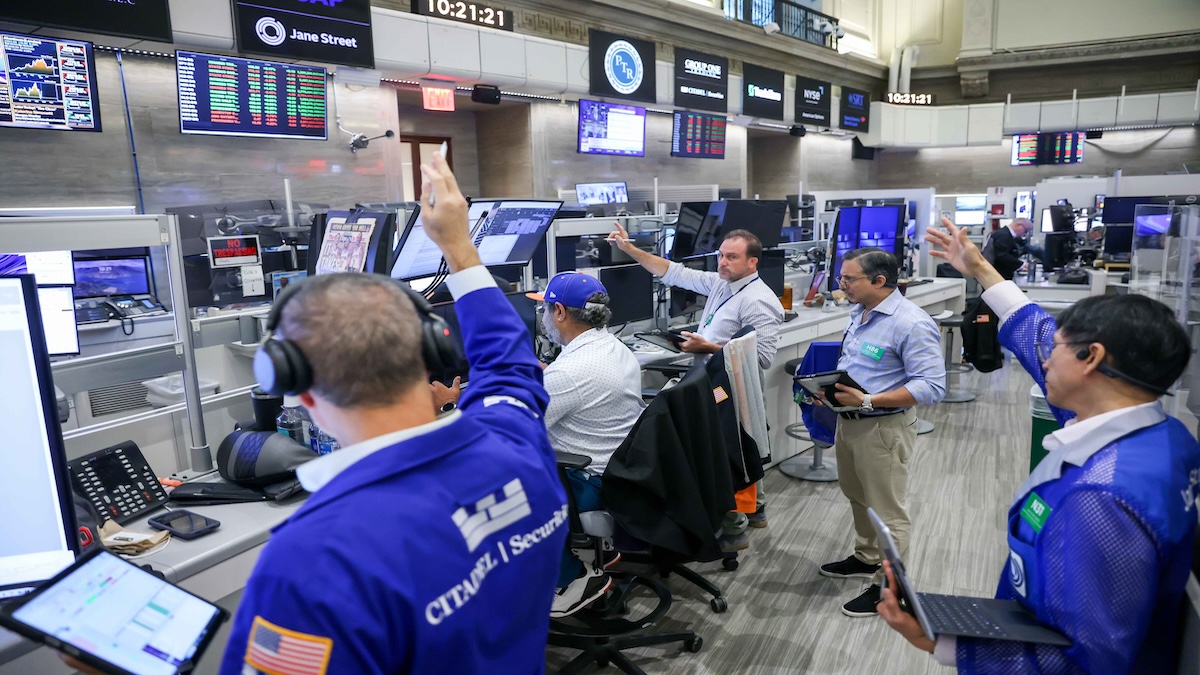
US stocks advanced on Tuesday as technology names rallied and investors continued to prepare for Nvidia Corp. earnings and the Jackson Hole Symposium.
Treasuries gained as a decline in crude oil eased inflation concerns and the pressure on Treasury Secretary Scott Bessent, who has been moving to halt a months-long selloff that pushed the longest-dated yields to the highest in almost two decades.
The artificial intelligence trade is booming, and so is the hunt for new ways to diversify AI exposure. Traders can buy power futures, track the technology’s beneficiaries and back data-center real estate projects, alongside buying the usual haul of chipmaker shares.
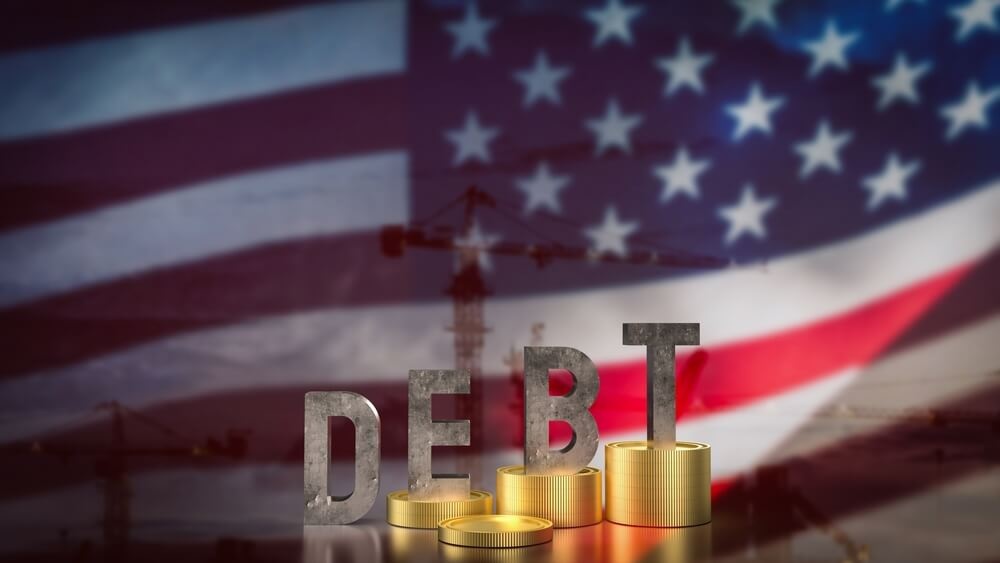
Yields on 30-year US bonds broke 5% last week, a level not seen since before the Great Financial Crisis. The Treasury Department bought bonds in an attempt to lower yields. It worked — for a day, then bond yields went back up. Meanwhile, in a not-exactly-unrelated development, the US national debt just passed $40 trillion.
In the first part of this series, I promised that the next enemy we would face is the one you cannot fire, mute, or unfollow, because it is “You.” You can learn every valuation metric ever invented, memorize the two questions that decide everything, and still hand most of your returns back to the market for one simple reason.
Chris Galipeau discusses high-conviction insights that go beyond media headlines.
Without a doubt, the number-one story in the financial markets of late has been the run-up in longer-dated Treasury (UST) yields. Indeed, headlines in both traditional and social media have centered on the fact that bond yields are now at levels not seen in nearly 20 years, or the time period right before the Financial Crisis hit in 2007.
The 30-year U.S. Treasury yield has touched roughly 5.3% in the past week, a level not seen in nearly two decades. Global counterparts in Europe, the U.K., and Japan have climbed to similar heights.
For the past five weeks, markets have been focused on a steady stream of corporate earnings, supported by upbeat management commentary and another quarter of strong results. But with second quarter 2026 earnings season nearing its end, investors' attention is shifting back to the macro backdrop.
Something strange has been happening in America lately. The Wall Street Journal says this is the summer when the U.S. became “a nation of Luddites.” The Economist calls it “the Summer of Ludd.”
U.S.-listed ETFs pulled in a record $193.42 billion in July, pushing year-to-date net inflows to $1.23 trillion. That total is the strongest seven-month haul on record, according to ETFGI’s July 2026 U.S. ETF industry report.
When it comes to equities exposure, investors typically gravitate toward a passive, market-cap-weighted index as the default strategy. These strategies are often billed as an efficient, low-cost method to capture broad market returns. As such, cap-weighted funds that track the S&P 500 or MSCI World have taken in trillions of dollars in global capital. However, within these market-cap-weighted indexes, a structural flaw exists.
Join the experts at SoFi for a product due diligence session covering the evolving income landscape and how options strategies can help investors pursue monthly income in different ways.
When portfolios become standardized, investor experience becomes standardized right along with them, even though almost nothing else about those investors is standard. Their goals, tax exposure, risk tolerances, and individual spending needs are too individualized to be captured by many models that purport to be customized.
While it is useful to analyze holdings by asset class, a portfolio-wide view can provide additional insights. Typically, the bond sleeve and the equity sleeve are seen as entirely separate. However, they usually hold unnoticed concentrations in different companies.
Amazon.com Inc.’s Andy Jassy has begun making an audacious boast during conference calls this year. Though his company remains a top Nvidia Corp. customer, it’s also one of the world’s largest makers of data center chips in its own right.
US stocks traded lower before the bell on Monday as investors prepared for a busy week of economic data and important earnings from Nvidia Corp.
The question facing advisors is no longer whether clients can hold digital assets, because many already do. It is whether the firm can explain, in writing, how each position was sized, why a particular product was chosen, and where that decision is recorded. Most firms cannot, and that gap is the exposure.
The Treasury Department could opt to draw down some of its cash pile to fund expanded buybacks of higher-yielding, older securities, CNBC reported Monday, citing two senior Treasury officials.
The debt problem is real. It just isn’t a bomb. As we’ve written before, the debt and deficit problem isn’t what you think. It’s a tax on future growth, collected slowly, and normal interest rates are simply the price of money doing its job, not the crisis the headlines keep selling.
Most of us try to be mindful not to put all our eggs in one basket. But the now-familiar concern that most portfolios are quite concentrated in a relatively small group of large US tech companies means that investors may still be doing just that.
Today, the backdrop for real assets has reset. Growth is returning, but in different parts of the market than many investors remember. While in the post-pandemic period performance was defined by scale, now it is the result of adaptability and having access to a broad array of organization sizes and business plans.
The minutes from the most recent Federal Open Market Committee (FOMC) meeting, released this week, revealed a committee that remained broadly hawkish. Policymakers continued to characterize inflation as elevated and emphasized that upside inflation risks persist.
No doubt, AI can be an unnerving tool. But it isn’t magic, malevolent, or secretly sentient. With some reasonable rules in place, policymakers should be able to keep the bots in line, and unleash the benefits for everyone else.
To some, the debate over inflation targeting is largely an academic exercise. But its outcome will have direct consequences for the paths of global interest rates and global markets. Some background on how we arrived at this juncture, and where we might go from here, follows.
In this video, Chuck Carnevale examines 20 fast-growing businesses that appear reasonably or attractively valued, focusing on the GARP principle—Growth at a Reasonable Price. The central message is that investors shouldn’t simply look for great companies; they should look for great businesses at sensible valuations.
On the first few trading days of every month, America’s paychecks hit the stock market. Most 401(k) contributions now default into index-tracking funds, which buy the same stocks in the same proportions whatever the price.
In the early weeks of Kevin Warsh’s start as chair of the U.S. Federal Reserve, there has been renewed focus on how “underlying” inflation should be measured to guide decisions on interest rates.
On the back of the White House’s cryptocurrency confab, which brought together policymakers and leaders of the digital asset community, Bitcoin notched a double-digit gain over August 19-20 — a rally that pumped new life into the largest digital currency.
For 11 of the 12 years following the 2008 financial crisis, U.S. stocks beat international markets. But that trend has flipped: Over the past four years, international equities have taken the lead.
Artificial intelligence is the topic of the day. It seems everyone has an opinion but not much actual factual knowledge. I’ve been dragging emails and research into my AI folder for a very long time. Today (and next week) I review those emails, as we are going to look at the reasons there is so much opposition to AI data centers.
The truth about the runaway costs of healthcare turns out to be a little more complex than any single source we've named. Hospitals, insurers, private equity, administrators, pharmaceutical companies… pull the thread on any one and we land in the same overextended, bloated, extractive system.
U.S. debt may not be at an immediate breaking point, but persistent deficits, higher rates, and rising interest costs are narrowing fiscal space and market tolerance.
GMO’s liquid alternatives are hedge fund strategies (e.g., equity long-short, global macro, event-driven) managed with an emphasis on risk control and liquidity. The GMO Alternative Allocation Strategy (“ALTA”) is a liquid alternative solution combining several underlying strategies; ALTA is available in a mutual fund with daily liquidity.
Morningstar's study, Mind the Gap 2026 reveals a 1.2% return gap. Learn how financial advisors can use automation to protect client wealth.
On August 19, the US Treasury announced that it will at least double the size of its long-term bond buybacks, from $2 billion to $4 billion per operation, between September 9 and the November Quarterly Refunding. The announcement followed a rise in the 30-year Treasury yield to roughly 5.3% and is drawing attention to how the Treasury may respond if pressure at the long end persists.
Outdoor sports and exercise are more difficult at the height of summer. Runners slow their paces, and teams start their practices early to beat the heat. Competitors must marshal their energy carefully to perform at their best.
Gold climbed to the highest in three months as the US Treasury’s bold intervention to try to stem a damaging increase in borrowing costs revived investor fears about its fiscal burden.
Market exuberance returned to cryptocurrencies when US Treasury Secretary Scott Bessent announced Wednesday the department would at least double the size of its long-dated bond buybacks, triggering an upswing that forced traders to liquidate billions in short positions.
Goldman Sachs Group Inc. and JPMorgan Chase & Co. strategists are among the most optimistic about European stocks on the back of a robust corporate earnings outlook, a Bloomberg survey shows.
A brisk rally in industrial stocks this year has defied higher oil prices, rising bond yields and restrictive trade policies, as investors bet on big gains from the artificial intelligence boom. Now signs are emerging the optimism may have gone too far.
US stocks rose in early trading Friday, putting the Nasdaq 100 on track to end a five-day losing streak as bond yields stabilize and Bitcoin soars.
Leading asset managers T. Rowe Price announced the acquisition of $19 billion F/m Investments in a press release Thursday afternoon. The deal brings F/m’s suite of leading fixed income strategies and ETFs into T. Rowe Price’s fund stable, reinforcing those areas in the latter’s list.
For years, Russell index reconstitutions have been treated as a routine maintenance event. Thousands of stocks are ranked, memberships are adjusted, and markets move on
High-yield municipal bonds are one of the best performing asset classes this year but that doesn't mean we think all investors should consider adding them to their portfolio.