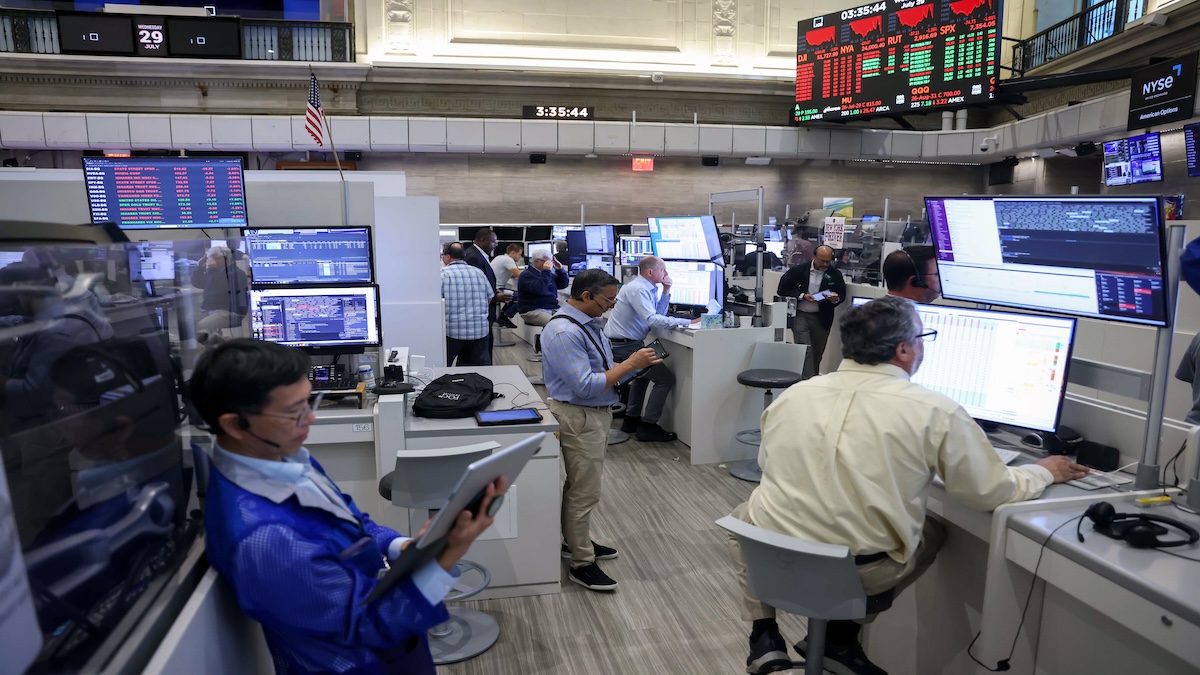
The list of challenges confronting Wall Street piled up this week. Oil firmly above $100. Inflation refusing to disappear. A defiant bond market that all but dared Scott Bessent to bring more policy firepower.
China criticized warnings from leading US technology executives to put the brakes on artificial intelligence development and claims that Chinese progress posed a dire security threat to the world.
The bond selloff has driven a key Treasury yield to the verge of 5%, worsening angst from Wall Street to Washington about higher borrowing costs hitting the US economy.
For many investors, a 401(k) is simply a retirement savings account. For high-net-worth families, however, it can become a sophisticated planning tool that supports tax efficiency, wealth accumulation, and long-term legacy objectives.
Every few months, a new essay declares that the US debt trap has finally sprung. The latest one making the rounds from The Economist is well written and genuinely unsettling. It argues that Washington has borrowed so recklessly that the Federal Reserve no longer dares to raise interest rates. Doing so, the piece warns, would detonate the whole structure and send financing costs spiraling out of control.
Equity markets generally moved lower as rising yields and energy prices created a more challenging backdrop. Higher yields can be particularly difficult for long-duration equities, where a greater share of expected cash flows sits further into the future.
Some investors are questioning how much further this year’s rally can run with the S&P 500 Index up 12.3% through the first eight months of the year. Encouragingly, history suggests that strong starts tend to persist; when the S&P 500 has gained more than 10% through August it has advanced from September through December in 25 of 28 instances, an 89% positive hit rate.
Occasionally, we are confronted with decisions where there are no easy options. The prevailing circumstances bound our choices, and we may face criticism no matter what we do. Collectively, the Federal Open Market Committee (FOMC) finds itself in just such a situation as it prepares for its upcoming meeting.
The recent employment report provided reassurance that the US labor market remains resilient. The economy added 162,000 jobs in August; the previous two months’ gains were revised higher by a combined 55,000, and the unemployment rate held steady at 4.1%.
How can investors recognize when a stock is severely overvalued—and decide whether it may be time to take profits?In this video, Chuck Carnevale, co-founder of FAST Graphs and “Mr. Valuation,” examines 22 popular stocks that appear overvalued or have recently begun correcting.
Investors can’t get enough of ultrashort bonds. Driven by concerns over high equity valuations and rate volatility as the U.S. Federal Reserve mulls over the direction of interest rates, capital preservation strategies appear to be the elixir to help ease uncertainty. As such, ultrashort bonds have been seeing greater demand as traditional safe havens fall short on yield or carry unwanted duration risk.
There is so much going on, it is hard to know where to begin. The data is all over the place. I had a long and epic dinner in New York with David Bahnsen, Rene Aninao, and Brian Syztel which has my mind buzzing with ideas and new concepts.
One or a few high-performing stocks can provide a big boost to portfolio values. But they’re hard to come by and often struggle to maintain their momentum over time. Because these stocks increase portfolio concentration, investors must balance the risk of overexposure against the tax cost of diversifying. A thoughtful, tax-aware plan may help bring portfolios back in line.
Don't let September's macro headline noise fool you. Today’s economic backdrop won’t likely trigger a broad market freeze like 2022, but there will be winners and losers. Cash-rich mega-caps, AI infrastructure plays, and scaled market leaders (the SpaceX, Anthropic and OpenAI tier) command their own gravity.
U.S. equities were little changed on the week – the S&P 500 rose 0.1 per cent, the NASDAQ gained 0.4 per cent, and the Russell 2000 added 0.12 per cent – but those modest moves masked a far more turbulent week in the global rates markets.
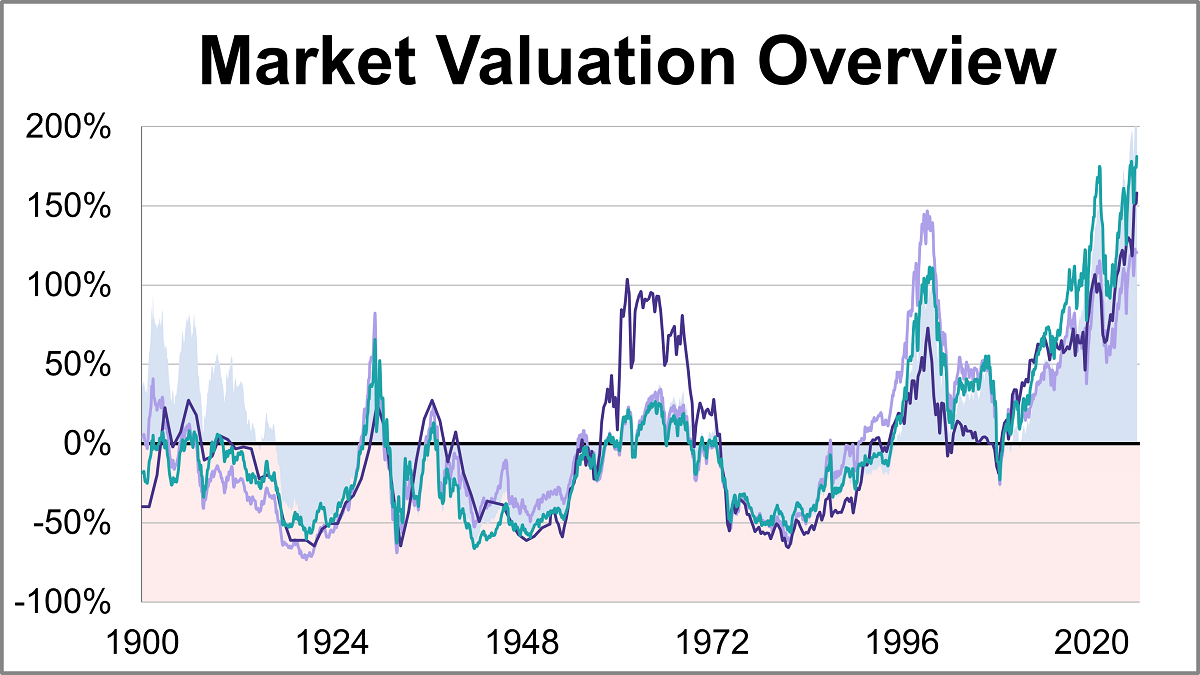
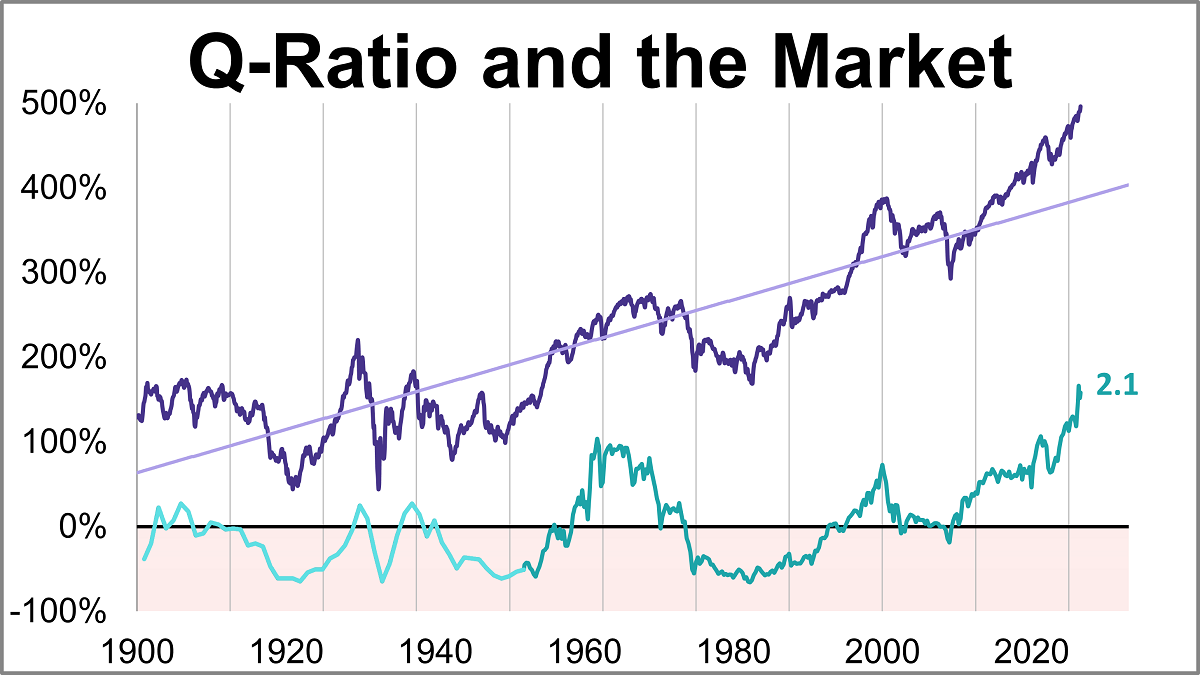
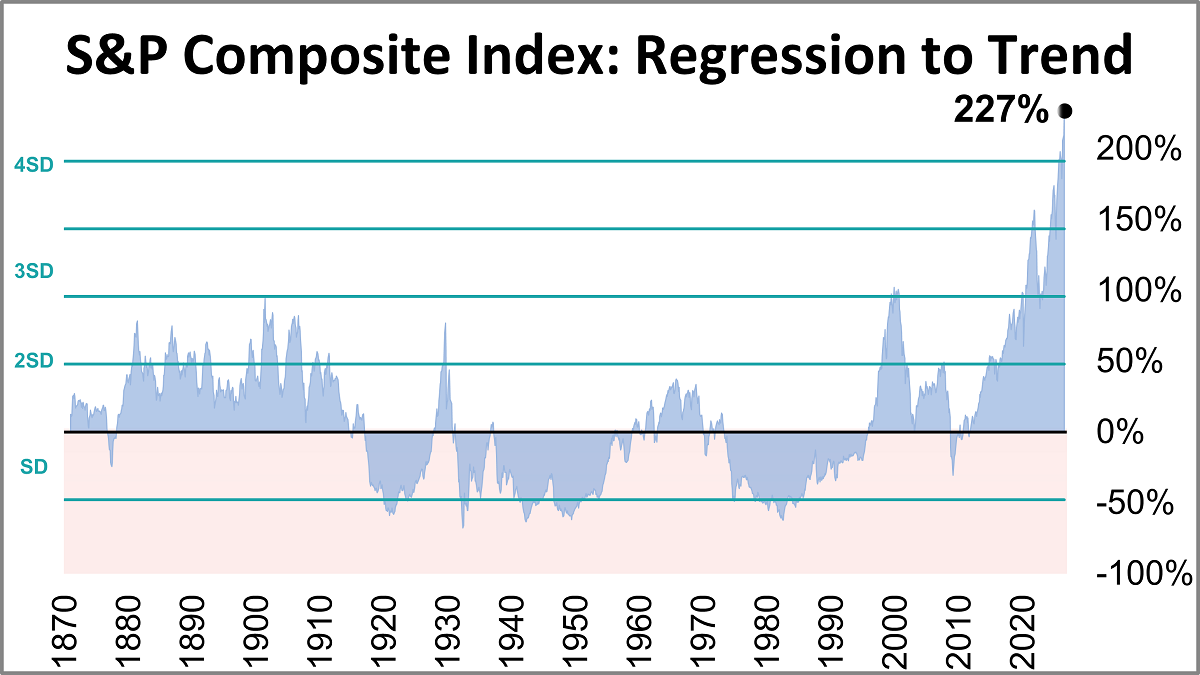
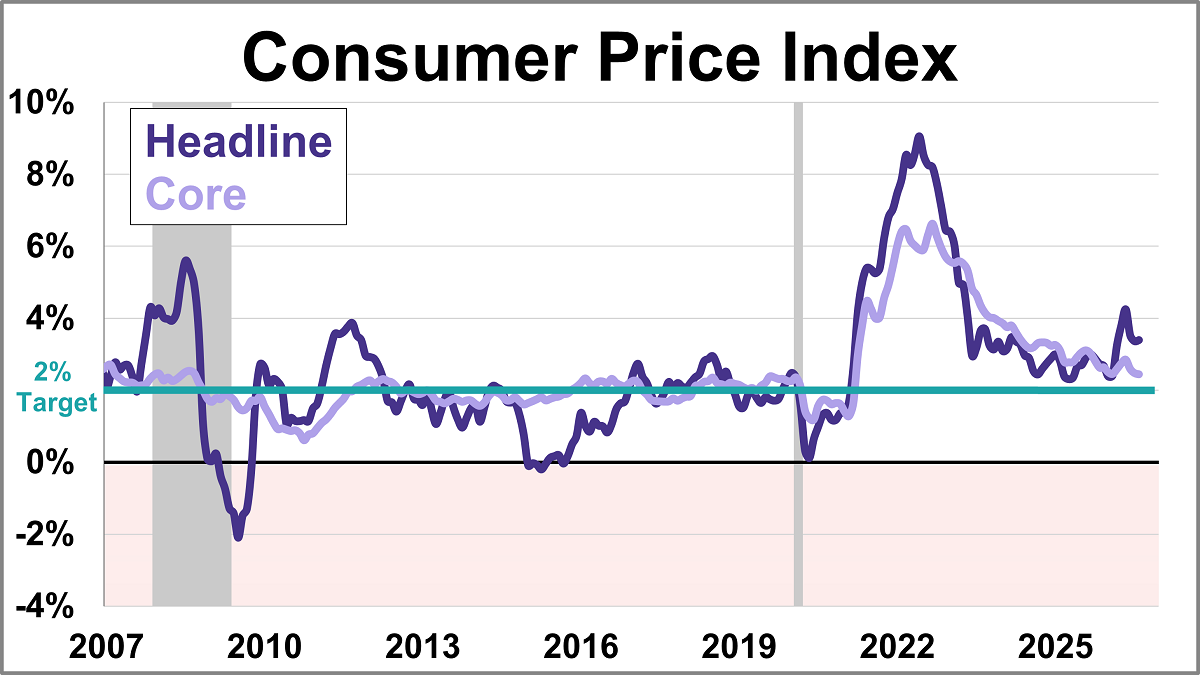
Here is a summary of the four market valuation indicators we update on a monthly basis.
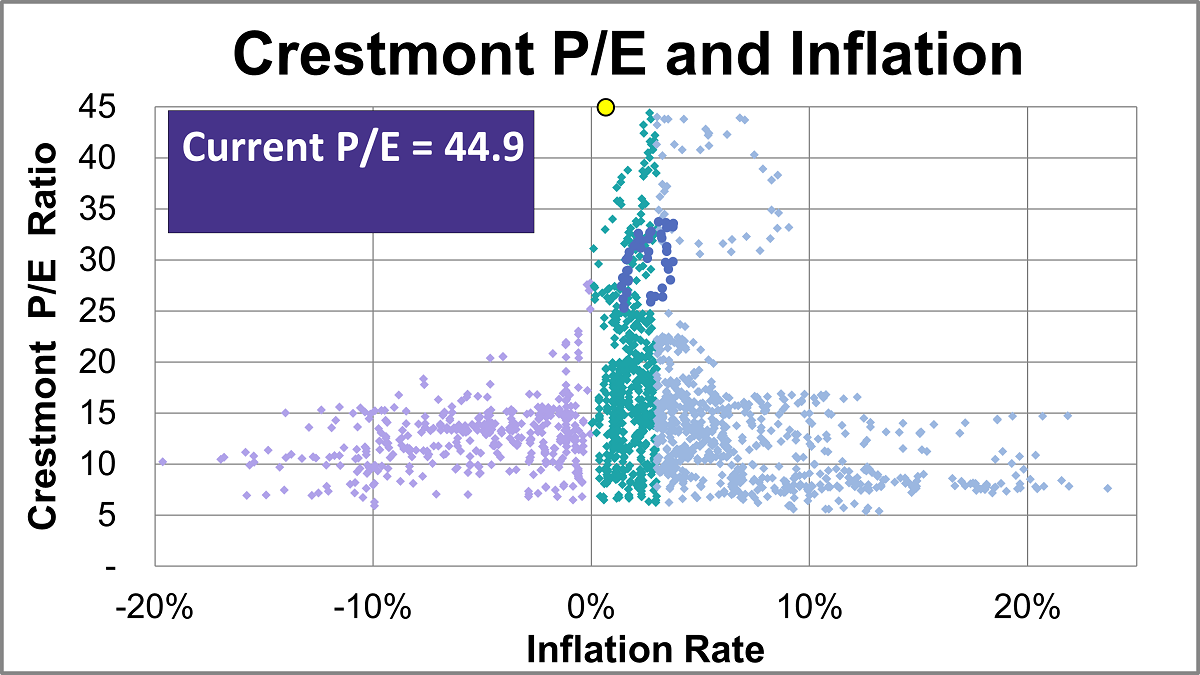
Based on August's S&P 500 average of daily closes, the Crestmont P/E of 44.9 is 191% above its arithmetic mean, 220% above its geometric mean, and is in the 100th percentile of this 14-plus-decade series.
The Q Ratio is the total price of the market divided by the replacement cost of all its companies. As of August 2026, the latest Q-ratio is at 2.12.
The inflation-adjusted S&P Composite Index was 227% above its long-term trend at the end of August.
Inflation rose 3.4% year-over-year in August, as it did for the 12 months ending July. The headline figure for the Consumer Price Index (CPI) was in line with economist estimates.
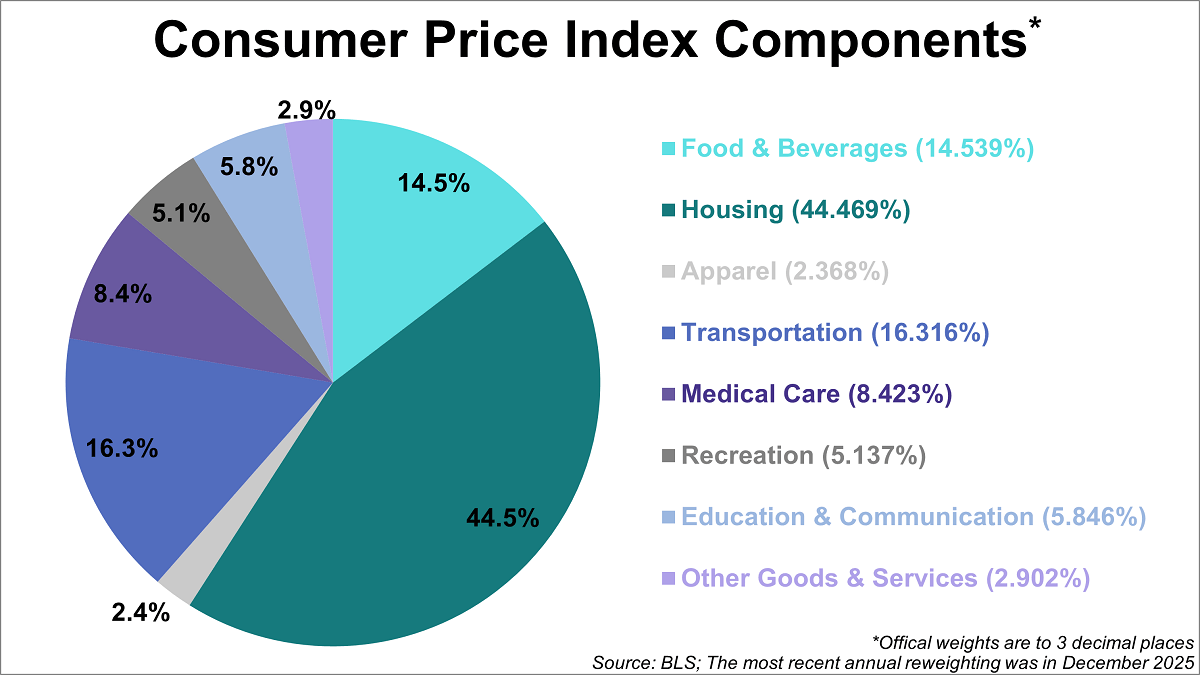
Inflation affects everything from grocery bills to rent, making the Consumer Price Index (CPI) one of the most closely watched economic indicators. The Bureau of Labor Statistics (BLS) tracks this by categorizing spending into eight categories, each weighted by its relative importance.
With a handful of stocks attracting most of the recent headlines, it’s easy to forget that investors continue to find opportunities across a broad range of sectors.
US convertible bond sales have reached their highest annual total on record, according to data compiled by Bloomberg, as companies look to fund heavy artificial intelligence-related spending.
Wall Street has a rule for how equity bull markets end: the economy rolls over or the Fed tightens until something breaks. Neither is in place right now, but rate risk is creeping back.
US stocks fell for a fourth straight day, their longest slide since June, as the relentless climb in oil prices and fresh evidence of sticky inflation boosted Treasury yields and bets the Federal Reserve will lift interest rates.
A quarter-century after the Sept. 11, 2001, terror attacks, families returned to the World Trade Center site on Friday to read aloud the names of the dead, marking a milestone anniversary of a tragedy that reshaped America.
A key gauge of US consumer prices rose by more than expected last month, bolstering the case for Federal Reserve officials to raise interest rates next week.
As wealth management firms scale, sustained organic growth increasingly depends on strong business leadership. Firms that build scalable client acquisition strategies, develop talent and create operational infrastructure can position themselves to grow beyond founder-led models and capitalize on the industry’s long-term opportunities.
History suggests slower Fed tightening tends to support stronger market returns and firmer economic growth, while faster hikes typically deepen drawdowns.
While the name is new, Syzygy is not. Syzygy, formerly Research Affiliates, will extend our multi-decade sub-advisory relationships in asset allocation and long-only active equities and expand into other active diversification strategies in the coming quarters.
In this article, Russ Koesterich argues that momentum remains supported by strong earnings growth, making the factor attractive despite market risks.
Portfolio Managers Jonathan Coleman and Aaron Schaechterle outline why they believe momentum in small-cap stocks relative to large caps can continue, highlighting favorable earnings growth prospects, appealing relative valuations, and other structural tailwinds.
2026 began with 10-year Treasuries right around 4%, which many viewed as a comfortable place. The comfort came from some simple math—2 plus 2 equals 4. The long-term real yield on the 10-year Treasury was around 2% and the Fed’s inflation target is 2%.
Market volatility persisted in August as investors were again forced to reassess escalating tensions and an exchange of military strikes in the Middle East, while softer labor-market data was countered by mixed inflation readings.
With so much attention focused on what the Federal Reserve (Fed) might do at its policy meeting next week, it’s a good time to look back at history to get a sense of how stocks might respond should the Fed hike rates as the market (barely) expects.
Benchmark-Free has been a flagship strategy for half of GMO's history. As we approach our 50th anniversary in 2027, Ben Inker reflects on our first 25 years of Benchmark-Free investing.
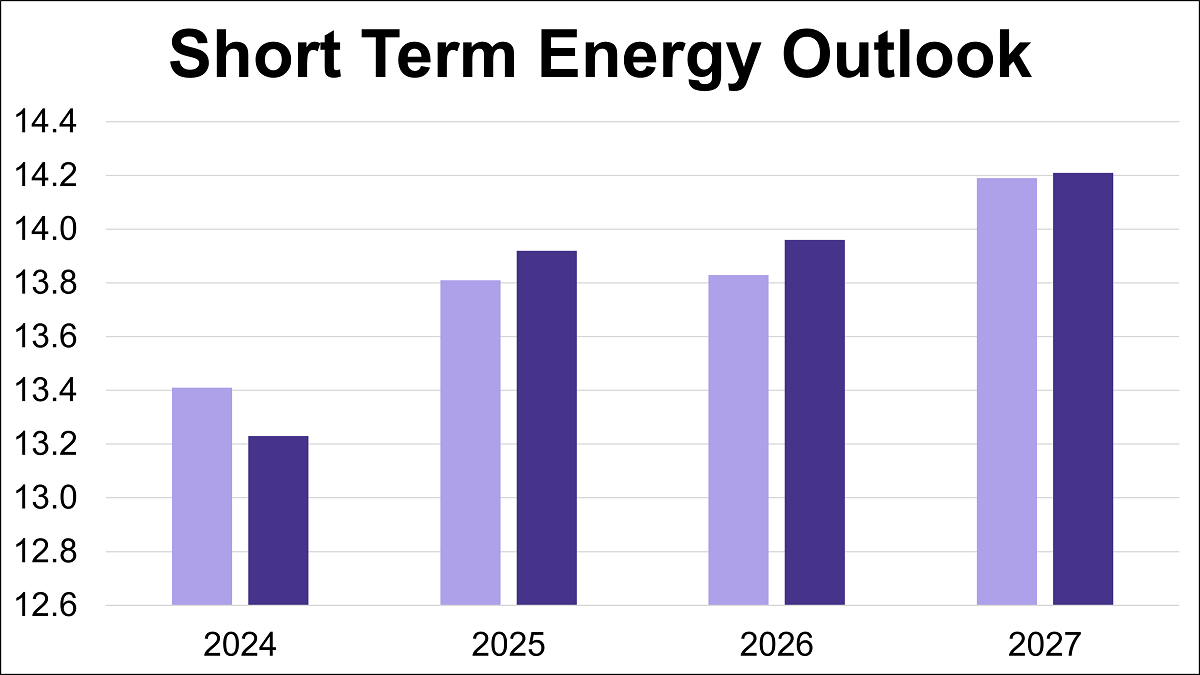
The U.S. Energy Information Administration (EIA) has released its latest Short-Term Energy Outlook (STEO), providing forecasts for energy markets. This article presents the annual production outlooks for crude oil, natural gas, and natural gas liquids (NGLs), comparing the September 2026 projections against the previous month's estimates.
Elevated interest rates have investors scrambling for yield, and munis have been ready to answer the call with tax-exempt income.
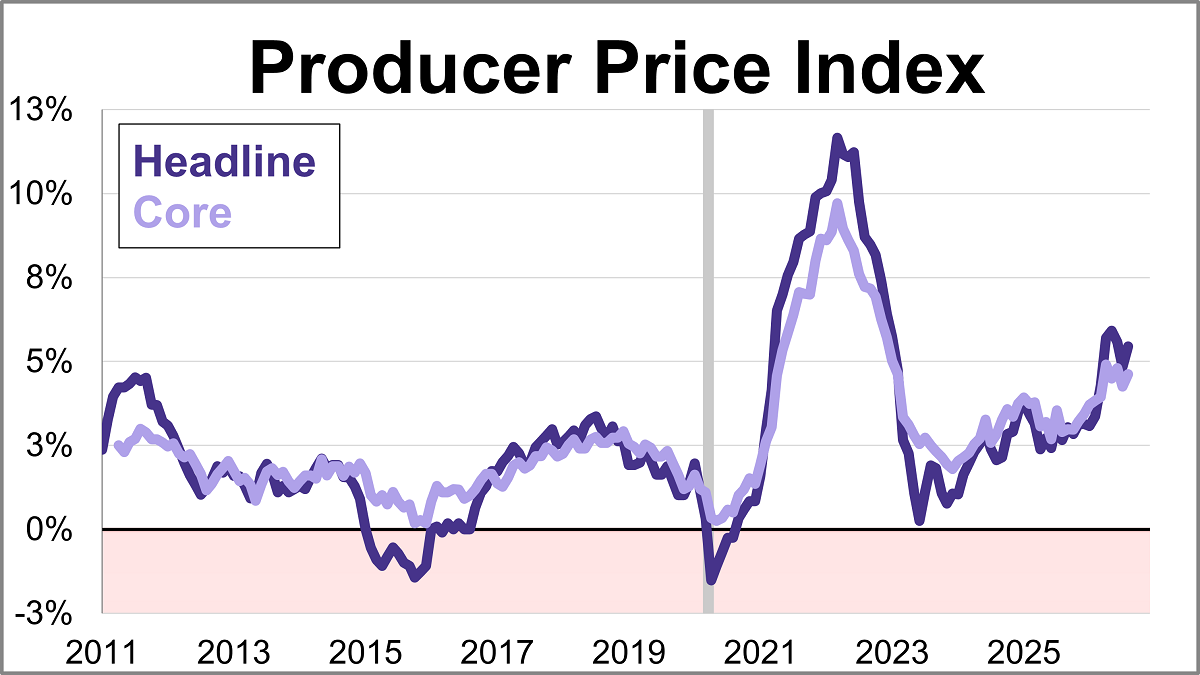
The Producer Price Index (PPI) was up 0.4% in August, better than expectations.
Join the investment strategists at WisdomTree for an educational webcast that explores portfolio position going into the second half of 2026.
Federal Reserve officials have signaled they’re prepared to raise interest rates if inflation doesn’t improve soon, but they may find their main policy tool will do little to restrain some of the forces pushing up prices now.
Meta Platforms Inc. was upgraded to overweight at JPMorgan Chase & Co. on Thursday, the latest example of how sentiment toward the Facebook parent’s position with artificial intelligence has been improving.
Gold hovered near $4,400 an ounce, as traders awaited US inflation data due later this week for clues as to whether the Federal Reserve will hike interest rates this month.
The midterm election season has entered its final stretch, and Wall Street is busy drawing up game plans for a range of scenarios. Yet, in a fortuitous turn of events, the best outcome for markets is also looking like the likeliest one.
Brent oil spiked to $105 a barrel as rising tensions in the Middle East heightened concerns over global supplies.
For much of the past decade and a half, investors saw little reason to favor bonds over equities. Yields were low and returns were muted, especially in passive strategies. Equities seemed to offer a much clearer path to long-term capital appreciation. For many investors, bonds were, at best, ballast: a dull but generally stable component of a broader portfolio. Then the experience of 2022 had investors questioning even that view, as areas of high quality fixed income generated equity-like losses that eroded much of the prior decade’s real return.
As students get closer to making a final college decision, the last two years of high school are particularly important. Parents will want to review their financial strategy to meet the costs of college, including a review of current savings, financial and merit aid, scholarships and loan options.
The August employment report was much stronger than expected and reinforces my view that the U.S. economy remains remarkably resilient. Payrolls increased by 162,000, above every estimate, while revisions added another 55,000 jobs to the previous two months. The workweek increased by one-tenth of an hour, the household survey was extremely strong, and the participation rate finally moved higher.
On Friday, the August U.S. employment report surprised to the upside, with 162,000 jobs added during the month. Year to date, the labor market has shown impressive resilience, with hiring also becoming more balanced across sectors than in previous years.
Before Friday’s jobs report, it was roughly a toss-up in the financial markets whether the Fed would raise rates at the next meeting in mid-September. Now, the odds favor a rate hike and it’s not hard to see why.