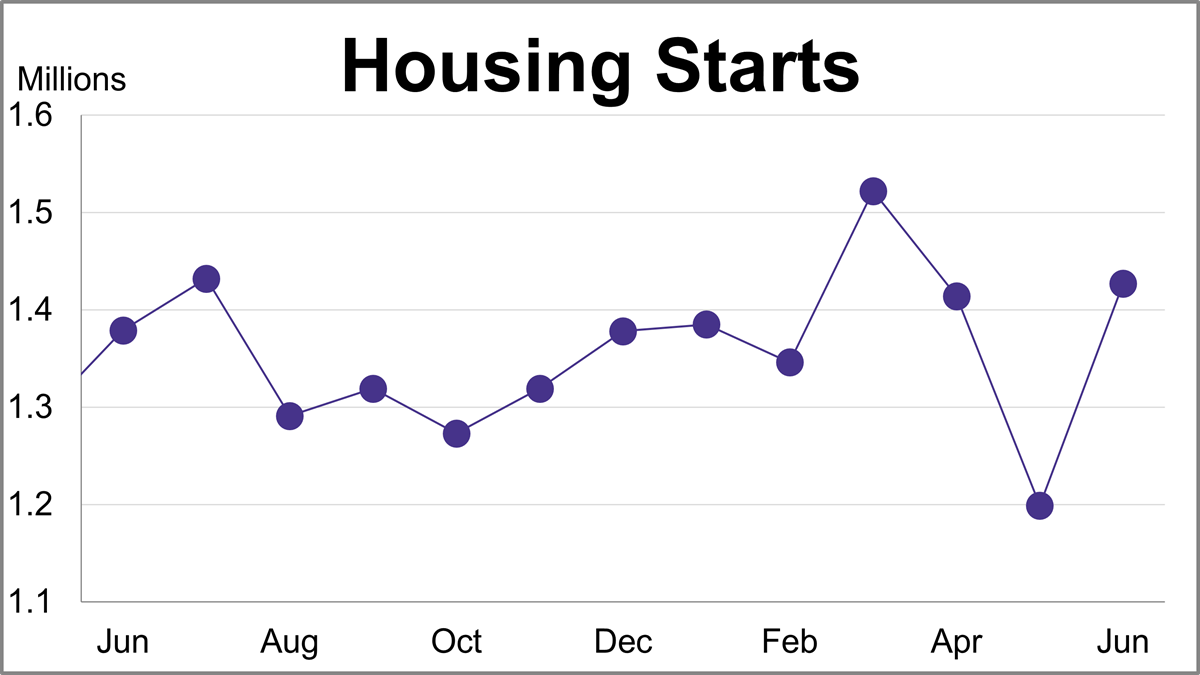
Housing starts jumped 19.0% in June to a seasonally adjusted annual rate of 1.427 million, beating forecasts driven by a massive surge in multi-family units.
Investors love an oligopoly. Imagine an industry dominated by a few large, long-standing players. They can earn outsized profits in boom times and avoid crashes thanks to rational capital spending. The existential questions, though, are whether these firms might turn on each other, and is the industry’s entry barrier high enough.
Our baseline outlook still sees the Fed on hold through 2026 amid gradually easing price pressures. But Waller’s comments suggest that after a string of firmer Personal Consumption Expenditures (PCE) inflation prints, the Fed now places greater emphasis on responding if inflation surprises sharply to the upside or proves more persistent than expected, regardless of which factors are driving the inflation. And this raises the stakes for incoming inflation data throughout the year.
As prediction markets draw record trading around events like the World Cup, Jump Trading Group is betting the once-niche contracts are becoming a lasting corner of Wall Street.
Midyear is a useful moment in investing—not because it tells us where we are going, but because it offers a clearer view of how little we truly knew at the start. Six months is often enough time for confident forecasts to meet reality, for consensus narratives to fray, and for the distinction between what sounded plausible and what proved durable to come into focus.
Beyond the obvious differences such as contribution limits, ability to take loans and eligibility requirements, here are some other, lesser-known differences many savers may not be aware of.
Gold and silver traded in a volatile fashion over the past several days as investors weighed conflicting signals from the Federal Reserve, economic data, and geopolitical developments in the Middle East.
David Solomon, decked out in full academic garb, bobbed his head happily and wagged his index finger to the beat of his own AI-generated music.
Private debt is increasingly valued for its potential to help insurers operationally and strategically: support liability matching, improve portfolio design, diversify underlying exposures and, when underwritten well, add resilient excess return.
The rules governing global commodity markets are starting to witness a profound shift, which is putting critical minerals at the forefront of policy. On a recent episode of ETF Guide’s Metals in Motion, Justin Tolman, Senior Portfolio Manager and Economic Geologist at Sprott Asset Management, discussed this dynamic.
A hawkish pivot by the Federal Reserve and resilient U.S. growth could keep the dollar strong, but its gains could be limited by any narrowing of the U.S. interest rate advantage.
Join Sprott Asset Management for an educational webcast exploring rare earths, their growing strategic importance, and the global effort to build secure supply chains outside China.
Discover the top 10 most-read charts from the first half of 2026, covering historic market valuations, record margin debt, recession indicators, and global index performance.
Netflix Inc. has been one of the worst stocks in the market over the past 12 months as concerns about the video-streaming giant’s plans and prospects refuse to go away. Now, investors worry that its earnings report after the close will confirm those fears.
Dr. Illah Nourbakhsh, Professor of Robotics at Carnegie Mellon University, brings his research expertise to a frank conversation about which jobs physical AI will genuinely displace, which are more resilient than the headlines suggest, and how families can make smarter decisions about education and career planning in a world where the robots are already showing up for work
Hoisington Investment Management Co., the bond manager known for its bullish stance on US Treasuries going back more than 30 years, has turned bearish.
Is it a bubble or isn’t it? That’s what everyone seems to be asking about the US stock market. I say it isn’t. A bubble to me is when price becomes disconnected from any rational, articulable value, the way people chased opaque schemes in the Roaring 1920s or the blind faith in new internet companies in the 1990s.
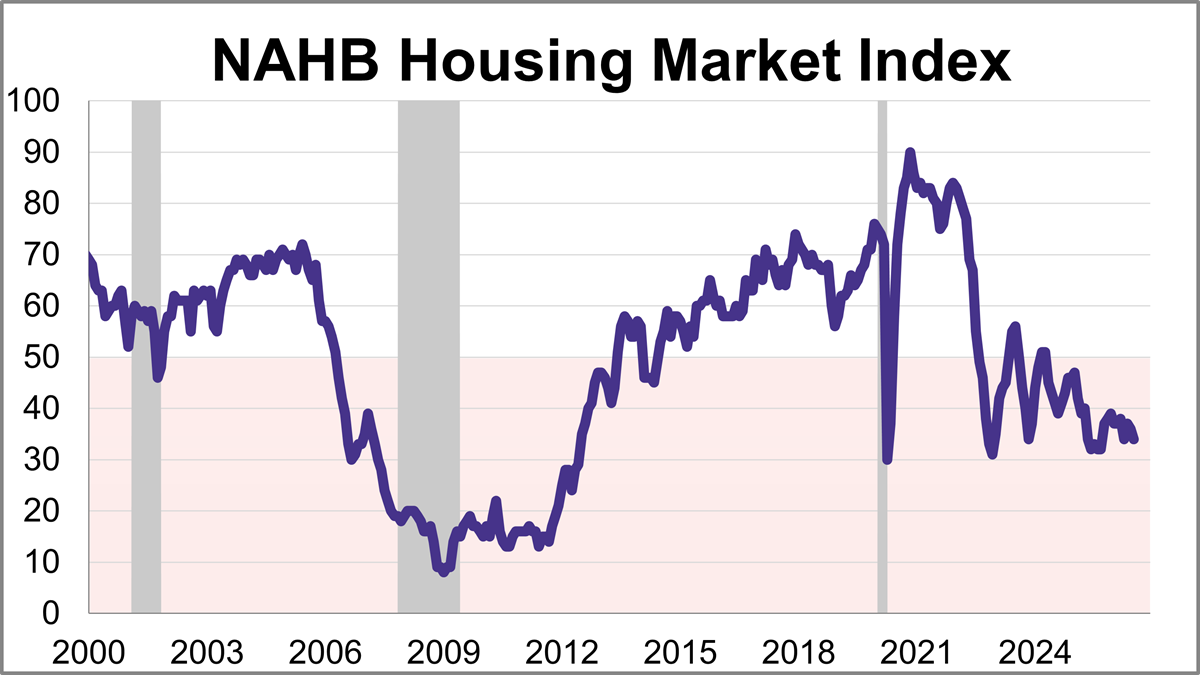
Builder confidence edged lower in July as ongoing affordability challenges continue to affect the housing market. The National Association of Home Builders (NAHB) Housing Market Index (HMI) fell 2 points from June to 34 this month, marking the 27th consecutive negative reading.
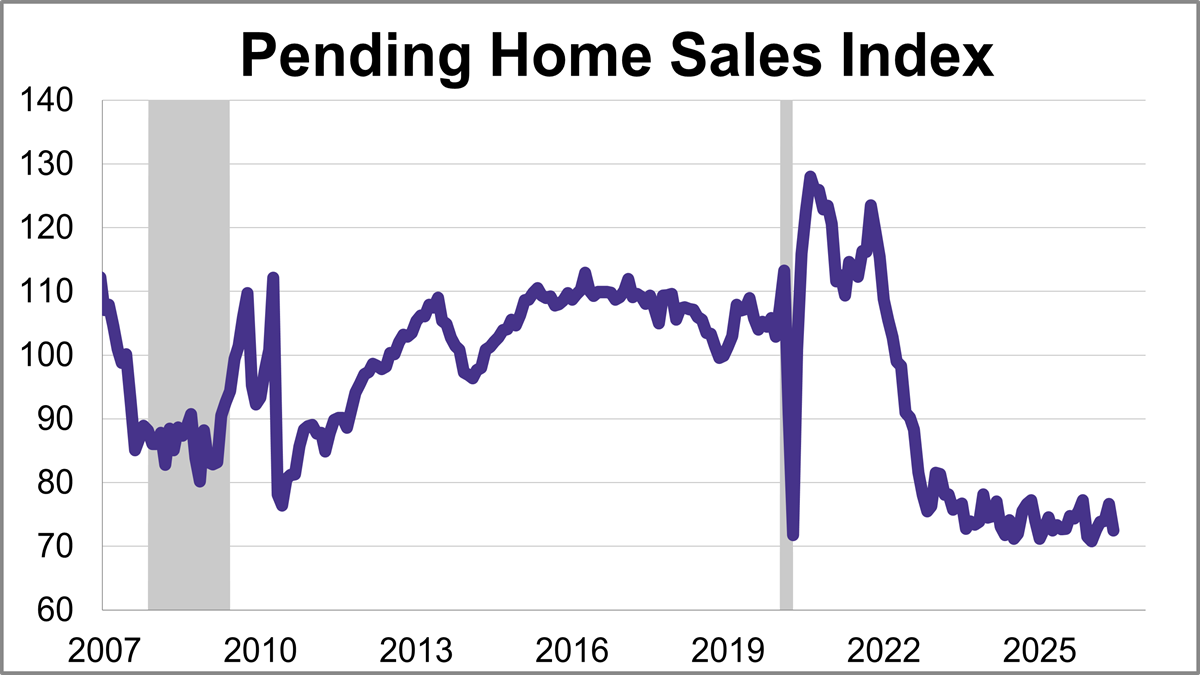
The National Association of Realtors® (NAR) pending home sales index sank 5.4% in June to 72.5, the lowest level since January.
Captain Ahab never caught Moby Dick, but Morgan Stanley shows how tracking billionaire tech whales like Elon Musk can eventually land a fortune. Not long ago, the bank appeared to have shot itself in the foot as lead lender on the disastrous $44 billion buyout of social media platform Twitter, now known as X.
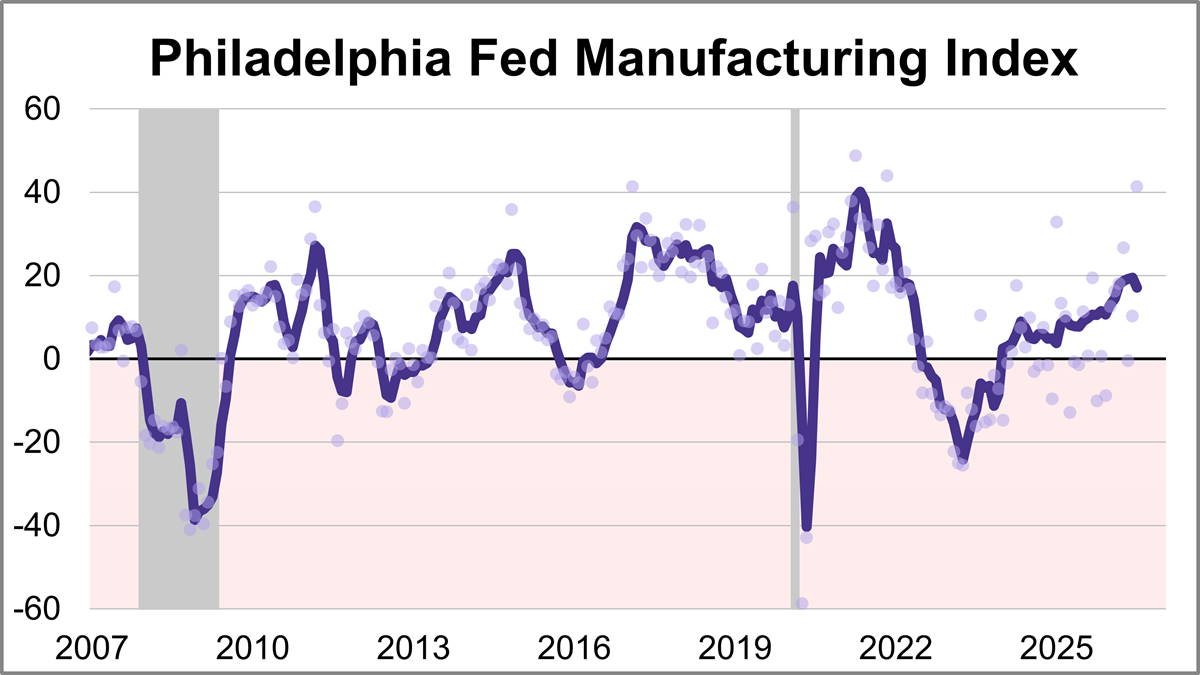
The Philadelphia Fed manufacturing index showed activity expanded significantly in July, with the index jumping 31.1 points to 41.4. This marks the highest level for the index since November 2021 and was more than triple the forecast of 12.7.
General Douglas MacArthur once remarked that “rules are mostly made to be broken.” He was at odds with U.S. President Harry Truman over the conduct of the Korean War, feeling that the restrictions placed on his forces weren’t supportive of success.
Eli Lilly & Co. agreed to buy AtaiBeckley Inc. for as much as $3.8 billion, underscoring growing interest from large drugmakers in the once-fringe area of psychedelic medicine.
Friday, July 10, may have been ordinary for those outside the investment community, but for folks engaged with the market, it marked an opportunity to gain exposure to the second most valuable company in South Korea. On Friday, SK Hynix (SKHY) became available to U.S. investors via the Nasdaq.
This paper presents the case for emerging market (EM) allocations within the broader context of global investment strategy. In a period of heightened geopolitical complexity—spanning the 2026 US-Iran conflict, challenges to globalization, political transformation and ongoing great power competition—we believe the case for engaged emerging markets exposure has never been stronger.
The Q2 earnings season is off to a rollercoaster start. The big banks collectively reported strong numbers, boosted by active capital markets and another impressive set of sales & trading revenue. And it was the usual chorus of bank CEO macro commentary:
In June we pointed out that Health Care looks cheap. Even though it has been rallying hard of late, the sector continues to trade at a 59% price-to-sales discount to the S&P 500, despite having an 18% return on equity (ROE) that is just a hair below the 19% ROE accorded the S&P 500.
Although economic conditions did not change much between the first and second quarters, investors were far more bullish in the second quarter.
For decades, traditional index-based ETFs have served as the low-cost foundational anchor for core allocations, consistently demonstrating that outperforming a broad market index is an uphill battle.
After a difficult start to the year, investor sentiment reached a low point near the end of March as concerns around inflation, geopolitics, and rising interest rates weighed on risk assets.
We had a data center at my first banking job. It was a dusty room filled with old Federal Reserve Bulletins, Economic Reports of the Presidents, and annual reports from the International Monetary Fund. I was the search engine, and the operation was powered by caffeine.
What were the key takeaways from last month’s numbers? Our corporate bond specialists look back at the market’s performance and provide incisive commentary to help you make sense of what drove the market—and what may be on the horizon for fixed income investors.
Join ProShares Global Investment Strategist Simeon Hyman and team for a mid-year market outlook discussing:
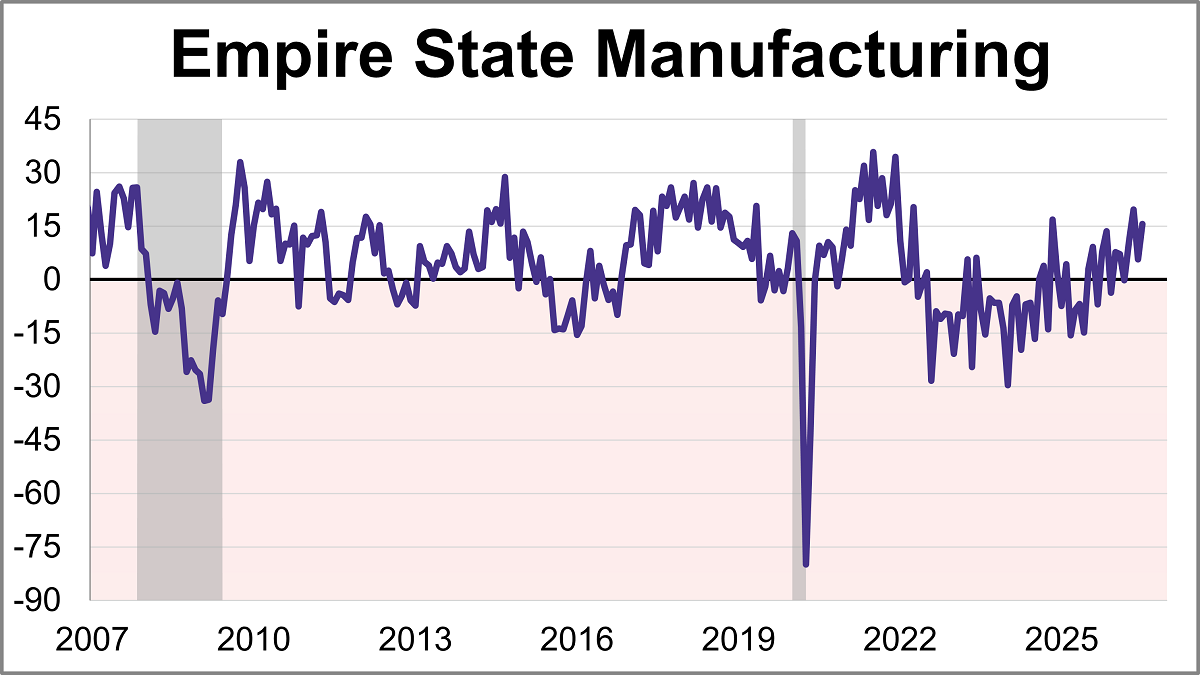
Manufacturing activity grew significantly in New York State, according to the Empire State Manufacturing July survey. The diffusion index for General Business Conditions remained in positive territory for a fourth straight month, jumping 9.9 points to 15.6 and coming in above the 9.3 forecast.
The universe of alternative investments is only growing. As advisors increasingly look for opportunities to diversify their client portfolios. But independent advisors who have purposefully built their businesses on doing what is best for their clients deserve to have partners who are doing the same.
The labor gap is creating pressure on firms to do more with their existing teams, and AI is giving those teams the tools to actually do it. Here is how firms achieve double-digit growth using AI, even while navigating a workforce transformation they cannot fully control.
incoln National Corp. is in advanced talks with Talcott Financial Group for a reinsurance deal that would shift billions of dollars of life insurance reserves off its balance sheet, according to people familiar with the deliberations.
For this week’s column, in the wake of the holiday celebrating our country’s independence, I’ll share some independent thinking for advisors to implement, whether it be with their teams, in their practice or with their clients. I’ll keep it brief in the hopes you will find one or two things that resonate.
BlackRock Inc. pulled in $192 billion of net client cash in the second quarter, with investors pouring money into exchange-traded funds and pushing total assets above $15 trillion for the first time.
In the span of just two weeks, Meta Platforms Inc. has gone from a market afterthought to one of its hottest stocks, as investors finally like what Facebook’s parent is saying about its artificial intelligence plans.
Artificial intelligence is reshaping every business, including ours. But the hardest challenge is not adopting it. It is rewiring your company around it. How corporate leaders respond to that test will determine whether AI shrinks their ambition or raises it.
The median house price in Nantucket, Massachusetts, is nearly $4 million. It was just $500,000 in 1995. This sounds like a stunning increase in one of the hottest and least accessible real estate markets in the country.
The current level of stock market valuations remains – easily – the most speculative extreme in U.S. financial history, beyond both the 1929 and 2000 extremes. Our baseline estimate is that the S&P 500 has a material risk of losing something on the order of 75% over the completion of this cycle.
Investors should consider where in the capital structure they are best compensated for risk. Equity may offer income with upside potential from active asset management, whereas debt may offer income with downside mitigation.
The first half of 2026 reinforced an important lesson for fixed income investors: Tax-loss harvesting opportunities don’t always arrive at year-end, often appearing during short periods of market dislocation when interest rates rise, new-issue supply increases or investor sentiment shifts.
When it comes to space stocks, Elon Musk’s SpaceX (SPCX) is clearly the big kahuna. After all, the company just completed the largest initial public offering (IPO) in history, rapidly joining the $1 trillion-plus market capitalization club in the process. However, the broader space economy extends beyond a single company.
The tech-heavy NASDAQ benefited from a semiconductor rebound and renewed enthusiasm for AI infrastructure names. The Dow, weighted more toward “old economy” stocks than high-growth names, captured none of last week’s gains.
LPL Research examines how sticky inflation, Fed leadership changes, and AI-driven borrowing are shaping the fixed income outlook for 2026.
Historically, many in the pension industry viewed funding above the "plan termination level" as having little incremental value. Once a plan reached “plan termination level”, thought of as roughly 110% funding, conventional wisdom suggested additional surplus had little economic value because it is effectively "trapped capital."
It has been an eventful six months, and we are delighted that the Equity Dislocation Strategy has risen to the occasion. The Strategy generated a 9.05% net return in the first half of 2026, compared with a 1.3% return for MSCI ACWI Value minus MSCI ACWI Growth, a broad proxy for the value-growth spread.