Big bank earnings offered little to alter the dimming views on the sector mired in the longest losing streak since the financial crisis. The bright spot: equities trading.
We agree that the economy has appeared remarkably resilient at the aggregate level, and that modest further rate increases may not put overall growth at risk. But the more important question for portfolios is not the level of inflation; it is its sensitivity to rates.
Central banks are tightening, and stocks are still within reach of their highs. The Fed hiked on September 16 for the first time since 2023, and the 10-year Treasury yield touched 5.34% this month, its highest level since 2002. Even so, the S&P 500 sits within roughly 2.5% of its record, and Japanese equities recently set fresh all-time highs.
As we round the three-quarter pole and head into the final stretch of 2026, the prevailing investment narrative has, of course, been AI, along with its pros and cons. Since March, when the Iran conflict began, there has been a secondary drumbeat that continues to get louder and louder: the narrative surrounding bond prices, interest rates, inflation, and the economy.
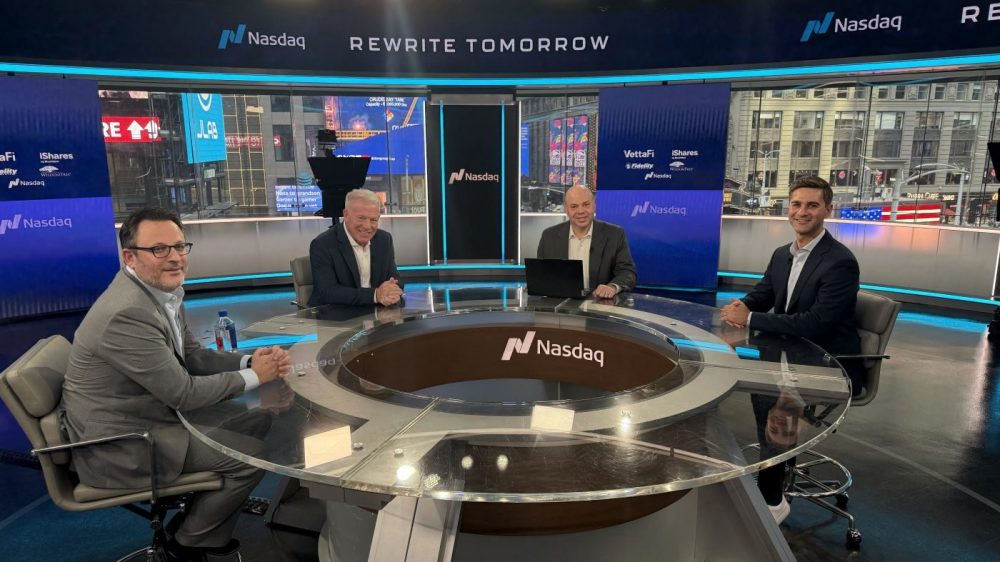
BlackRock, WisdomTree, and Fidelity Investments had representation at the recent Nasdaq VettaFi Asset Allocation summit.
In a recent webcast, Ari Polychronopoulos, TMX VettaFi’s head of RAFI Indices™, and Brent Leadbetter, TMX VettaFi’s head of RAFI Distribution, discussed growing market concentration risk.
Last week, the NEOS Nasdaq-100 High Income ETF (QQQI) crossed $15 billion in assets under management. This major milestone was the result of investor demand. In the first nine months of 2026, the tax-efficient options-based ETF had $7.0 billion in net inflows. With the help of the $13 billion NEOS S&P 500 High Income ETF (SPYI), NEOS has firmly established itself as a premier manager for enhanced income ETFs.
Charles Schwab Corp. reported earnings that beat estimates as retail investors continue to pile into the stock market.
An AI rendering of a 19th-century Jon Gray, complete with pitchfork, waistcoat and straw hat, flashed up behind the Blackstone Inc. president at a recent meeting with investors.
As chip stocks shed $1 trillion in market value, ETF investors are pouring billions into the selloff, putting a fund that triples their daily exposure to the sector on pace for record weekly inflows.
Many investors underestimate the AI exposure already embedded in diversified portfolios. Michael McNurney explains how to evaluate AI enablers, creators and beneficiaries while balancing long-term opportunity against short-term valuation and concentration risks.
Monthly checks for nearly 72 million Americans receiving Social Security benefits will increase by 3.6% in 2027, the most in four years.
Gold and silver finally put a winning week on the board. But the more revealing development is what happened while prices were falling: investors poured billions into gold-backed funds, and China stepped up its purchases of physical gold.
The dollar strengthened to the highest level in over a year as a hot US inflation reading pushed traders to add to bets that the Federal Reserve will raise interest rates.
Every time I clean out my wardrobe, I find items I have not worn in years but cannot quite bring myself to give away. Maybe they will come back into fashion. Maybe they’ll fit again one day. Or maybe getting rid of them simply feels harder than buying them did.
A new peptide ETF launched today, holding the drugmakers behind GLP-1 weight-loss treatments along with the companies that make and deliver them.
Global income strategies offer a compelling value proposition for investors: a steady stream of income generated from dividend-paying equities, government bonds and structured instruments like equity-linked notes (ELNs) from around the world.
We see a reason for advisors to evaluate the support surrounding the strategy. Questions about onboarding existing holdings, applying restrictions, monitoring tax budgets and managing ongoing trading belong with the implementation provider. Understanding exposures and portfolio fit is where our consultation team can help.
Global equity markets finished the third quarter only modestly higher, but the path beneath the surface was anything but calm. The AI and momentum trade that powered markets in the first half unwound sharply in July, leadership broadened through August as capital returned to areas that had been left behind, and the market narrowed again in September.
The Northern ETF SKOR crossed the $1 billion AUM threshold following $247 million in recent inflows amid surging corporate bond yields.
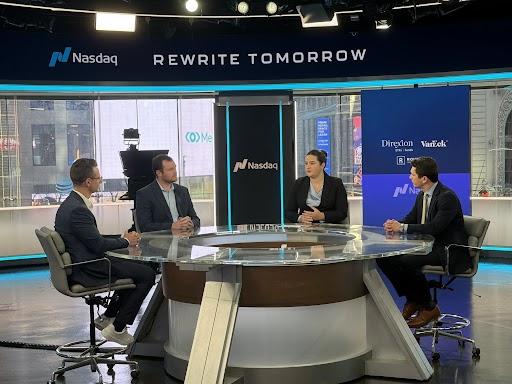
The recent Nasdaq Vettafi summit on asset allocation saw issuer leaders talk thematic ETFs, AI, and leveraged ETFs.
Small-capitalization stocks may now provide greater diversification and less valuation risk than many of the market’s largest blue-chip companies. Moreover, it appears to us that this is just the beginning stages of a change in leadership, and it is possible small-capitalization stocks could outperform large stocks for the next few years.
Americans have been relentlessly spending their paychecks despite rising prices, buying pickup trucks with diesel near record highs and steak dinners even as the cost of beef soars.
CLOs simply offer strong yield potential that often outpaces corporate bonds with similar credit ratings. Given that the ‘income’ portion of fixed income is often a key priority for investors, attaining high yield on a consistent basis gives CLOs a compelling use case.
Skeptics of the artificial investment boom are doubling down. Billionaire Ray Dalio warned last week that the bubble was near its bursting point, while Michael Burry of the Big Short fame brought forward the timeline for his bearish thesis. SoftBank Group Corp. founder Masayoshi Son’s attempt to set up another $100 billion AI-focused venture capital fund will only give the doubters more ammunition.
The outlook for government policy, bond markets, and monetary policy appears less settled than it has been for much of the post-COVID period. The debate about public debt, the functioning of the Treasury market, inflation persistence, and the future path of interest rates has intensified. Global bond yields have been soaring.
Taylor Topousis and Christian Galipeau discuss high-conviction insights that go beyond media headlines.
Earlier last week, a supertanker loading crude in the Gulf of Oman was fixed at $1.01 million a day for a voyage to Asia, with another deal reportedly agreed at $1.16 million.
Higher interest rates are dominating the news of late, raising more questions than answers. Why are they moving up? Can they be tamed? And in the credit world, the question has arisen: as rates rise, are we at risk of loans underperforming?
The market continues to hold near all-time highs despite pressure from higher bond yields. This week brought relatively little economic data, but the important takeaway is that the underlying economy still looks strong. High-frequency indicators, jobless claims and consumer spending data continue to point to solid growth, while this week’s CPI, PPI and retail sales reports will provide the next important test for both the economy and the Federal Reserve.
For most of the past year, investors have been trying to answer what seems like a fairly straightforward question: How can the stock market continue to rise when interest rates keep moving higher? The conventional answer is that interest rates simply do not matter as much as they used to.
Tokenization has taken hold in money market funds, leaving ETFs room to grow, while Cerulli eyes private markets as the long-term prize.
Strong corporate earnings will be pivotal to hopes for a year-end rally in global stocks, as flare-ups in fears over inflation, bond volatility and artificial intelligence spending weigh on sentiment.
By generation, Gen Z and Millennials now make up 88% of online betting activity. Gen X trails at 9%. Boomers barely register. As recently as this spring, Millennials were the bigger group. Then Gen Z passed them, and Bank of America called it a “turning point.”
Global investing is changing. Geopolitical tensions, shifting trade relationships, energy costs and divergent central-bank policies are increasingly influencing which companies and markets are best positioned to navigate the environment.
The Fed's recent rate increase may not develop into a hiking cycle as extensive as the one that began in 2022 because much of today's inflation pressure comes from supply constraints rather than broad economic overheating, where demand exceeds the economy's productive capacity.
While a gold ETF is a convenient way to play gold's price, you don’t possess any gold. You have paper. And you don’t know for sure that the fund has all the gold, especially when it sees inflows. In such a scenario, there have been difficulties or delays in obtaining physical metal.
When headlines announce that the stock market has reached an all-time high, investors often wonder whether they should stop buying stocks, sell their holdings, or wait for a correction. But those questions can distract from what matters most: the individual businesses they own and the prices they pay for them.
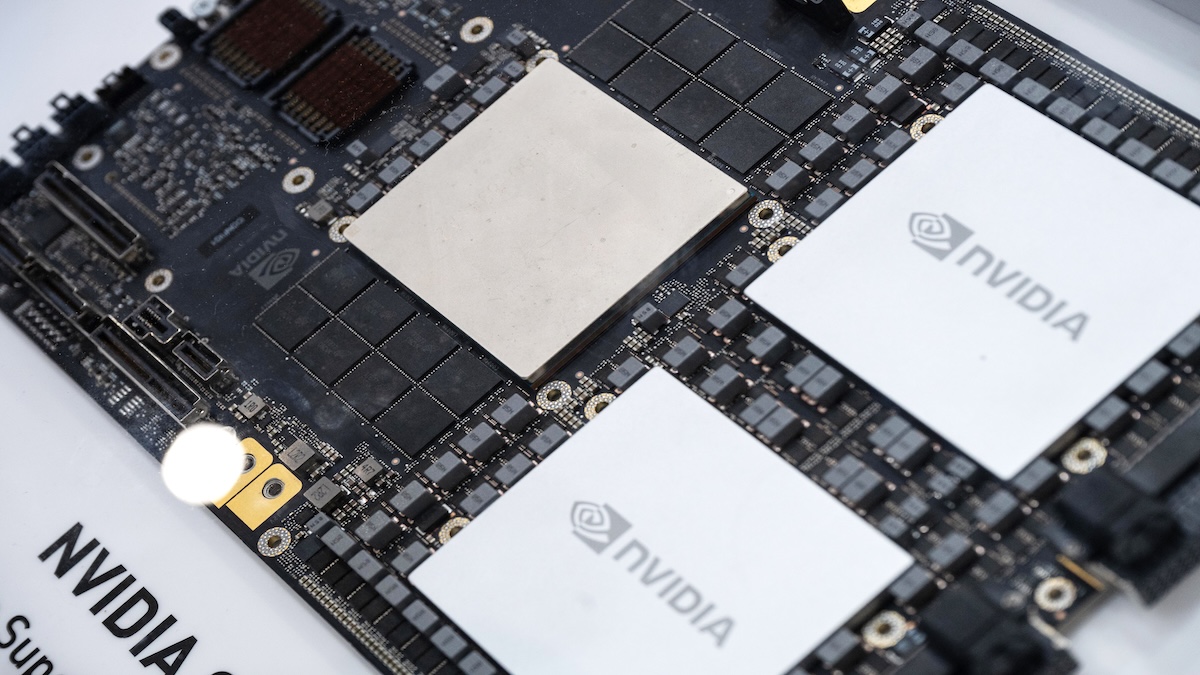
Broadly speaking, when advisors and investors consider adding focused industry exposure to a portfolio, there needs to be a strong justification for doing so. Take the AI industry, for example, where sustained buildout has driven many to target key tech players for exposure.
The S&P 500 hit a new record high in 3Q as strong earnings offset headwinds from oil returning to $100/bbl, the Fed hiking rates, and the 10-year Treasury crossing 5%.
The dollar rally is forging ahead as soaring oil prices weigh on currencies of energy importing nations and global inflation fears persist.
SpaceX investors are finally getting some reprieve after months of being whipsawed by volatility as the Elon Musk-led company’s stock breaks above the level it’s been stuck below since July.
With markets around the globe rattled by the bond sell-off, it may be time to pivot towards safe havens that still generate strong yield.
Active ETF flows offer a window into where the ETF ecosystem is going, and what its shifts and changes might mean for broader ETF innovation.
September ETF launches highlighted active strategies and an AI hardware ETF as year-to-date inflows reached a record $1.54 trillion.
Gold advanced as oil fell and an auction of 30-year US debt on Thursday drew solid demand, helping to pull long-dated yields from the highest levels in more than two decades.
The bull market in US stocks is showing few signs of stress as it approaches its fourth anniversary: Corporate profits are rock-solid, the S&P 500 Index is near a record and volatility appears subdued.
Advisors choosing between two similar ETFs often let the lower expense ratio decide, but that fee says little about a fund’s liquidity. It may not even point to the cheaper fund to own, according to State Street Investment Management research.
Is it time to bail out of stocks — or to stay the course? Who knows? In the meantime, we can array recent stock returns against history to put 2026 into context and allow readers to judge for themselves.
Consumer confidence is collapsing, hiring is weak and the housing market is largely frozen. All of which serves to underscore that the US economy is only holding up because of the boom in artificial intelligence and an aging population spending ever more on healthcare.