Among the world’s top fuel-consuming nations, Japan is the most energy insecure. Its import-dependency ratios are scary: It buys overseas 99.9% of the oil it needs; 99.7% of the coal; and 97.8% of the natural gas.
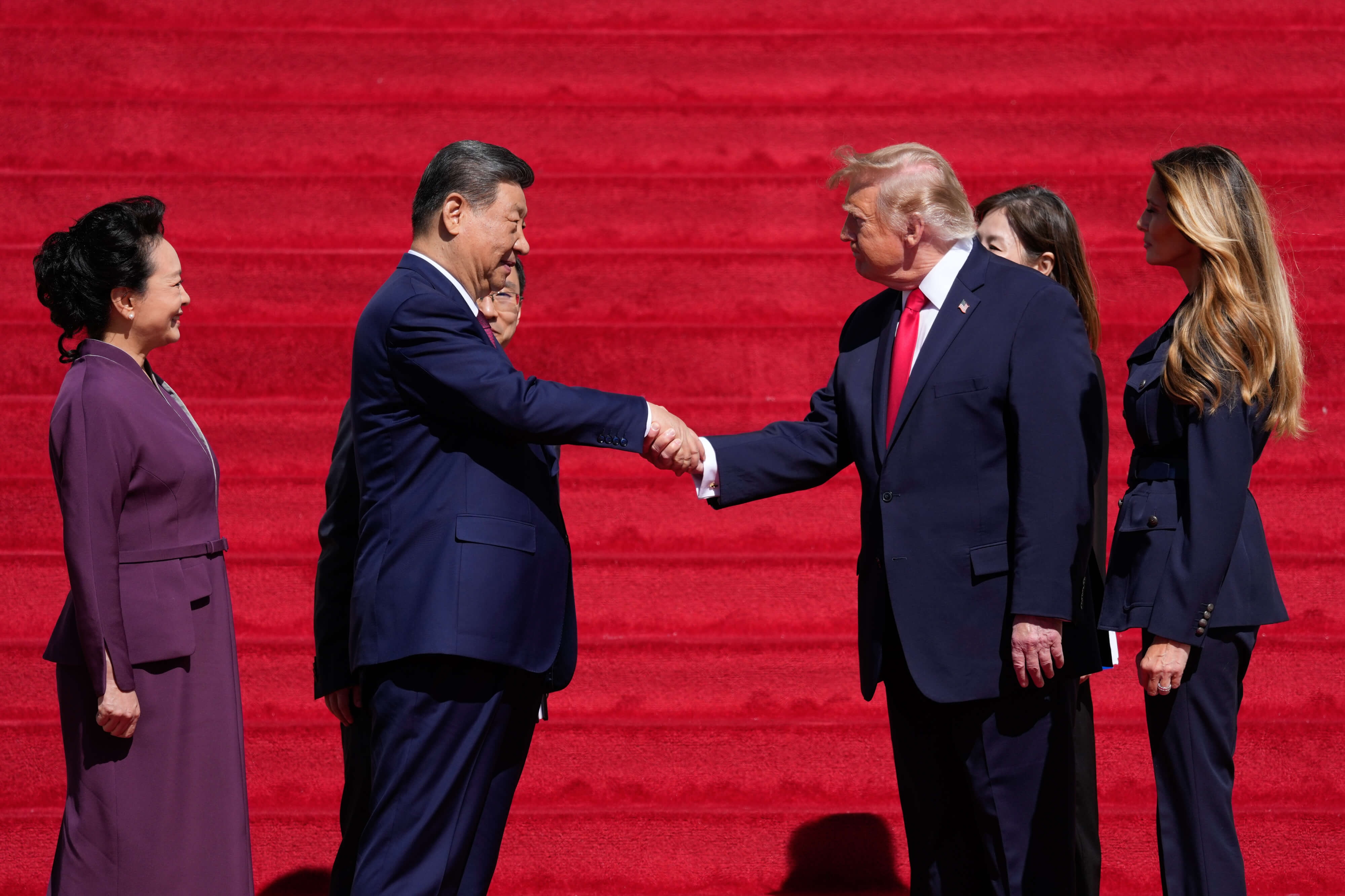
The US and China detailed a plan to cut tariffs on about $30 billion of imports from each country, taking a step toward fulfilling a key outcome of last week’s summit between Donald Trump and Xi Jinping.
A number has been making the rounds all year, and it’s misleading. The claim: roughly 13% of credit card balances are 90 days or more past due, the worst since 2008. Here’s the twist. That number is real, and it comes straight from the New York Fed.
The U.S. economy remains resilient despite headwinds including sticky inflation, trade instability and rising geopolitical tensions. State and local government tax revenues have followed suit and have posted solid growth, aided by robust equity market returns.
The S&P 500 has remained remarkably resilient in the face of mounting macro headwinds. Despite oil prices topping $100 per barrel, 10-year Treasury yields climbing above 5%, and a renewed shift toward tighter monetary policy, the index continues to hover near record levels.
Second-quarter earnings were strong, particularly in technology, but crowded ownership often determined whether good news was rewarded. The selloff in semiconductors arguably reflected crowded positioning and concerns surrounding the sustainability of the earnings boom. The net result: multiples compressed while earnings revisions held up.
Artificial intelligence (AI) leadership is no longer a developed-market monopoly. Emerging markets (EM) now have their own AI champions, and productivity gains may follow. For bond investors, we expect the implications to differ by country—driven by industry composition, capital intensity, digital infrastructure and speed to adoption.
The Treasury Department will buy back another $6 billion in long-term Treasuries today (Thursday, Sept. 24) as it continues efforts to tamp down rising yields.
The yield on the 30-year hit a multi-decade high this week, spiking amid continued fiscal and monetary concerns. The 30-year hitting 5.45%, its highest mark since 2004, comes amid an already busy year for bonds.
In September 2024 and June 2025, I wrote memos that were critical of governments’ attempts to override the laws of economics, based on my conviction that trying to do so is likely to prove ineffective and potentially harmful.
Asset owners want private-market exposure, but liquidity remains their biggest hurdle, an opening advisors can meet with public alternatives.
This week, there are a few things that we need to pay attention to: the large move in interest rates and what it means (and more importantly, what it doesn’t mean!); and the constant barrage of doom and gloom on energy and AI. Let’s jump in.
I do not know whether quantum computing is in that kind of window right now. Nobody does, and I am suspicious of anyone who claims certainty in either direction. What I can say is that the pattern-matching is uncomfortably familiar.
Creating significant wealth requires concentration of capital, attention, risk, and decision-making.
Last week we looked at the Federal Reserve’s inflation problem. This week, let’s look at the other half of its mandate: maximum employment.
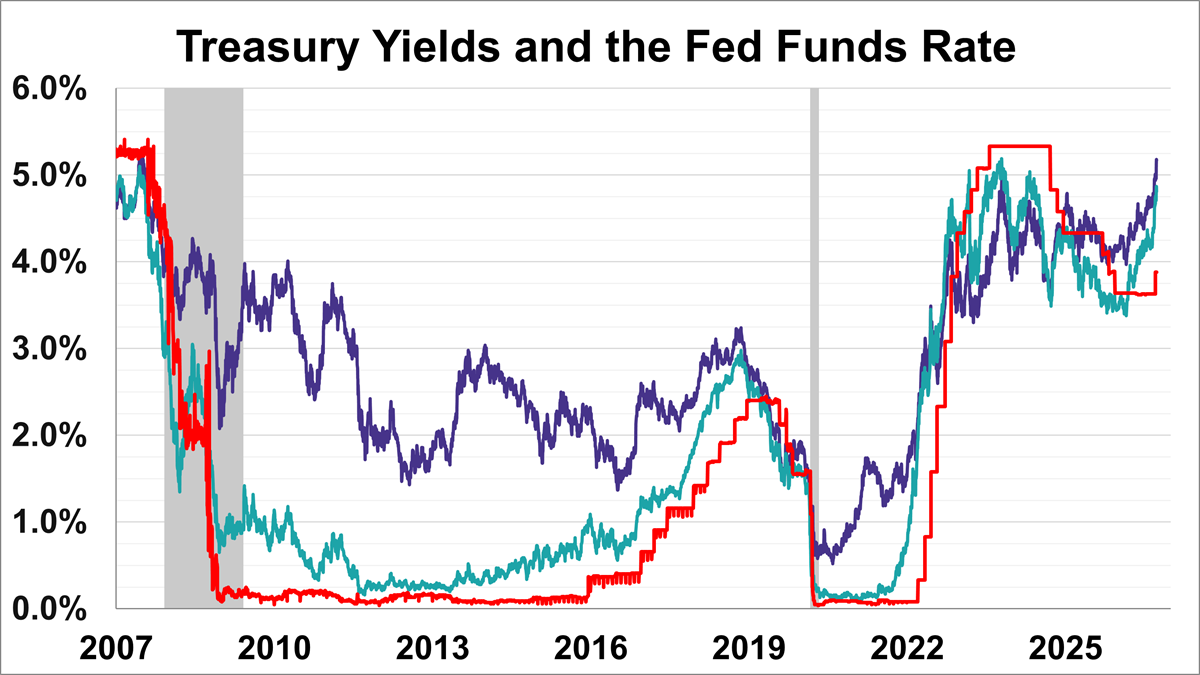
The yield on the 10-year note finished September 25, 2026 at 5.17% while the 2-year note ended at 4.81%.
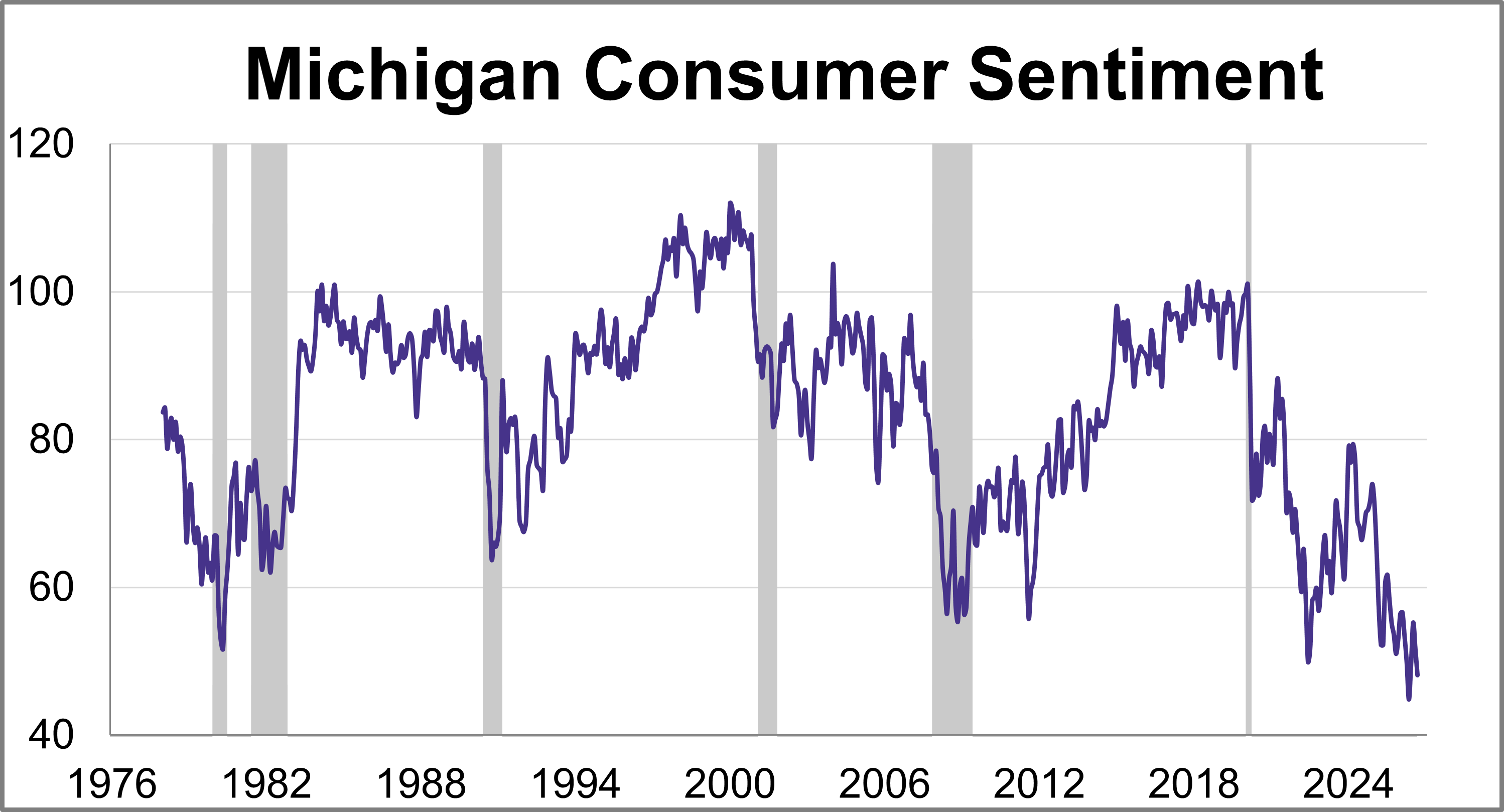
Consumer sentiment falls in September for two consecutive months. The final September reading for the University of Michigan Consumer Sentiment Index came in at 48.1. This marks a 7.0% (3.6 points) decrease from August.
US stocks climbed as oil and Treasury yields pulled back from the recent surges ahead of data on inflation expectations.
The Facebook parent’s shares had jumped 36% in September through Thursday’s close following the release of its Muse personal AI assistant, which has risen quickly to the top of app charts and muffled concerns that heavy spending on AI won’t pay off. The stock is on pace for its best month since July 2013 and within striking distance of joining an elite group of companies worth at least $2 trillion.
Now the US is in a higher-interest-rate environment, and once again there is a lot of redefining going on. One change is that it’s finally good to be a saver again. The catch is that saving isn’t quite as safe as it used to be.
The AI and cryptocurrency sectors are bankrolling hundreds of millions of dollars in advertising to shape public opinion and elect allies to Congress and key state offices in the midterm elections.
The tectonic plates of the global economy have shifted. Across the world, yields on long government bonds — keystone of the entire financial system — have climbed to their highest in decades. A trend that had been clear ever since the brief post-pandemic boom turned into resurgent inflation and higher rates has suddenly accelerated.
The US housing market has been stuck in neutral for nearly four years, with sales of new and existing homes plodding along at a historically slow pace. One explanation is that the average rate on a 30-year fixed-rate mortgage in the US passed 6% four years ago and has stayed above that ever since, creeping past 7% this week.
The exchange-traded fund (ETF) market is pacing toward a record-breaking year in 2026, driven by an unprecedented wave of new product launches and historic capital inflows.
Since ChatGPT was first released in 2022, the artificial intelligence (AI) trade has dominated US equity markets. Gains have been driven by three interrelated forces: enthusiasm for artificial intelligence, growing concentration in the largest technology companies and strong price momentum.
This year has presented no shortage of challenges for investors. Geopolitical conflict, trade tensions, rising energy prices, shifting interest rate expectations and an increasingly active political backdrop have each taken turns dominating the headlines. Yet despite these obstacles, the economy has continued to expand, corporate profits have marched higher and markets have climbed one wall of worry after another.
Trump Accounts are now available nationwide. Explore how the new tax-advantaged accounts work, who can contribute and key considerations for families evaluating their long-term savings options.
Confluence Investment Management offers various asset allocation products, which are managed based on “top down,” or macro, analysis. We publish asset allocation thoughts on a bi-weekly basis, updating the report every other Monday, along with an accompanying podcast.
AI has changed coding, mathematics, and weather forecasting. They all have a vast pool of available training data, rapid feedback, and clear right and wrong answers. These keep models moored to reality, not spiraling off to disaster as the result of compounding small errors.
Doshi said gold holding $4,000 during the correction and later rallying to $4,700 before last week's Fed rate hike strengthened his conviction that the broader gold bull market remains intact despite continued headwinds from the Iran war oil shock.
The Federal Reserve hiked rates, and we expect there are more to come. With a hawkish Fed and a resilient economy, long-term yields may stay elevated.
The U.S. economy has traveled farther than most forecasters expected. Strong household spending, healthy labor markets and continued business investment have kept the expansion on course.
The rise in Treasury yields has prompted a familiar set of explanations. Some investors have pointed to government borrowing and persistent inflation, while others have focused on the possibility that artificial intelligence will lift economic growth and interest rates.
Investment bubbles are inherently dangerous beasts. Like a natural Ponzi scheme, an investment bubble needs to draw in ever larger amounts of capital to keep it going. Nothing attracts capital like apparent success, so an inflating bubble that is creating fortunes for those who got in early will inevitably draw in capital. Unfortunately, this means the amount of money lost when the bubble bursts can outstrip the gains created on its way up.
Yields on the US’s longest-dated bonds climbed to the highest level in more than two decades, the latest milestone in a global selloff driven by inflation fears and concern about government debt burdens.
Cathie Wood is putting one of her investment funds on the blockchain for the first time, deepening her ties to the growing world of tokenized assets as Wall Street experiments with a new financial infrastructure.
The US midterm elections are turning into a key source of concern for a stock market that is riding high on the artificial intelligence trade.
For at least eight years, Congress has been trying and (mostly) failing to create a special set of rules for digital assets and the markets they trade on. It’s worth asking how much, if any, of that was advisable.
The rush for the exits by wealthy investors in private credit funds is far from done. But even as the rich run away from direct lending, they aren’t abandoning alternative assets. Instead, they look to be chasing the next hot thing: infrastructure finance.
We know from recent history why this question feels so timely. Fixed income remains a foundational portfolio building block, offering low-correlated or uncorrelated diversification and downside risk mitigation. However, holding long-dated bonds in recent years has been notoriously painful.
Looking ahead, markets are priced for additional hikes. And our base case is that the FOMC will likely deliver one or two more 25-bp rate hikes through this year and into early next. However, looking further out, anticipating appropriate Fed policy through a financial-conditions-targeting framework has its own limitations. Hence, a neutral rate anchor is still useful.
The appeal of a portfolio of individual bonds for many investors are the known qualities that they can provide: a known stream of cash flow, a known redemption value, a known redemption date, and a known yield; all of which are locked in at the time of purchase.
LPL Research analyzes S&P 500 margin expansion, assessing how much is structural versus cyclical and what that means for future earnings forecasts.
It’s really starting to feel like autumn now. August PPI, CPI, and Retail Sales are in the books, the September FOMC meeting is out of the way, and we can now look forward to Jobs Week on Wall Street. Football is in full swing, and earnings season begins before you know it, with Pepsi (PEP) posting results on Thursday, October 8, followed the next morning by Delta (DAL).
Global growth remains resilient but uneven. In the United States, expansion is supported by private demand, a stable labor market and AI investment, while Europe and Japan continue to show surprising strength despite ongoing risks.
Artificial intelligence (AI) technologies are developing faster than investors anticipated just a few years ago, fueling a popular narrative that AI will trigger widespread job cuts. Yet there’s little evidence to back this view. Instead, we find that AI is changing hiring patterns, altering skill requirements and shifting the mix of work performed within firms.
While the AI trade absorbs nearly all available investor attention, owning energy covers our absolute risk while creating the risk budget to cover the AI relative risk more effectively.
Major US equity indices finished the week mixed. The NASDAQ gained 0.7 per cent while the Dow and S&P 500 slipped. The divergence reflected a tug-of-war between fears of slower AI development early in the week and a rebound in AI-linked shares by Friday.
For many advisory firms, portfolio management creates a practical tension. Standardized models can simplify implementation and support scale, yet they may not reflect a firm's investment philosophy, tax realities, legacy holdings or preferred managers. Building every portfolio internally preserves control, but it also demands time, systems and ongoing investment oversight.
The Texas Stock Exchange (TXSE) is more than a regional milestone — it is a shift in competition among U.S. capital markets. After months of anticipation, the TXSE reached a major landmark last week as Texas Capital’s TXS and OILT ETFs became its first primary listings, followed a day later by PWRX as the first new ETF to launch on the exchange.